EARLY
MONASTIC
SPIRITUALITY
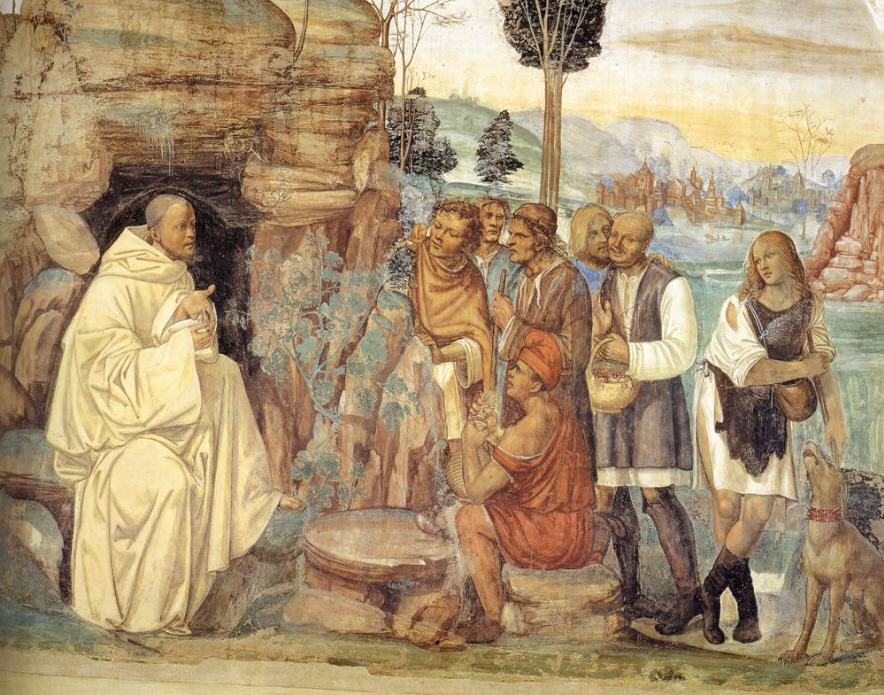
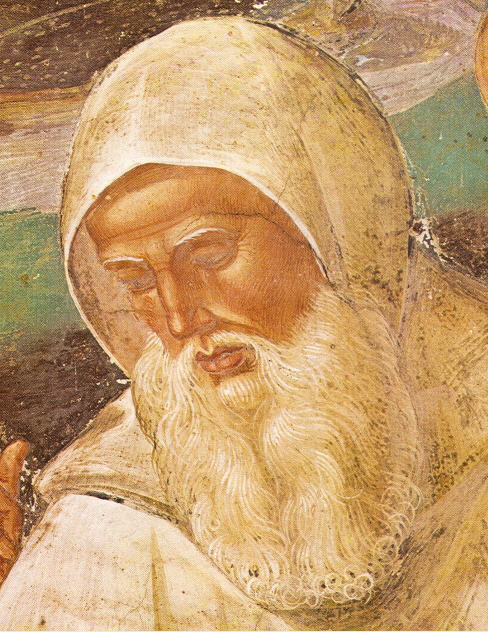
Saint Benedict
Sodoma, Monte Oliveto, c.1500
|
Saint Benedict Sodoma, Monte Oliveto, c.1500 |
|
A WORKSHOP
on EARLY
MONASTICISM
FROM
THE
BEGINNINGS
to THE
TIME
of SAINT
BENEDICT
SAINT
ANDREW’S
ABBEY,
VALYERMO
MAY
22-24,
2020
Fr. Luke's email:
ldysinger@stjohnsem.edu
If you experience technical difficulties during the workshop, please call Fr. Patrick at 661-472-2928
SEVERAL participants have asked about spiritual practices that may be undertaken between our conferences. For those who wish, these might include using the psalms in prayer in the Divine Office (Liturgy of the Hours) and/or praying the Sacred Scriptures in the monastic tradition of lectio divina.IF you would like to hear and see the form of the Divine Office we celebrate at Valyermo, Abbot Damien has made six of our offices available at the Recorded Prayers tab on the Abbey website, (https://www.saintandrewsabbey.com). During the workshop we will discuss the Benedictine practice of alternating psalmody and silence during the Divine Office.
WITH
regard to the practice of lectio divina, please explore the articles
downloadable from the section on
lectio divina accessible from the
Bibliography link on the navigation panel to the left. Feel free,
also, to explore the Lectio Divina link on the navigation panel.
Biblical texts and patristic writings used at Mass and the Divine Office
(which are excellent matter for lectio divina) may be found at the
Universalis Website
(https://www.universalis.com/USA/0/mass.htm).
|
WORKSHOP
THEMES
THE BEGINNINGS: PROTO-MONASTICISM
THE GOAL: THEOSIS/SANCTIFICATION
THE DESERT
PSALMODY
BENEDICT
CHANT
LECTIO DIVINA
|
|
|
v PHILO of ALEXANDRIA, a Jewish philosopher and mystic resident in Alexandria described: (1) Jewish hermits in Egypt; and (2) monks living in community (cenobites) in Palestine.
v WIDOWS and VIRGINS, are mentioned both in the New Testament and in the early patristic authors as an important group within the Christian community.
v MARTYRS and CONFESSORS are revered as models of Christian courage and as intercessors and contemplatives.
v PHILOSOPHICAL OTIUM or retirement from social activity for contemplation, research, and writing was an established practice in classical antiquity.
v SONS and DAUGHTERS of the COVENANT were a Syrian version of proto-monasticism
|
|
|
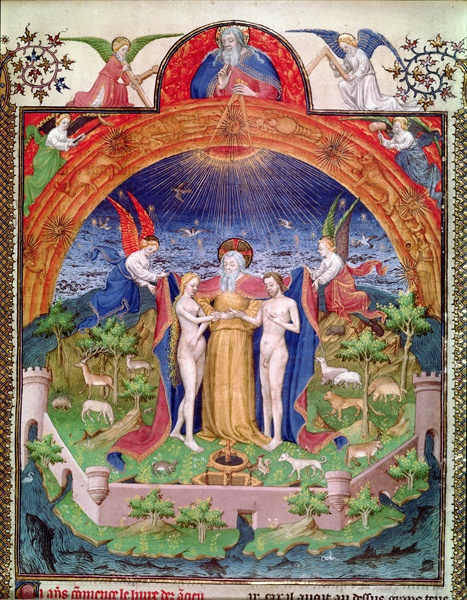
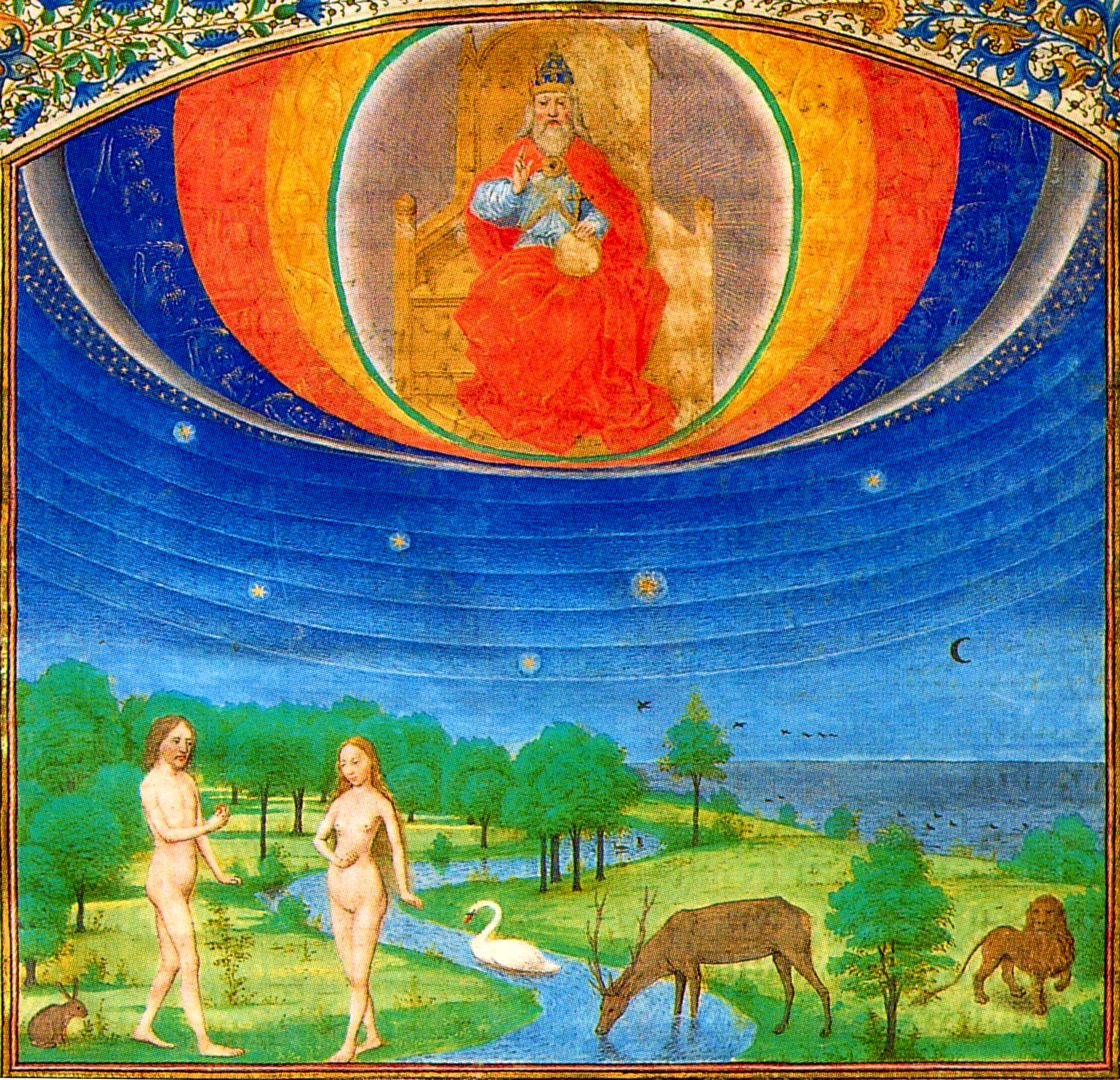
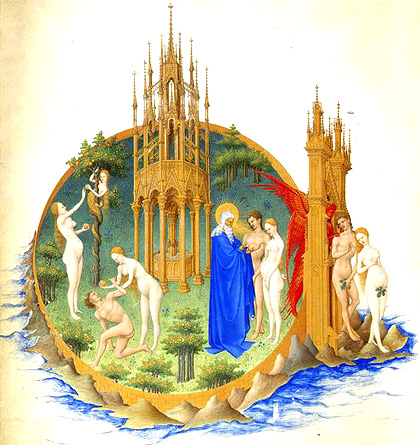
[...]WE see Antony’s perfection as the return to man’s natural condition. This is the constant teaching of East Christian ascetics. Their aim is the recovery of Adam’s condition before the Fall. That is accepted as man’s true nature, man’s fallen condition being παρὰ φύσιν [para phusin] - ‘unnatural’. we see Antony’s perfection as the return to man’s natural condition. This is the constant teaching of East Christian ascetics. Their aim is the recovery of Adam’s condition before the Fall. That is accepted as man’s true nature, man’s fallen condition being παρὰ φύσιν [para phusin] - ‘unnatural’.
Derwas Chitty, The Desert A City, (1966) p. 4
|
|
|
|
|
|
|
|
from the
ROMAN
MISSAL
at the mixing of water and wine in
the chalice, during the Preparation of Gifts, the priest or deacon says quietly:
|
BY the MYSTERY of this water and wine |
Per huius aquae et vini mysterium |
|
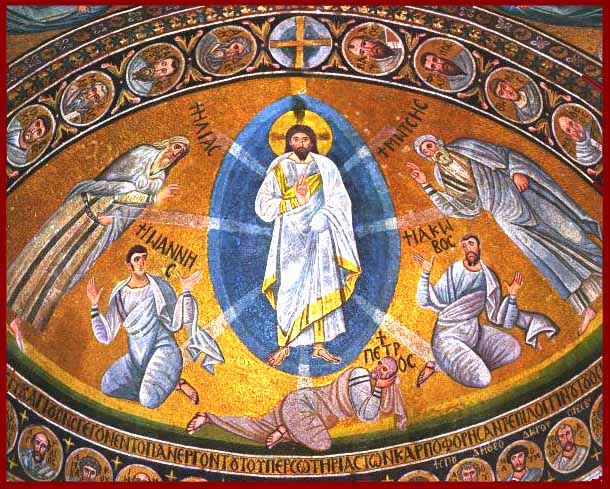
may we come to SHARE in the DIVINITY of CHRIST (lit. of Him), |
eius efficiamur divinitatis consortes, |
|
Who humbled Himself to share in our humanity |
qui humanitatis nostrae fieri dignatus est particeps. |
from theCATECHISM of the
CATHOLIC
CHURCH
I,3,I,1. on The Creed: Was conceived by the power of the Holy Spirit and was born of the Virgin Mary. Question: “why did the Word become flesh?” [457: to save us; 458: so that we might know God’s love; 459: to be our model of holiness]
460 The Word became flesh to make us “partakers of the divine nature”: (2 Pet 1:4) “For this is why the Word became man, [1265, 1391] and the Son of God became the Son of man: so that man, by entering into communion with the Word and thus receiving divine sonship, might become a son of God.” (St. Irenaeus, Adv. haeres. 3, 19, 1: PG 7/1.939) “For the Son of God became man so that we might BECOME GOD.”(St. Athanasius, De inc., 54, 3: PG 25, 192B) [1988] “The only-begotten Son of God, wanting to make us sharers in his divinity, assumed our nature, so that he, made man, might MAKE MEN GODS.” (St. Thomas Aquinas, Opusc. 57: 1-4).
|
Coronation of the Virgin, Belles Heures of Jean, Duke of Berry. |
|
|
|
|
|
|
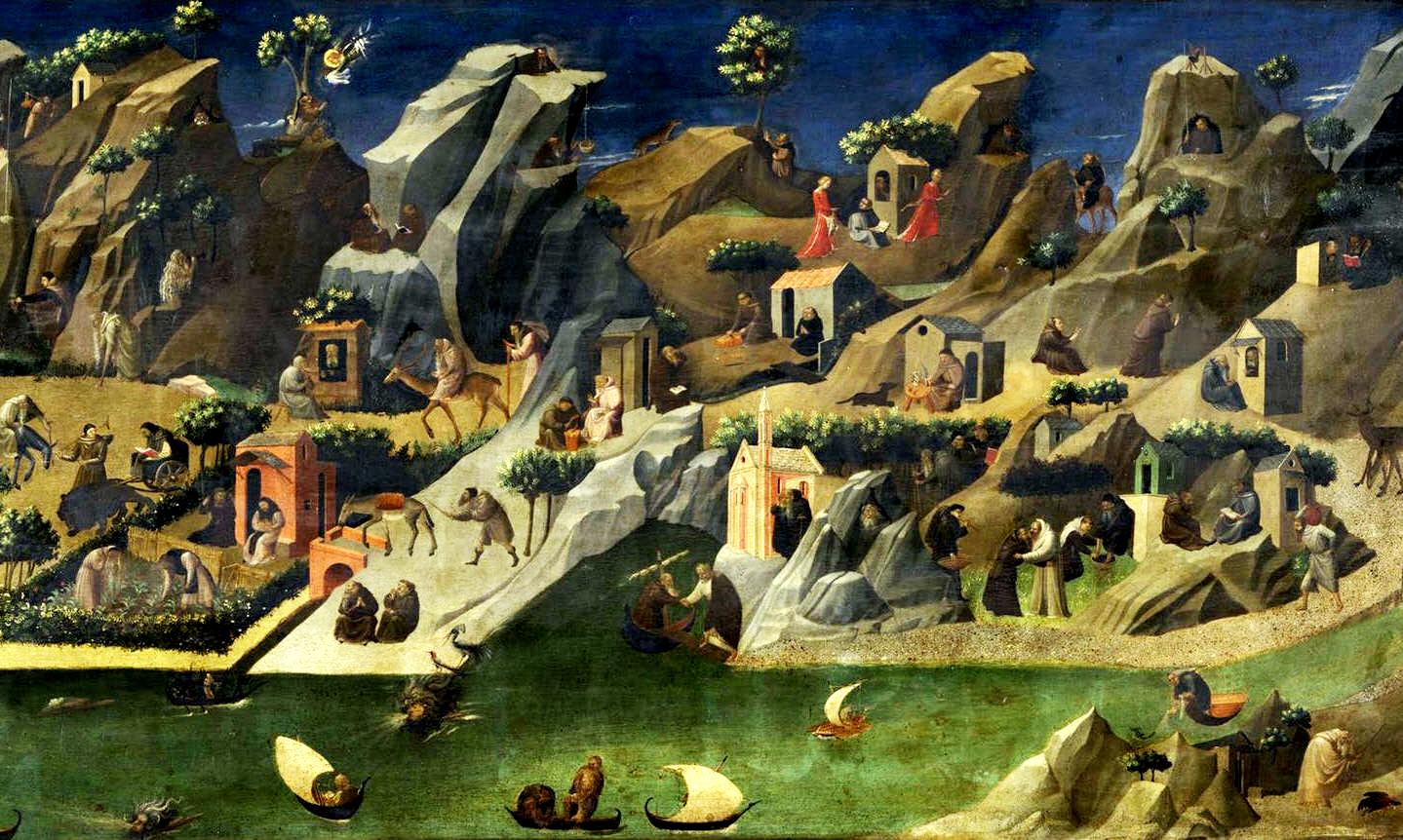
The Thebaid, Fra Angelico, 1420, Uffizi Gallery |
|
|
|
|
|
|
|
|
|
|
|
Benedict offers Instruction, Sodoma, c.1500, Monte Oliveto. |
|
|
|
|
|
|
|
|
v Gift from our Heritage for the Church and World Today
v Restores Balance of Private and Liturgical Prayer
v Teaches us to Pray the Book of the Heart
v Re-establishes a Rhythm of Silence and Speech – of Self-Offering and Attentive Listening
http://ldysinger.com/retreats/monasticism_early/00a_start.htm
This Webpage was created for a workshop held at Saint Andrew's Abbey, Valyermo, California in 2003