 |
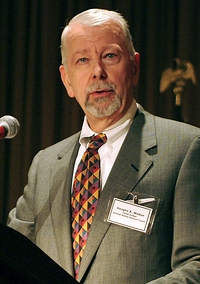
Judge Vaughn Walker |
|
|
Judge Vaughn Walker |
2.
NOW
WHAT
FOR
MARRIAGE?
By DANA MACK
The Wall Street Journal AUGUST 6, 2010
This week, a verdict was delivered in the federal case on the constitutionality of California’s Proposition 8, the 2008 referendum that defined marriage in that state as exclusively between a man and woman. Ninth Circuit District Court Chief Judge Vaughn Walker came down on the side of legalization of same-sex marriage, declaring that marriage is a basic right and that Proposition 8 denies equal-protection and due-process guarantees for gay men and women.
The court’s decision was more than six months in coming; but it is no surprise. The proceedings, according to newspaper reports, were marred by failure on the part of the defense to establish any truly compelling evidence for denying marriage to homosexual couples.
As a long time student of family issues, I watched this court case with interest. Most particularly, I noted the public lambasting that followed testimony by the star witness for the defense, David Blankenhorn. Mr. Blankenhorn is a former colleague of mine; several years ago we co-edited an anthology on the subject of marriage.
In court, counsel for the plaintiffs (echoed later by a number of prominent journalists and political commentators) charged that in more than seven hours of questioning last January, Mr. Blankenhorn failed to acquit himself as anything approaching an expert on the subject of gay marriage. They noted that during the course of his testimony, Mr. Blankenhorn admitted that he had neither performed nor read any data-based studies on the success or failure of same-sex unions in the jurisdictions where they are legal.
In fact, Mr. Blakenhorn set forth his principal arguments against gay marriage as derived from a long career of studying the state of contemporary heterosexual marriage. The arguments were as follows: Gay marriage, he said, would “accelerate the de-institutionalization of marriage” and weaken family life by “mainstreaming alternative family forms.” Marriage, he further observed, was throughout history a child-centered social institution—a bond between a man and a woman forged primarily in the interest of procreation and child rearing. Legalizing same-sex marriage, he said, would intensify the current trend to center marriage on adult gratification rather than on the needs of children.
During his testimony, Mr. Blankenhorn noted that granting gay men and women the right to marry would be a gesture quintessentially in the American spirit of equality. Nevertheless, it was a gesture from which he urged the court to demur for the simple reason that two men or two women could not conceive a child together, and that “a child needs a mother and a father.”
To be fair to Mr. Blankenhorn, though he is no expert on same-sex unions, there is a great deal of social-science evidence connecting marriage and the active engagement of two biological parents with child well-being. And there is simply no other way to view the age-old, universal institution of marriage than as rooted in the biological family.
Marriage, like all cultural institutions, evolves; and it may look very different in different cultures. But the institution’s common denominator across time and cultures has been its dedication to the offices of reproduction. The great 20th century cultural anthropologist Bronislaw Malinowsky stated that while marriage is as old as human life, it has never been primarily a romantic, or even an economic, bond. It has been principally an arrangement for bearing children.
Over the course of the 20th century, the institution of marriage endured precipitous change. In fact, there remain in Western nations today only very tenuous connections between marriage and parenthood, as we once understood those connections. Thirty-eight percent of American children are now born out of wedlock. A recent Pew analysis of 2008 census data showed that only just over 40% of Americans consider children fundamental to marriage.
The once-critical relationship between sexuality and parenthood also is quickly becoming irrelevant. The explosion of reproductive technologies make it possible for men and women to reproduce regardless of sexual orientation. Finally, gender roles have become so fluid that they strain court decisions on family matters. The courts can no longer rely, as guidelines in family cases, on the once deterministic roles of “husband,” “wife,” “mother” and “father.”
Hardly a wonder, then, that in the Proposition 8 case, the counsel for the plaintiffs, David Boies, argued that marriage is no longer an institution but, rather, a private contract. And as if affirming Mr. Boies’s statements, Judge Walker challenged defense attorney Charles Cooper with searching questions during closing arguments:
“Do people get married for the benefit of the community? Why couldn’t the state start saying marriage is entirely a matter of private conduct?”
Such inquiries beg the underlying question as to why same-sex couples would want to take part in such a deconstructed, even quaint social arrangement as marriage. If marriage today is little more than a declaration of emotional commitment with tax and inheritance benefits, why not settle for the alternative of civil union—which ideally would grant the same legal and economic privileges to domestic partnerships as marriage does, and without the messy burden of history?
Fact is, the gay-marriage movement derives less of its animus from the material benefits society at large accords marriage than from the social and cultural dignities granted it by its long history. In lobbying for marriage, gay men and women clearly care much less about legal advantages than they do about weddings, rings, and the spiritual trappings of married life.
They care about marriage precisely because in a culture searching for meaningful symbols, marriage is the veritable symbol of culture. Jonathan Rauch, a leader in the gay-marriage movement, puts it succinctly enough: Gay people want to marry because “marriage is the foundation of civilization.”
For those same-sex couples in California and elsewhere who are striving for deeper affirmation of their sexual partnerships, Judge Walker’s decision —while hardly the final judicial word on the subject—is balm. Gay couples have moved closer to sewing lives in patterns borrowed from their own birth families’ cultural histories and traditions. The question, however, is whether giving them license to piece together remnants of so decayed an institution as marriage will not aggravate all the more the fraying of its fabric.
Ms. Mack is author of “The Assault on Parenthood” (Simon & Schuster; Encounter Paperbacks,) and co-editor of “The Book of Marriage: The Wisest Answers to the Toughest Questions
THE
INSTITUTION
OF
MARRIAGE
IS
UNIQUE
IN OUR
SOCIETY
Bishop Harry R. Jackson Jr.
By Bishop Harry R. Jackson Jr., Special to CNN
August 8, 2010 9:35 a.m. EDT
Same-sex marriage will hurt families, society
Bishop Harry Jackson: The institution of marriage is unique in our society
The institution serves broad societal purposes, Jackson writes
Jackson: Gay marriage will lead to degradation of the nuclear family
Family structures that promote positive environments should be culture’s aim, he says
Editor’s note: Bishop Harry R. Jackson Jr. is senior pastor of Hope Christian Church in Beltsville, Maryland, and founder and Chairman of the High Impact Leadership Coalition (HILC). He shares his thoughts on traditional marriage in “The Black Pulpit,” a weekly series of opinion pieces that explores faith in the black community. CNN’s “Black in America: Churched” premieres October 14.
The institution of marriage is unique. It is the one institution that binds women and men together to form a family, and this serves broad societal purposes.
In California, a U.S. District Court Judge last week overturned Proposition 8, the California Marriage Protection Act. It was passed in November 2008 by California voters to recognize “only marriage between a man and a woman.”
The majority of Californians, including two-thirds of the state’s black voters, have just had their core civil right -- the right to vote -- stripped from them by an openly gay federal judge who has misread history and the Constitution to impose his views on the state’s people.
The implicit comparison Judge Vaughn Walker made between racism and opposition to same-sex marriage is particularly offensive to me and to all who remember the reality of Jim Crow. It is not bigotry, it is biology that discriminates between same-sex couples and opposite-sex couples.
A marriage requires a husband and a wife, because these unions are necessary to make new life and connect children to their mother and father. Judge Walker’s decision will not stand the test of time and history. Congress and the Supreme Court must act to protect all Americans’ right to vote for marriage.
Advocates of making same-sex marriage a legally recognized right claim that this will have no impact on traditional marriage -- that it can peacefully coexist alongside traditional marriage. On the contrary, it will have profound impacts. It will create a conflict for people of faith (and nonreligious people as well) who fervently believe in traditional man-woman marriage and the law.
The Bible is so clear in its support of heterosexual marriage there is little need for us to go through an exhaustive definition of biblical marriage versus the types of unions allowed by law today. The Scriptures say in Genesis 2:24 that a man is to leave his family and cleave to his wife.
This concept is repeated in Matthew 19:5 and Mark 10:7. All the scriptures in the Bible concerning marriage presuppose heterosexual marriage.
We can teach our kids that there are important spiritual and societal reasons to believe in traditional marriage and oppose same-sex marriage. But if same-sex marriage becomes legally recognized across the country, our kids will be told that gay marriage is a civil rights issue and that those who oppose it are akin to the racists of history who opposed interracial marriage and supported slavery.
We can teach our children at home that marriage is between a man and a woman, but our children’s public schools will teach them that marriage includes same-sex couples. Both would be “equal marriages” under the law.
What might this look like? In Massachusetts, where a ruling legalized same-sex marriage in 2004, kids in public schools are reading books depicting same-sex families. At a California charter school in 2008, kindergartners’ parents objected when a school newsletter alerted them to “National Coming Out Day;” a parent told a local ABC-TV affiliate that a teacher at the school screened a film to kindergartners the previous year showing gay families.
These kinds of ill-advised social experiments may produce a host of unexpected consequences. If gay marriage is allowed, the nation will soon begin to experience an increased degradation of the nuclear family -- resulting in fewer kids being raised by both a mom and a dad.
Beyond that, those of us who believe in traditional marriage and are in a regulated profession -- such as counselor, physician, attorney or accountant -- and act in concert with our beliefs, may be vulnerable to losing our professional license and our livelihood.
We can be a religious charity faithfully fulfilling our mission by serving our community, such as by providing adoption and other services, but if we refuse to provide those services to a same-sex couple, we have the choice of abandoning our beliefs or ending our mission.
In 2003, Adoption.com was sued by two California homosexual men, who claimed illegal discrimination because the agency refused to serve homosexual couples. The agency lost the lawsuit and no longer serves adoptive parents in California.
An even more substantive danger lies in the consequences of gay marriage on the next generation. Redefining marriage redefines family. Changing the concept of family will change both the definition and the pattern of parenting.
What will the landscape of America look like if same-sex marriage is legalized across our nation? Social scientists report what most Americans have always known: Both boys and girls are deeply affected in biological and psychological ways by the presence of their fathers.
If the American family loses the presence of the birth dad in the home, there will be huge consequences to the growth and stability of the next generation of children in that family.
For example, repeatedly, scholarly studies focused on adolescence show that early onset of puberty in girls is associated with negative psychological, social, and health problems including depression, alcohol consumption, and higher teenage pregnancy. An eight-year study of girls and their families showed that a father’s presence in the home, with appropriate involvement in his children’s lives, contributed to daughters’ reaching puberty at a later age.
Despite the incredible adaptability of children, our entire culture should advocate for family structures that promote the most positive environments for coming generations.
In addition to fighting the marriage redefinition, leaders from all sectors of our culture, including our churches, must work hard at improving heterosexual marriages. Counseling, modeling, and interventions are needed to help ailing marriages. Both battles must be fought if our families, which are the incubators of future societal greatness, are to be protected.
Let’s set our sights high. Let’s not fall victim to the circling argument of our opposition. We simply need an army of bipartisan leaders to strategize, organize, and prioritize the protection of marriage.
The opinions expressed in this commentary are solely those of Harry R. Jackson, Jr.
This Webpage was created for a workshop held at Saint Andrew's Abbey, Valyermo, California in 1990