|
|
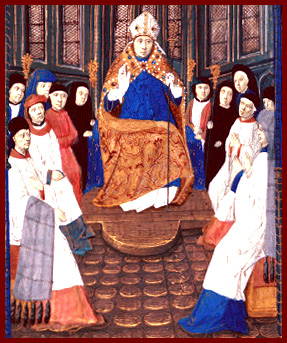
Episcopal Council, Autun BM 129 f.91,1490 |
|
|
Episcopal Council, Autun BM 129 f.91,1490 |
1.WHAT
BEHAVIORS
CONSTITUTE
ABUSE?
Sexual abuse is[:]
unwanted sexual activity, with perpetrators
using force,
making threats or
taking advantage of victims not able to give consent.
Most victims and perpetrators know each other.
Immediate reactions to sexual abuse include
shock,
fear or
disbelief.
Long-term symptoms include
anxiety,
fear or
post-traumatic stress disorder.
While efforts to treat sex offenders remain unpromising, psychological interventions for survivors — especially group therapy — appears effective.
FOR
anyone who has made a public promise or vow of lifetime celibacy there can
be no such thing as a “consensual sexual relationship” with anyone for any
reason. Any form of physical intimacy with another person or encouragement
of such behavior (“grooming”) by a person who has made a public promise of
celibacy will be – and should be – regarded as “abuse”.
SPIRITUAL
ABUSE
Archbishop José Rodríguez Carballo
Secretary of the Vatican Congregation for Institutes of Consecrated Life
and Societies of Apostolic Life
spiritual harassment,
manipulation of consciences,
brainwashing.
2.
HOW
SHOULD
WE
COMMUNICATE
OUR
CATHOLIC
TEACHING
CONCERNING
MARRIAGE
and
HUMAN
SEXUALITY?
 |
 |
 |
 |
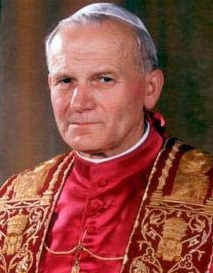
| Pope John Paul II |
Dietrich Von Hildebrand |
Alice Von Hildebrand |
Christopher West |
3.
HOW
CAN
WE
STILL
CLAIM
MORAL
AUTHORITY?
How can we teach with any kind of moral authority in the face of the sex-abuse crisis in our Church?
We will study in detail the John Jay study which details as much as is known about abusive Catholic clergy.
Try to bear in mind importance of avoiding extremes:
|
VIRTUE
of PENITENCE
(Aristotle's mean / midpoint) |
|
[vice of] EXCESS |
[virtuous] MEAN |
[vice
of] |
[A] With regard to Penitence (Penance/poenitentia)
|
Scrupulousness |
Penitence |
Indifference |
|
|
▲ |
|
|
REPENT
of the RIGHT
THINGS |
|
[vice of] DESPAIR |
[truthful] METANOIA |
[vice
of] |
[A] With regard to Penitence (Penance/poenitentia)
|
a) Fundamentally Flawed |
Transforming |
b) Nothing is Wrong |
|
|
▲ |
|
TWO DANGEROUS and FALSE EXTREMES
|
a) Assumption that the “system is totally corrupt”. Presume drastic changes have to be made: vast numbers of bishops and priests punished and dumped; and/or married priests, ordained women as “solution”. |
b) Denial and adoption of a Martyr Posture: It's All Lies!! It's the Work of the Enemies of the Church! “At worst there are no more abusers among Catholic Clergy and Religious than in the general population!” (How is this consoling?) |
ANSWER: By knowing and acknowledging honestly what has happened and what we, as a Church, are doing in response.
|
|
|
PRESIDENT
of U.S. BISHOPS
CONFERENCE
ISSUES
STATEMENT
on COURSE
of ACTION
RESPONDING
to MORAL
FAILURES
on PART
OF CHURCH
LEADERS
From the USCCB Website, August 1, 2018
http://usccb.org/news/2018/18-136.cfm
WASHINGTON—Cardinal Daniel N. DiNardo, Archbishop of Galveston-Houston and President of the United States Conference of Catholic Bishops, has issued the following statement noting the steps the U.S. Bishops Conference will take in addressing the failures of the Church in protecting the people of God.
Cardinal DiNardo’s full statement follows:
THE accusations against Archbishop Theodore McCarrick reveal a grievous moral failure within the Church. They cause bishops anger, sadness, and shame; I know they do in me. They compel bishops to ask, as I do, what more could have been done to protect the People of God. Both the abuses themselves, and the fact that they have remained undisclosed for decades, have caused great harm to people’s lives and represent grave moral failures of judgement on the part of Church leaders.
These failures raise serious questions.[:]
[1] Why weren’t these allegations of sins against chastity and human dignity disclosed when they were first brought to Church officials?
[2] Why wasn’t this egregious situation addressed decades sooner and with justice?
[3] What must our seminaries do to protect the freedom to discern a priestly vocation without being subject to misuse of power?
Archbishop McCarrick will rightly face the judgement of a canonical process at the Holy See regarding the allegations against him, but there are also steps we should be taking as the Church here in the United States. Having prayed about this, I have convened the USCCB Executive Committee. This meeting was the first of many among bishops that will extend into our Administrative Committee meeting in September and our General Assembly in November. All of these discussions will be oriented toward discerning the right course of action for the USCCB. This work will take some time but allow me to stress these four points immediately.
[1] First, I encourage my brother bishops as they stand ready in our local dioceses to respond with compassion and justice to anyone who has been sexually abused or harassed by anyone in the Church. We should do whatever we can to accompany them.
[2] Second, I would urge anyone who has experienced sexual assault or harassment by anyone in the Church to come forward. Where the incident may rise to the level of a crime, please also contact local law enforcement.
[3] Third, the United States Conference of Catholic Bishops will pursue the many questions surrounding Archbishop McCarrick’s conduct to the full extent of its authority; and where that authority finds its limits, the Conference will advocate with those who do have the authority. One way or the other, we are determined to find the truth in this matter.
[4] Finally, we bishops recognize that a spiritual conversion is needed as we seek to restore the right relationship among us and with the Lord. Our Church is suffering from a crisis of sexual morality. The way forward must involve learning from past sins.
Let us pray for God’s wisdom and strength for renewal as we follow St. Paul’s instruction: ‘Do not conform yourselves to this age but be transformed by the renewal of your mind, that you may discern what is the will of God, what is good and pleasing and perfect’ (Romans 12:2).”
PRESIDENT
OF U.S.
BISHOPS’
CONFERENCE
and COMMITTEE CHAIRMAN
RESPONSE
to PENNSYLVANIA
GRAND
JURY
REPORT
From the USCCB Website, August 14, 2018
http://www.usccb.org/news/2018/18-138.cfm
WASHINGTON—Cardinal Daniel N. DiNardo of Galveston-Houston, President of the United States Conference of Catholic Bishops, is hosting a series of meetings this week responding to the broader issue of safe environments within the Church. An update will be offered upon their conclusion.
In response to today’s Pennsylvania grand jury report, Cardinal DiNardo joins Bishop Timothy L. Doherty of Lafayette in Indiana, in issuing the following joint statement. Bishop Doherty is Chairman for the USCCB’s Committee for the Protection of Children and Young People.
The full statement follows:
THE report of the Pennsylvania grand jury again illustrates the pain of those who have been victims of the crime of sexual abuse by individual members of our clergy, and by those who shielded abusers and so facilitated an evil that continued for years or even decades. We are grateful for the courage of the people who aided the investigation by sharing their personal stories of abuse. As a body of bishops, we are shamed by and sorry for the sins and omissions by Catholic priests and Catholic bishops.
We are profoundly saddened each time we hear about the harm caused as a result of abuse, at the hands of a clergyman of any rank. The USCCB Committee for the Protection of Children and Young People and the office of the Secretariat of Child and Youth Protection will continue to offer avenues to healing for those who have been abused. We are committed to work in determined ways so that such abuse cannot happen.
The Pennsylvania grand jury report covers a span of more than 70 years. In 2002 the U.S. Catholic bishops adopted the Charter for the Protection of Children and Young People, which commits us to respond promptly and compassionately to victims, report the abuse of minors, remove offenders and take ongoing action to prevent abuse. This Charter was revised and updated in 2011 and again in 2018. We pledge[:]
[1] to maintain transparency and
[2] to provide for the permanent removal of offenders from ministry and
[3] to maintain safe environments for everyone.
[4]
All
policies and procedures regarding training
and
background check requirements are made publicly available by dioceses and
eparchies.
We pray that all survivors of sexual abuse find healing, comfort and strength in God’s loving presence as the Church pledges to continue to restore trust through accompaniment, communion, accountability and justice.”
PRESIDENT
OF U.S.
BISHOPS’
CONFERENCE
ANNOUNCES
EFFORT
THAT
WILL
INVOLVE
LAITY,
EXPERTS,
and THE
VATICAN
as U.S. BISHOPS
RESOLVE
to ADDRESS
“MORAL
CATASTROPHE”
From
the USCCB Website, August 16, 2018
http://www.usccb.org/news/2018/18-139.cfm
WASHINGTON— Cardinal Daniel
N. DiNardo of Galveston-Houston, President of the United States Conference of
Catholic Bishops (USCCB), has issued the following statement after a series of
meetings with members of the USCCB’s Executive Committee and other bishops. The
following statement includes three goals and three principles, along with
initial steps of a plan that will involve laity, experts, and the Vatican. A
more developed plan will be presented to the full body of bishops at their
general assembly meeting in Baltimore in November.
Cardinal DiNardo’s full statement follows:
“BROTHERS and Sisters in Christ,
Two weeks ago, I shared with you my sadness, anger, and shame over the recent revelations concerning Archbishop Theodore McCarrick. Those sentiments continue and are deepened in light of the Pennsylvania Grand Jury report. We are faced with a spiritual crisis that requires not only spiritual conversion, but practical changes to avoid repeating the sins and failures of the past that are so evident in the recent report. Earlier this week, the USCCB Executive Committee met again and established an outline of these necessary changes.
The Executive Committee has established three goals:
(1) an investigation into the questions surrounding Archbishop McCarrick;
(2) an opening of new and confidential channels for reporting complaints against bishops; and
(3) advocacy for more effective resolution of future complaints. These goals will be pursued according to three criteria:
[1] proper independence,
[2] sufficient authority, and
[3] substantial leadership by
laity.We have already begun to develop a concrete plan for accomplishing these goals, relying upon consultation with experts, laity, and clergy, as well as the Vatican. We will present this plan to the full body of bishops in our November meeting. In addition, I will travel to Rome to present these goals and criteria to the Holy See, and to urge further concrete steps based on them.
The overarching goal in all of this is stronger protections against predators in the Church and anyone who would conceal them, protections that will hold bishops to the highest standards of transparency and accountability.
Allow me to briefly elaborate on the goals and criteria that we have identified.
[1] The first goal is a full investigation of questions surrounding Archbishop McCarrick. These answers are necessary to prevent a recurrence, and so help to protect
minors,
seminarians,
and others who are vulnerable
in the future. We will therefore
[1.a.] invite the Vatican to conduct an Apostolic Visitation to address these questions,
[1.b] in concert with a group of predominantly lay people
[1.c.] identified for their expertise by members of the National Review Board and empowered to act.
[2] The second goal is to make reporting of abuse and misconduct by bishops easier. Our 2002 “Statement of Episcopal Commitment” does not make clear what avenue victims themselves should follow in reporting abuse or other sexual misconduct by bishops. We need to update this document. We also need to develop and widely promote reliable third-party reporting mechanisms. Such tools already exist in many dioceses and in the public sector and we are already examining specific options.
[3] The third goal is to advocate for better procedures to resolve complaints against bishops. For example, the canonical procedures that follow a complaint will be studied with an eye toward concrete proposals
to make them more prompt, fair, and transparent
and to specify what constraints may be imposed on bishops at each stage of that process.
We will pursue these goals according to three criteria.
[1] The first criterion is genuine independence. Any mechanism for addressing any complaint against a bishop must be free from bias or undue influence by a bishop. Our structures must preclude bishops from
deterring complaints against them,
from hampering their investigation,
or from skewing their resolution.
[2] The second criterion relates to authority in the Church. Because only the Pope has authority to discipline or remove bishops, we will assure that our measures will both
respect that authority and
protect the vulnerable from the abuse of ecclesial power.
[3] Our third criterion is substantial involvement of the laity. Lay people bring expertise in areas of investigation, law enforcement, psychology, and other relevant disciplines, and their presence reinforces our commitment to the first criterion of independence.
Finally, I apologize and humbly ask your forgiveness for what my brother bishops and I have done and failed to do. Whatever the details may turn out to be regarding Archbishop McCarrick or the many abuses in Pennsylvania (or anywhere else), we already know that one root cause is the failure of episcopal leadership. The result was that scores of beloved children of God were abandoned to face an abuse of power alone. This is a moral catastrophe. It is also part of this catastrophe that so many faithful priests who are pursuing holiness and serving with integrity are tainted by this failure.
We firmly resolve, with the help of God’s grace, never to repeat it. I have no illusions about the degree to which trust in the bishops has been damaged by these past sins and failures. It will take work to rebuild that trust. What I have outlined here is only the beginning; other steps will follow. I will keep you informed of our progress toward these goals.
Let me ask you to hold us to all of these resolutions. Let me also ask you to pray for us, that we will take this time to reflect, repent, and recommit ourselves to holiness of life and to conform our lives even more to Christ, the Good Shepherd.”
VATICAN
PRESS
OFFICE
RESPONDS
to PENNSYLVANIA
GRAND
JURY
ABUSE
REPORT
August 16, 2018
https://www.vaticannews.va/en/pope/news/2018-08/vatican-responds-to-pennsylvania-grand-jury-abuse-report.html
https://www.vaticannews.va/it/papa/news/2018-08/papa-francesco-abusi-pennsylvania-greg-burke.html
|
Abuse in Pennsylvania: |
Abusi in Pennsylvania. |
|
The Pope: Wipe out th[is] horror: victims are the priority. |
Il Papa: sradicare l’orrore, le vittime sono la priorità |
|
On Thursday evening, the Director of the Holy See Press Office, Greg Burke, issued the following statement regarding the report of the Pennsylvania Grand Jury issued earlier this week in the United States over the sexual abuse of minors. |
Dichiarazione del direttore della Sala Stampa vaticana sul rapporto sugli abusi compiuti da esponenti della Chiesa in Pennsylvania: vergogna e dolore, il Papa è dalla parte delle vittime |
| “REGARDING the report made public in Pennsylvania this week, there are two words that can express the feelings faced with these horrible crimes: shame and sorrow. | “Davanti al rapporto reso pubblico in Pennsylvania questa settimana, due sono le parole che possono esprimere quanto si prova di fronte a questi orribili crimini: vergogna e dolore”. |
|
The Holy See treats with great seriousness the work of the Investigating Grand Jury of Pennsylvania and the lengthy Interim Report it has produced. The Holy See condemns unequivocally the sexual abuse of minors. |
E’ quanto ha affermato il direttore della Sala Stampa vaticana Greg Burke.“La Santa Sede - sottolinea Burke - considera con grande serietà il lavoro compiuto dall’Investigating Grand Jury della Pennsylvania e il lungo Interim Report da esso prodotto. La Santa Sede condanna inequivocabilmente l’abuso sessuale su minori. |
|
UNIQUE
ADMISSION
of SERIOUSNESS
of ABUSE |
|
|
The abuses described in the report are criminal and morally reprehensible. Those acts were betrayals of trust that robbed survivors of their dignity and their faith. |
Gli abusi descritti nel rapporto sono penalmente e moralmente riprovevoli. Questi atti hanno tradito la fiducia e hanno rubato alle vittime la loro dignità e la loro fede”. |
| The Church must learn hard lessons from its past, | “La Chiesa deve imparare dure lezioni dal passato |
| and there should be accountability for both | e che dovrebbe esserci un’assunzione di responsabilità da parte sia |
|
abusers and those who permitted abuse to occur. |
di coloro che hanno abusato, sia di quelli che hanno permesso che ciò accadesse. |
|
Most of the discussion in the report concerns abuses before the early 2000s. By finding almost no cases after 2002, the Grand Jury’s conclusions are consistent with previous studies showing that Catholic Church reforms in the United States drastically reduced the incidence of clergy child abuse. |
La gran parte di ciò che si legge nel rapporto riguarda gli abusi anteriori ai primi anni del 2000. Non avendo quasi trovato casi dopo il 2002, le conclusioni del Grand Jury sono coerenti con precedenti studi che hanno mostrato come le riforme fatte dalla Chiesa Cattolica negli Stati Uniti hanno ridotto drasticamente l’incidenza degli abusi commessi dal clero. |
| The Holy See encourages continued reform and vigilance at all levels of the Catholic Church, to help ensure the protection [from harm] of | La Santa Sede incoraggia costanti riforme e vigilanza a tutti i livelli della Chiesa Cattolica per garantire la protezione |
|
minors and vulnerable adults |
dei minori e degli adulti vulnerabili. |
| The Holy See also wants to underscore the need to comply with the civil law, including mandatory child abuse reporting requirements. | Sottolinea, inoltre, la necessità di obbedire alla legislazione civile, compreso l’obbligo di denunciare i casi di abusi su minori”. |
|
The Holy Father understands well how much these crimes can shake the faith and the spirit of believers and reiterates the call to |
“Il Santo Padre - conclude Greg Burke - comprende bene quanto questi crimini possano scuotere la fede e lo spirito dei credenti e ribadisce l’appello a |
| make every effort to create a safe environment for | fare ogni sforzo per creare un ambiente sicuro per |
|
minors and vulnerable adults |
i minor e gli adulti vulnerabili |
| in the Church and in all of society. | nella Chiesa e in tutta la società. |
|
Victims should know that the Pope is on their side. Those who have suffered are his priority, and the Church wants to listen to them to root out this tragic horror that destroys the lives of the innocent.” |
Le vittime devono sapere che il Papa è dalla loro parte. Coloro che hanno sofferto sono la sua priorità, e la Chiesa vuole ascoltarli per sradicare questo tragico orrore che distrugge la vita degli innocenti”. |
LETTER OF HIS HOLINESS POPE FRANCIS
TO THE PEOPLE OF GOD
August 20, 2018
“IF one member suffers, all suffer together with it” (1 Cor 12:26). These words of Saint Paul forcefully echo in my heart as I acknowledge once more the suffering endured by many minors due to sexual abuse, the abuse of power and the abuse of conscience perpetrated by a significant number of clerics and consecrated persons. Crimes that inflict deep wounds of pain and powerlessness, primarily among the victims, but also in their family members and in the larger community of believers and nonbelievers alike. Looking back to the past, no effort to beg pardon and to seek to repair the harm done will ever be sufficient. Looking ahead to the future,
no effort must be spared
to create a culture able to prevent such situations from happening, but also
to prevent the possibility of their being covered up and perpetuated.
The pain of the victims and their families is also our pain, and so it is urgent that we once more reaffirm our commitment to ensure the protection of minors and of vulnerable adults.
1. If one member suffers…
IN recent days, a report was made public which detailed the experiences of at least a thousand survivors, victims of sexual abuse, the abuse of power and of conscience at the hands of priests over a period of approximately seventy years. Even though it can be said that most of these cases belong to the past, nonetheless as time goes on we have come to know the pain of many of the victims. We have realized that these wounds never disappear and that they require us forcefully to condemn these atrocities and join forces in uprooting this culture of death; these wounds never go away. The heart-wrenching pain of these victims, which cries out to heaven, was long ignored, kept quiet or silenced. But their outcry was more powerful than all the measures meant to silence it, or sought even to resolve it by decisions that increased its gravity by falling into complicity. The Lord heard that cry and once again showed us on which side he stands. Mary’s song is not mistaken and continues quietly to echo throughout history. For the Lord remembers the promise he made to our fathers: “he has scattered the proud in their conceit; he has cast down the mighty from their thrones and lifted up the lowly; he has filled the hungry with good things, and the rich he has sent away empty” (Lk 1:51-53). We feel shame when we realize that our style of life has denied, and continues to deny, the words we recite.
With shame and repentance, we acknowledge as an ecclesial community that
we were not where we should have been, that we did not act in a timely manner, realizing the magnitude and the gravity of the damage done to so many lives. We showed no care for the little ones; we abandoned them.
I make my own the words of the then Cardinal Ratzinger when, during the Way of the Cross composed for Good Friday 2005, he identified with the cry of pain of so many victims and exclaimed: “How much filth there is in the Church, and even among those who, in the priesthood, ought to belong entirely to [Christ]! How much pride, how much self-complacency! Christ’s betrayal by his disciples, their unworthy reception of his body and blood, is certainly the greatest suffering endured by the Redeemer; it pierces his heart. We can only call to him from the depths of our hearts: Kyrie eleison – Lord, save us! (cf. Mt 8:25)” (Ninth Station).
2. … all suffer together with it
THE extent and the gravity of all that has happened requires coming to grips with this reality in a comprehensive and communal way. While it is important and necessary on every journey of conversion to acknowledge the truth of what has happened, in itself this is not enough. Today we are challenged as the People of God to take on the pain of our brothers and sisters wounded in their flesh and in their spirit. If, in the past, the response was one of omission,
today we want solidarity, in the deepest and most challenging sense, to become our way of forging present and future history. And this in an environment where conflicts, tensions and above all the victims of every type of abuse can encounter an outstretched hand to protect them and rescue them from their pain (cf. Evangelii Gaudium, 228). Such solidarity demands that we in turn condemn whatever endangers the integrity of any person. A solidarity that summons us to fight all forms of corruption, especially spiritual corruption. The latter is “a comfortable and self-satisfied form of blindness. Everything then appears acceptable: deception, slander, egotism and other subtle forms of self-centeredness, for ‘even Satan disguises himself as an angel of light’ (2 Cor 11:14)” (Gaudete et Exsultate, 165). Saint Paul’s exhortation to suffer with those who suffer is the best antidote against all our attempts to repeat the words of Cain: “Am I my brother's keeper?” (Gen 4:9).
I am conscious of the effort and work being carried out in various parts of the world to come up with the necessary means to ensure the safety and protection of the integrity
of children
and of vulnerable adults,
as well as implementing
zero tolerance
and ways of making all those who
perpetrate or
cover up these crimes accountable.
We have delayed in applying these actions and sanctions that are so necessary, yet I am confident that they will help to guarantee a greater culture of care in the present and future.
Together with those efforts, every one of the baptized should feel involved in the ecclesial and social change that we so greatly need. This change calls for a personal and communal conversion that makes us see things as the Lord does. For as Saint John Paul II liked to say: “If we have truly started out anew from the contemplation of Christ, we must learn to see him especially in the faces of those with whom he wished to be identified” (Novo Millennio Ineunte, 49). To see things as the Lord does, to be where the Lord wants us to be, to experience a conversion of heart in his presence. To do so, prayer and penance will help. I invite the entire holy faithful People of God to a penitential exercise of prayer and fasting, following the Lord’s command.[1] This can awaken our conscience and arouse our solidarity and commitment to a culture of care that says “never again” to every form of abuse.
It is impossible to think of a conversion of our activity as a Church that does not include the active participation of all the members of God’s People. Indeed, whenever we have tried to replace, or silence, or ignore, or reduce the People of God to small elites, we end up creating communities, projects, theological approaches, spiritualities and structures without roots, without memory, without faces, without bodies and ultimately, without lives.[2]
This is clearly seen in a peculiar way of understanding the Church’s authority, one common in many communities where sexual abuse and the abuse of power and conscience have occurred. Such is the case with clericalism,
an approach that “not only nullifies the character of Christians,
but also tends to diminish and undervalue the baptismal grace that the Holy Spirit has placed in the heart of our people”.[3]
Clericalism, whether fostered by priests themselves or by lay persons, leads to an excision in the ecclesial body that supports and helps to perpetuate many of the evils that we are condemning today.
To say “no” to abuse is to say an emphatic “no” to all forms of clericalism.
It is always helpful to remember that “in salvation history, the Lord saved one people. We are never completely ourselves unless we belong to a people. That is why no one is saved alone, as an isolated individual. Rather, God draws us to himself, taking into account the complex fabric of interpersonal relationships present in the human community. God wanted to enter into the life and history of a people” (Gaudete et Exsultate, 6). Consequently, the only way that we have to respond to this evil that has darkened so many lives is to experience it as a task regarding all of us as the People of God. This awareness of being part of a people and a shared history will enable us to acknowledge our past sins and mistakes with a penitential openness that can allow us to be renewed from within. Without the active participation of all the Church’s members, everything being done to uproot the culture of abuse in our communities will not be successful in generating the necessary dynamics for sound and realistic change. The penitential dimension of fasting and prayer will help us as God’s People to come before the Lord and our wounded brothers and sisters as sinners imploring forgiveness and the grace of shame and conversion. In this way, we will come up with actions that can generate resources attuned to the Gospel. For “whenever we make the effort to return to the source and to recover the original freshness of the Gospel, new avenues arise, new paths of creativity open up, with different forms of expression, more eloquent signs and words with new meaning for today’s world” (Evangelii Gaudium, 11).
It is essential that we, as a Church, be able to acknowledge and condemn, with sorrow and shame, the atrocities perpetrated by
consecrated persons,
clerics,
and all those entrusted with the mission of watching over and caring for those most vulnerable.
Let us beg forgiveness for our own sins and the sins of others. An awareness of sin helps us to acknowledge the errors, the crimes and the wounds caused in the past and allows us, in the present, to be more open and committed along a journey of renewed conversion.
Likewise, penance and prayer will help us to open our eyes and our hearts to other people’s sufferings and to overcome the thirst for power and possessions that are so often the root of those evils. May fasting and prayer open our ears to the hushed pain felt by children, young people and the disabled. A fasting that can make us hunger and thirst for justice and impel us to walk in the truth, supporting all the judicial measures that may be necessary. A fasting that shakes us up and leads us to be committed in truth and charity with all men and women of good will, and with society in general, to combatting all forms of the abuse of power, sexual abuse and the abuse of conscience.
In this way, we can show clearly our calling to be “a sign and instrument of communion with God and of the unity of the entire human race” (Lumen Gentium, 1).
“If one member suffers, all suffer together with it”, said Saint Paul. By an attitude of prayer and penance, we will become attuned as individuals and as a community to this exhortation, so that we may grow in the gift of compassion, in justice, prevention and reparation. Mary chose to stand at the foot of her Son’s cross. She did so unhesitatingly, standing firmly by Jesus’ side. In this way, she reveals the way she lived her entire life. When we experience the desolation caused by these ecclesial wounds, we will do well, with Mary, “to insist more upon prayer”, seeking to grow all the more in love and fidelity to the Church (SAINT IGNATIUS OF LOYOLA, Spiritual Exercises, 319). She, the first of the disciples, teaches all of us as disciples how we are to halt before the sufferings of the innocent, without excuses or cowardice. To look to Mary is to discover the model of a true follower of Christ.
May the Holy Spirit grant us the grace of conversion and the interior anointing needed to
express before these crimes of abuse our compunction and
our resolve courageously to combat them.
Vatican City, 20 August 2018
FRANCIS
[1] “But this kind [of demon] does not come out except by prayer and fasting” (Mt 17:21).
[2] Cf. Letter to the Pilgrim People of God in Chile (31 May 2018).
[3] Letter to Cardinal Marc Ouellet, President of the Pontifical Commission for Latin America (19 March 2016).
ARCHBISHOP
GOMEZ
on
THE
CURRENT
CRISIS
August 15, 2018
Los Angeles Archbishop José H. Gomez urged the faithful to turn to the Blessed Virgin Mary to “purify the Church” amid recent revelations of sexual abuse in the Catholic Church during a Mass celebrating the Solemnity of the Assumption of Blessed Virgin Mary.
“THIS is a time now for prayer and repentance and a time for examining our conscience, especially for those of us who are bishops and priests,” he said in his homily Wednesday afternoon at the Cathedral of Our Lady of the Angels.
“As we gather to pray today, we are aware that this is a sad and confusing time for the Church in this country. In recent days and weeks, we have heard new revelations about sin and abuse in the Church.
“All of us need to pray for every person who has been hurt by the Church, and we need to work to help them heal,” said the archbishop.
“Let us ask the intercession of our Blessed Mother Mary, the Mother of the Church,” he continued. “May she help us to have the courage we need to purify the Church and renew our love for holiness and our devotion to Jesus Christ and his Gospel.”
ARCHBISHOP
GOMEZ
to the
PEOPLE
of the
ARCHDIOCESE
August 17, 2018
MY dear brothers and sisters in Christ,
It is a sad and confusing time for all of us, with the recent revelations about sin and abuse in the Church in this country.
I am praying for you and your families and for our young people; and for our bishops, priests, deacons, seminarians and religious. I am praying most intensely for the victim-survivors of these crimes, and am trying to offer what small penance I can for everyone who has suffered abuse by pastors of the Church.
In one sense, the Church's pastors are no different than any Christian. We are all called to holiness and to grow in our relationship with Jesus and to glorify God by our lives. But the priest above all is consecrated to serve "in the person of Christ."
That is why the evil at the heart of these scandals is so terrible. A sacred trust has been broken by men whom Jesus entrusted to be his representatives on earth. These priests have betrayed Christ and done violence to his children. The cruelty they have done casts a shadow on the priesthood and the vast majority of priests who are good and faithful servants of the Gospel.
I understand the anger and frustration that people have against the Church and her leaders right now. For me, I am feeling a deep sadness. I am horrified that such crimes could be committed against innocent children of God. We need to hold people accountable and we need to atone for these sins as a Church.
I am a member of the executive committee of the U.S. Bishops and we have issued two statements that I think are a good start for responding to the present crisis. These proposals should go a long way towards increasing transparency and addressing the culture of clericalism that contributed to these abuses and failures in leadership.
Here in the Archdiocese of Los Angeles, we have an effective system for reporting and investigating suspected abuse by priests and for removing offenders from ministry. Our oversight board includes both clergy and lay experts from several disciplines and also includes persons who have experienced abuse. We have also established an extensive program of education and background checks to make sure our children are safe and cared for in our parishes, schools and ministries.
We remain committed to keeping our children safe and providing a compassionate environment in which victim-survivors can come forward to seek justice and find healing. If you or any one you know is a victim of clerical abuse here in Los Angeles, I urge you to call our hotline (800) 355-2545 or visit our website: http://www.la-archdiocese.org/oreprotectine.
Programs, protocols, and best practices are essential. But they are not enough.
The deeper crisis today in the Church is spiritual and moral. I believe we need to respond to this crisis with a new call to penance and purification and a new dedication to leading holy lives.
Renewal of the Church is first of all a duty for bishops and priests.
We need humble penance for what has been done by our brothers.
We need to live with simplicity and integrity
and be models of conversion and holiness.
Now more than ever, I pray that every bishop and every priest will rediscover his love for Jesus Christ and burn with new desire to bring holiness and salvation to our people.
I am confident that the Holy Spirit will raise up saints from every walk of life to renew and rebuild his Church in this time of need. What has happened is the responsibility of bishops and priests. That is clear. But the way forward will mean lay people and clergy working together.
To renew and rebuild the Church takes time. Conversion, which means changing our lives in the image of Jesus Christ, is an ongoing process and it lasts our whole lives.
We need to begin again right now, starting with those of us who are bishops and priests. All of us in the Church need to commit ourselves again to the basic practices of our Christian life:
personal prayer, the Eucharist and Confession, the works of mercy, growing in the virtues.
My brothers and sisters, do not lose hope in the Church. Jesus told us that God permits evil to grow up alongside the good, both in the world and in the Church. This truth does not make us excuse or accept what has happened. Just the opposite. In this moment, our Lord is counting on us. So please do not give in to discouragement. Put your hope in God's promise: where sin increases, his grace will increase even more.
Please keep praying for me and know that I am praying for you. Let us pray in a special way in these days for every person who has been hurt by members of the Church and let us keep working to help them heal.
Let us ask our Blessed Mother Mary to intercede for us and give us the courage and wisdom to purify the Church and renew our love for Jesus Christ and his Gospel.
May God grant you peace,
Most Reverend Jose H. Gomez
Archbishop of Los Angeles
BISHOP
VANN
on
THE
CURRENT
CRISIS
August 15, 2018
MY dear sisters and brothers in the Lord,
It is with the utmost sorrow that I write to you in this time of great scandal and tribulation in our Church. Many people in leadership, particularly among the episcopacy, have failed the people of God. There can be no ambiguity about this.
As your spiritual father and the shepherd of this Diocese, I have prayed, struggled, and reflected a great deal these past few weeks in order to determine how I can best serve you.
The release of the Pennsylvania’s Grand Jury report yesterday confirms that we who lead the Church have a great responsibility to take action against a predation that can only be called satanic.
After I was appointed to our Diocese I began to meet regularly with our Oversight Review Board, whose charge it is to advise me on matters concerning accusations of sexual abuse of a minor perpetrated by a cleric. Based on the painful experiences in my home Diocese of Springfield, Illinois during Bishop Daniel Ryan’s tenure which resulted in a devastating loss of trust, I wanted to take every opportunity to create a truly safe environment, including reviewing allegations involving adults, not just minors. I regularly seek the members of this group to offer their observations and advice on a variety of matters that came to the attention of the Diocese. Their counsel has been invaluable and a great help in dealing with matters of misconduct, regarding both clerical and lay matters. Their membership includes ten lay experts, one priest, and one religious sister. Five diocesan employees also staff the Board, three of whom are clergy and two lay. I am grateful to all of the members for their sage advice and willingness to serve. In addition, I urge anyone who has been a victim of clerical abuse in our Diocese to report the abuse by calling our toll free number: (800) 364-3064.
In light of the revelations surrounding Archbishop McCarrick, not to mention the situations in Honduras and Chile, I now know that the review process needs to be expanded to include claims from seminarians and priests so that they, too, are protected from sexual abuse by those in power. Additionally, I will review our process with my leadership team to confirm that it is as robust as possible.
Canon law provides for judicial processes to try all clergy, including bishops, who are charged with canonical crimes. Make no mistake, sexual crimes against the faithful are serious violations of Church law. As a canon lawyer, I know also that these canonical processes were strengthened by Pope Francis as recently as 2016. It goes without saying that there are civil and criminal recourses, as well.
I appreciate the righteous anger expressed toward those who have failed to follow due process and the demands of accountability. I also want to assure you that I am committed to join with my brother bishops to address these failings. A competent independent national investigative body comprised of qualified professionals needs to be created so that if we have systemic issues within our Church, they can be thoroughly reviewed and addressed. I pledge my support to this and will allocate diocesan funds for this purpose.
Unequivocally, I join my brother bishops who have already spoken out to identify the root cause as a crisis in holiness. Shepherds who sincerely seek the Lord do not abuse the power that Our Lord has entrusted to them. Those who abuse this holy office fail Christ and his Church.
In this difficult time, please join with me to pray that our Church be purified, that all the people who have been wounded by abuse on the part of the clergy experience healing, and that I, along with the rest of Church leadership, act with wisdom, courage, and humility to fulfill the office that the Lord has entrusted to us.
On this, the feast of the Assumption of Our Lady, I pray that she be consoled to see the truth of these injustices coming to light so that her children may be part of a Church that is worthy of them and of her Son.
With gratitude for your support and appreciation for your continued prayers,
Bishop Kevin W. Vann
Most Rev. Kevin W. Vann, JCD, DD
Bishop of Orange
(714) 282-3132
|
|
|
|
https://www.thetablet.co.uk/news/9652/pope-francis-dismisses-vigano-allegations
POPE FRANCIS:
With regard to the most vulnerable, I cannot fail to acknowledge the grave scandal caused in Ireland by the abuse of young people by members of the Church charged with responsibility for their protection and education…The failure of ecclesiastical authorities—bishops, religious superiors, priests and others—adequately to address these repellent crimes has rightly given rise to outrage, and remains a source of pain and shame for the Catholic community. I myself share those sentiments… My predecessor, Pope Benedict, spared no words in recognizing both the gravity of the situation and in demanding that “truly evangelical, just and effective” measures be taken in response to this betrayal of trust (cf. Pastoral Letter to the Catholics of Ireland, 10). His frank and decisive intervention continues to serve as an incentive for the efforts of the Church’s leadership both to remedy past mistakes and to adopt stringent norms meant to ensure that they do not happen again. More recently, in a Letter to the People of God, I reaffirmed the commitment, and the need for an even greater commitment, to eliminating this scourge in the Church, at any cost, moral and of suffering (emphasis added). (Dublin Castle, Ireland Aug 25),
“I read the statement this morning, and I must tell you sincerely that, I must say this, to you and all those who are interested: Read the statement carefully and make your own judgment,” he answered. “I will not say a single word on this.”
Speaking aboard the papal plane from Dublin to Rome Aug. 26, Francis said he believes in the “journalistic capacity to draw your own conclusions,” calling it an “act of faith.”
“When some time passes and you have drawn your conclusions, I may
speak. But I would like your professional maturity to do the work for you. It
will be good for you,” he told members of the press.
Asked in a follow up question when he first learned about the abuse allegations
against McCarrick, Pope Francis responded, “This is part of the statement. Study
it and then I will say.”
|
TESTIMONY
by |
TESTIMONIANZA di |
|
In this tragic moment for the Church in various parts of the world — the United States, Chile, Honduras, Australia, etc. — bishops have a very grave responsibility. I am thinking in particular of the United States of America, where I was sent as Apostolic Nuncio by Pope Benedict XVI on October 19, 2011, the memorial feast of the First North American Martyrs. The Bishops of the United States are called, and I with them, to follow the example of these first martyrs who brought the Gospel to the lands of America, to be credible witnesses of the immeasurable love of Christ, the Way, the Truth and the Life. |
In questo tragico momento che sta attraversando la Chiesa in varie parti del mondo, Stati Uniti, Cile, Honduras, Australia, ecc., gravissima è la responsabilità dei Vescovi. Penso in particolare agli Stati Uniti d’America dove fui inviato come Nunzio Apostolico da papa Benedetto XVI il 19 ottobre 2011, memoria dei Primi Martiri dell’America Settentrionale. I Vescovi degli Stati Uniti sono chiamati, ed io con loro, a seguire l’esempio di questi primi martiri che portarono il Vangelo nelle terre d’America, ad essere testimoni credibili dell’incommensurabile amore di Cristo, Via, Verità e Vita. |
|
Bishops and priests, abusing their authority, have committed horrendous crimes to the detriment of their faithful, minors, innocent victims, and young men eager to offer their lives to the Church, or by their silence have not prevented that such crimes continue to be perpetrated. |
Vescovi e sacerdoti, abusando della loro autorità, hanno commesso crimini orrendi a danno di loro fedeli, minori, vittime innocenti, giovani uomini desiderosi di offrire la loro vita alla Chiesa, o non hanno impedito con il loro silenzio che tali crimini continuassero ad essere perpetrati. |
|
To restore the beauty of holiness to the face of the Bride of Christ, which is terribly disfigured by so many abominable crimes, and if we truly want to free the Church from the fetid swamp into which she has fallen, we must have the courage to tear down the culture of secrecy and publicly confess the truths we have kept hidden. We must tear down the conspiracy of silence with which bishops and priests have protected themselves at the expense of their faithful, a conspiracy of silence that in the eyes of the world risks making the Church look like a sect, a conspiracy of silence not so dissimilar from the one that prevails in the mafia. “Whatever you have said in the dark ... shall be proclaimed from the housetops” (Lk. 12:3). |
Per restituire la bellezza della santità al volto della Sposa di Cristo, tremendamente sfigurato da tanti abominevoli delitti, se vogliamo veramente liberare la Chiesa dalla fetida palude in cui è caduta, dobbiamo avere il coraggio di abbattere la cultura del segreto e confessare pubblicamente le verità che abbiamo tenuto nascoste. Occorre abbattere l’omertà con cui vescovi e sacerdoti hanno protetto loro stessi a danno dei loro fedeli, omertà che agli occhi del mondo rischia di far apparire la Chiesa come una setta, omertà non tanto dissimile da quella che vige nella mafia. “Tutto quello che avete detto nelle tenebre... sarà proclamato sui tetti” (Lc. 12:3). |
|
I had always believed and hoped that the hierarchy of the Church could find within itself the spiritual resources and strength to tell the whole truth, to amend and to renew itself. That is why, even though I had repeatedly been asked to do so, I always avoided making statements to the media, even when it would have been my right to do so, in order to defend myself against the calumnies published about me, even by high-ranking prelates of the Roman Curia. But now that the corruption has reached the very top of the Church’s hierarchy, my conscience dictates that I reveal those truths regarding the heart-breaking case of the Archbishop Emeritus of Washington, D.C., Theodore McCarrick, which I came to know in the course of the duties entrusted to me by St. John Paul II, as Delegate for Pontifical Representations, from 1998 to 2009, and by Pope Benedict XVI, as Apostolic Nuncio to the United States of America, from October 19, 2011 until end of May 2016. |
Avevo sempre creduto e sperato che la gerarchia della Chiesa potesse trovare in se stessa le risorse spirituali e la forza per far emergere la verità, per emendarsi e rinnovarsi. Per questo motivo, anche se più volte sollecitato, avevo sempre evitato di fare dichiarazioni ai mezzi di comunicazione, anche quando sarebbe stato mio diritto farlo per difendermi dalle calunnie pubblicate sul mio conto anche da alti prelati della Curia romana. Ma ora che la corruzione è arrivata ai vertici della gerarchica della Chiesa la mia coscienza mi impone di rivelare quelle verità che con relazione al caso tristissimo dell’arcivescovo emerito di Washington Theodore McCarrick sono venuto a conoscenza nel corso degli incarichi che mi furono affidati, da S. Giovanni Paolo II come Delegato per le Rappresentanze Pontificie dal 1998 al 2009 e da Papa Benedetto XVI come Nunzio Apostolico negli Stati Uniti d’America dal 19 ottobre 2011 a fine maggio 2016. |
|
As Delegate for Pontifical Representations in the Secretariat of State, my responsibilities were not limited to the Apostolic Nunciatures, but also included the staff of the Roman Curia (hires, promotions, informational processes on candidates to the episcopate, etc.) and the examination of delicate cases, including those regarding cardinals and bishops, that were entrusted to the Delegate by the Cardinal Secretary of State or by the Substitute of the Secretariat of State. |
Come Delegato per le Rappresentanze Pontificie nella Segreteria di Stato, le mie competenze non erano limitate alle Nunziature Apostoliche, ma comprendevano anche il personale della Curia romana (assunzioni, promozioni, processi informativi su candidati all’episcopato, ecc.) e l’esame di casi delicati, anche di cardinali e vescovi, che venivano affidati al Delegato dal Cardinale Segretario di Stato o dal Sostituto della Segreteria di Stato. |
|
To dispel suspicions insinuated in several recent articles, I will immediately say that the Apostolic Nuncios in the United States, Gabriel Montalvo and Pietro Sambi, both prematurely deceased, did not fail to inform the Holy See immediately, as soon as they learned of Archbishop McCarrick’s gravely immoral behavior with seminarians and priests. Indeed, according to what Nuncio Pietro Sambi wrote, Father Boniface Ramsey, O.P.’s letter, dated November 22, 2000, was written at the request of the late Nuncio Montalvo. In the letter, Father Ramsey, who had been a professor at the diocesan seminary in Newark from the end of the ‘80s until 1996, affirms that there was a recurring rumor in the seminary that the Archbishop “shared his bed with seminarians,” inviting five at a time to spend the weekend with him at his beach house. And he added that he knew a certain number of seminarians, some of whom were later ordained priests for the Archdiocese of Newark, who had been invited to this beach house and had shared a bed with the Archbishop. |
Per dissipare sospetti insinuati in alcuni articoli recenti, dirò subito che i Nunzi Apostolici negli Stati Uniti, Gabriel Montalvo e Pietro Sambi, ambedue deceduti prematuramente, non mancarono di informare immediatamente la Santa Sede non appena ebbero notizia dei comportamenti gravemente immorali con seminaristi e sacerdoti dell’arcivescovo McCarrick. Anzi, la lettera del P. Boniface Ramsey, O.P. del 22 novembre 2000, secondo quanto scrisse il Nunzio Pietro Sambi, fu da lui scritta a richiesta del compianto Nunzio Montalvo. In essa P. Ramsey, che era stato professore nel Seminario diocesano di Newark dalla fine degli anni ‘80 fino al 1996, afferma che era voce ricorrente in seminario che l’arcivescovo “shared his bed with seminarians”, invitandone cinque alla volta a passare il fine settimana con lui nella sua casa al mare. Ed aggiungeva di conoscere un certo numero di seminaristi, di cui alcuni furono poi ordinati sacerdoti per l’arcidiocesi di Newark, che erano stati invitati a detta casa al mare ed avevano condiviso il letto con l’arcivescovo. |
|
The office that I held at the time was not informed of any measure taken by the Holy See after those charges were brought by Nuncio Montalvo at the end of 2000, when Cardinal Angelo Sodano was Secretary of State. |
L’ufficio che allora ricoprivo non fu portato a conoscenza di alcun provvedimento preso dalla Santa Sede dopo quella denuncia del Nunzio Montalvo alla fine del 2000, quando Segretario di Stato era il Card. Angelo Sodano. |
|
Likewise, Nuncio Sambi transmitted to the Cardinal Secretary of State, Tarcisio Bertone, an Indictment Memorandum against McCarrick by the priest Gregory Littleton of the diocese of Charlotte, who was reduced to the lay state for a violation of minors, together with two documents from the same Littleton, in which he recounted his tragic story of sexual abuse by the then-Archbishop of Newark and several other priests and seminarians. The Nuncio added that Littleton had already forwarded his Memorandum to about twenty people, including civil and ecclesiastical judicial authorities, police and lawyers, in June 2006, and that it was therefore very likely that the news would soon be made public. He therefore called for a prompt intervention by the Holy See. |
Parimenti, il Nunzio Sambi trasmise al Cardinale Segretario di Stato Tarcisio Bertone una Memoria di accusa contro McCarrick da parte del sacerdote Gregory Littleton della diocesi di Charlotte, ridotto allo stato laicale per violazione di minori, assieme a due documenti dello stesso Littleton, in cui raccontava la sua triste storia di abusi sessuali da parte dell’allora arcivescovo di Newark e di diversi altri preti e seminaristi. Il Nunzio aggiungeva che il Littleton aveva già inoltrato questa sua Memoria a circa una ventina di persone, fra autorità giudiziarie civili ed ecclesiastiche, di polizia ed avvocati, fin dal giugno 2006, e che era quindi molto probabile che la notizia venisse presto resa pubblica. Egli sollecitava pertanto un pronto intervento della Santa Sede. |
|
In writing up a memo[1] on these documents that were entrusted to me, as Delegate for Pontifical Representations, on December 6, 2006, I wrote to my superiors, Cardinal Tarcisio Bertone and the Substitute Leonardo Sandri, that the facts attributed to McCarrick by Littleton were of such gravity and vileness as to provoke bewilderment, a sense of disgust, deep sorrow and bitterness in the reader, and that they constituted the crimes of seducing, requesting depraved acts of seminarians and priests, repeatedly and simultaneously with several people, derision of a young seminarian who tried to resist the Archbishop’s seductions in the presence of two other priests, absolution of the accomplices in these depraved acts, sacrilegious celebration of the Eucharist with the same priests after committing such acts. |
Nel redigere l’Appunto su questi documenti che come Delegato per le RR.PP. mi furono affidati il 6 dicembre 2006, scrissi per i miei superiori, il Card. Tarcisio Bertone e il Sostituto Leonardo Sandri, che i fatti attribuiti a McCarrick dal Littleton erano di tale gravità e nefandezza da provocare nel lettore sconcerto, senso di disgusto, profonda pena e amarezza e che essi configuravano i crimini di adescamento, sollecitazione ad atti turpi di seminaristi e sacerdoti, ripetuti e simultaneamente con più persone, dileggio di un giovane seminarista che cercava di resistere alle seduzioni dell’arcivescovo alla presenza di altri due sacerdoti, assoluzione del complice in atti turpi, celebrazione sacrilega dell’Eucaristia con i medesimi sacerdoti dopo aver commesso tali atti. |
|
In my memo, which I delivered on that same December 6, 2006 to my direct superior, the Substitute Leonardo Sandri, I proposed the following considerations and course of action to my superiors: |
In quel mio Appunto che consegnai quello stesso 6 dicembre 2006 al mio diretto superiore, il Sostituto Leonardo Sandri, proponevo ai miei superiori le seguenti considerazioni e linea d’azione: |
|
· Given that it seemed a new scandal of particular gravity, as it regarded a cardinal, was going to be added to the many scandals for the Church in the United States, |
· Premesso che a tanti scandali nella Chiesa negli Stati Uniti, sembrava che se ne stesse per aggiungere uno di particolare gravità che riguardava un cardinale; |
|
· and that, since this matter had to do with a cardinal, and according to can. 1405 § 1, No. 2˚, “ipsius Romani Pontificis dumtaxat ius est iudicandi”; |
· e che in via di diritto, trattandosi di un cardinale, in base al can. 1405 § 1, n. 2˚, “ipsius Romani Pontificis dumtaxat ius est iudicandi”; |
|
· I proposed that an exemplary measure be taken against the Cardinal that could have a medicinal function, to prevent future abuses against innocent victims and alleviate the very serious scandal for the faithful, who despite everything continued to love and believe in the Church. |
· proponevo che venisse preso nei confronti del cardinale un provvedimento esemplare che potesse avere una funzione medicinale, per prevenire futuri abusi nei confronti di vittime innocenti e lenire il gravissimo scandalo per i fedeli, che nonostante tutto continuavano ad amare e credere nella Chiesa. |
|
I added that it would be salutary if, for once, ecclesiastical authority would intervene before the civil authorities and, if possible, before the scandal had broken out in the press. This could have restored some dignity to a Church so sorely tried and humiliated by so many abominable acts on the part of some pastors. If this were done, the civil authority would no longer have to judge a cardinal, but a pastor with whom the Church had already taken appropriate measures to prevent the cardinal from abusing his authority and continuing to destroy innocent victims. |
Aggiungevo che sarebbe stato salutare che per una volta l’Autorità ecclesiastica avesse ad intervenire prima di quella civile e se possibile prima che lo scandalo fosse scoppiato sulla stampa. Ciò avrebbe potuto restituire un po’ di dignità ad una Chiesa così provata ed umiliata per tanti abominevoli comportamenti da parte di alcuni pastori. In tal caso, l’Autorità civile non si sarebbe trovata più a dover giudicare un cardinale, ma un pastore verso cui la Chiesa aveva già preso opportuni provvedimenti, per impedire che il cardinale abusando della sua autorità continuasse a distruggere vittime innocenti. |
|
My memo of December 6, 2006 was kept by my superiors, and was never returned to me with any actual decision by the superiors on this matter. |
Quel mio Appunto del 6 dicembre 2006 fu trattenuto dai miei superiori e mai mi fu restituito con un’eventuale decisione superiore al riguardo. |
|
|
|
|
Subsequently, around April 21-23, 2008, the Statement for Pope Benedict XVI about the pattern of sexual abuse crisis in the United States, by Richard Sipe, was published on the internet, at richardsipe.com. On April 24, it was passed on by the Prefect of the Congregation for the Doctrine of the Faith, Cardinal William Levada, to the Cardinal Secretary of State Tarcisio Bertone. It was delivered to me one month later, on May 24, 2008. |
Successivamente, intorno al 21-23 aprile 2008, fu pubblicato in internet nel sito richardsipe.com lo Statement for Pope Benedict XVI about the pattern of sexual abuse crisis in the United States, di Richard Sipe. Esso fu trasmesso il 24 aprile dal Prefetto della Congregazione per la Dottrina della Fede Card. William Levada, al Cardinale Segretario di Stato Tarcisio Bertone, e fu a me consegnato un mese dopo, il successivo 24 maggio 2008. |
|
The following day, I delivered a new memo to the new Substitute, Fernando Filoni, which included my previous one of December 6, 2006. In it, I summarized Richard Sipe’s document, which ended with this respectful and heartfelt appeal to Pope Benedict XVI: “I approach Your Holiness with due reverence, but with the same intensity that motivated Peter Damian to lay out before your predecessor, Pope Leo IX, a description of the condition of the clergy during his time. The problems he spoke of are similar and as great now in the United States as they were then in Rome. If Your Holiness requests, I will personally submit to you documentation of that about which I have spoken.” |
Il giorno seguente consegnavo al nuovo Sostituto Fernando Filoni il mio Appunto, comprensivo del mio precedente del 6 dicembre 2006. In esso facevo una sintesi del documento di Richard Sipe, che terminava con questo rispettoso ed accorato appello a Papa Benedetto XVI: “I approach Your Holiness with due reverence, but with the same intensity that motivated Peter Damian to lay out before your predecessor, Pope Leo IX, a description of the condition of the clergy during his time. The problems he spoke of are similar and as great now in the United States as they were then in Rome. If Your Holiness requests I will submit to you personally documentation of that about which I have spoken”. |
|
I ended my memo by repeating to my superiors that I thought it was necessary to intervene as soon as possible by removing the cardinal’s hat from Cardinal McCarrick and that he should be subjected to the sanctions established by the Code of Canon Law, which also provide for reduction to the lay state. |
Terminavo questo mio Appunto ripetendo ai miei superiori che ritenevo si dovesse intervenire quanto prima togliendo il cappello cardinalizio al Card. McCarrick e che gli fossero inflitte le sanzioni stabilite dal codice di diritto canonico, le quali prevedono anche la riduzione allo stato laicale. |
|
This second memo of mine was also never returned to the Personnel Office, and I was greatly dismayed at my superiors for the inconceivable absence of any measure against the Cardinal, and for the continuing lack of any communication with me since my first memo in December 2006. |
Anche questo secondo mio Appunto non fu mai restituito all’Ufficio del Personale e grande era il mio sconcerto nei confronti dei superiori per l’inconcepibile assenza di ogni provvedimento nei confronti del cardinale e per il perdurare della mancanza di ogni comunicazione nei miei riguardi fin da quel mio primo Appunto del dicembre 2006. |
|
But finally I learned with certainty, through Cardinal Giovanni Battista Re, then-Prefect of the Congregation for Bishops, that Richard Sipe’s courageous and meritorious Statement had had the desired result. Pope Benedict had imposed on Cardinal McCarrick sanctions similar to those now imposed on him by Pope Francis: the Cardinal was to leave the seminary where he was living, he was forbidden to celebrate [Mass] in public, to participate in public meetings, to give lectures, to travel, with the obligation of dedicating himself to a life of prayer and penance. |
Ma finalmente seppi con certezza, tramite il Card. Giovanni Battista Re, allora Prefetto della Congregazione per i Vescovi, che il coraggioso e meritevole Statement di Richard Sipe aveva avuto il risultato auspicato. Papa Benedetto aveva comminato al Card. McCarrick sanzioni simili a quelle ora inflittegli da Papa Francesco: il cardinale doveva lasciare il seminario in cui abitava, gli veniva proibito di celebrare in pubblico, di partecipare a pubbliche riunioni, di dare conferenze, di viaggiare, con obbligo di dedicarsi ad una vita di preghiera e di penitenza. |
|
I do not know when Pope Benedict took these measures against McCarrick, whether in 2009 or 2010, because in the meantime I had been transferred to the Governorate of Vatican City State, just as I do not know who was responsible for this incredible delay. I certainly do not believe it was Pope Benedict, who as Cardinal had repeatedly denounced the corruption present in the Church, and in the first months of his pontificate had already taken a firm stand against the admission into seminary of young men with deep homosexual tendencies. I believe it was due to the Pope’s first collaborator at the time, Cardinal Tarcisio Bertone, who notoriously favored promoting homosexuals into positions of responsibility, and was accustomed to managing the information he thought appropriate to convey to the Pope. |
Non mi è noto quando papa Benedetto abbia preso nei confronti di McCarrick questi provvedimenti, se nel 2009 o nel 2010, perché nel frattempo ero stato trasferito al Governatorato dello Stato della Città del Vaticano, così come non mi è dato sapere chi sia stato responsabile di questo incredibile ritardo. Non credo certo papa Benedetto, il quale da Cardinale aveva già più volte denunciato la corruzione presente nella Chiesa, e nei primi mesi del suo pontificato aveva preso ferma posizione contro l’ammissione in seminario di giovani con profonde tendenze omosessuali. Ritengo che ciò fosse dovuto all’allora primo collaboratore del papa, Card. Tarcisio Bertone, notoriamente favorevole a promuovere omosessuali in posti di responsabilità, solito a gestire le informazioni che riteneva opportuno far pervenire al papa. |
|
In any case, what is certain is that Pope Benedict imposed the above canonical sanctions on McCarrick and that they were communicated to him by the Apostolic Nuncio to the United States, Pietro Sambi. Monsignor Jean-François Lantheaume, then first Counsellor of the Nunciature in Washington and Chargé d’Affaires a.i. after the unexpected death of Nuncio Sambi in Baltimore, told me when I arrived in Washington — and he is ready to testify to it— about a stormy conversation, lasting over an hour, that Nuncio Sambi had with Cardinal McCarrick whom he had summoned to the Nunciature. Monsignor Lantheaume told me that “the Nuncio’s voice could be heard all the way out in the corridor.” |
In ogni caso, quello che è certo è che papa Benedetto inflisse a McCarrick le suddette sanzioni canoniche e che esse gli furono comunicate dal Nunzio Apostolico negli Stati Uniti Pietro Sambi. Mons. Jean-François Lantheaume, allora primo Consigliere della Nunziatura a Washington e Chargé d’Affaires a.i. dopo la morte inaspettata del Nunzio Sambi a Baltimora, mi riferì quando giunsi a Washington – ed egli è pronto a darne testimonianza – di un colloquio burrascoso, di oltre un’ora, del Nunzio Sambi con il Card. McCarrick convocato in Nunziatura: “la voce del Nunzio – mi disse Mons. Lantheaume – si sentiva fin nel corridoio.” |
|
Pope Benedict’s same dispositions were then also communicated to me by the new Prefect of the Congregation for Bishops, Cardinal Marc Ouellet, in November 2011, in a conversation before my departure for Washington, and were included among the instructions of the same Congregation to the new Nuncio. |
Le medesime disposizioni di papa Benedetto furono poi comunicate anche a me dal nuovo Prefetto della Congregazione per i Vescovi, Card. Marc Ouellet, nel novembre 2011 in un colloquio prima della mia partenza per Washington fra le istruzioni della medesima Congregazione al nuovo nunzio. |
|
In turn, I repeated them to Cardinal McCarrick at my first meeting with him at the Nunciature. The Cardinal, muttering in a barely comprehensible way, admitted that he had perhaps made the mistake of sleeping in the same bed with some seminarians at his beach house, but he said this as if it had no importance. |
A mia volta le ribadii al Card. McCarrick al mio primo incontro con lui in Nunziatura. Il cardinale, farfugliando in modo appena comprensibile, ammise di aver forse commesso l’errore di aver dormito nello stesso letto con qualche seminarista nella sua casa al mare, ma me lo disse come se ciò non avesse alcuna importanza. |
|
The faithful insistently wonder how it was possible for him to be appointed to Washington, and as Cardinal, and they have every right to know who knew, and who covered up his grave misdeeds. It is therefore my duty to reveal what I know about this, beginning with the Roman Curia. |
I fedeli si chiedono insistentemente come sia stata possibile la sua nomina a Washington e a cardinale ed hanno pieno diritto di sapere chi era a conoscenza, chi ha coperto i suoi gravi misfatti. È perciò mio dovere rendere noto quanto so al riguardo, incominciando dalla Curia Romana. |
|
Cardinal Angelo Sodano was Secretary of State until September 2006: all information was communicated to him. In November 2000, Nunzio Montalvo sent him his report, passing on to him the aforementioned letter from Father Boniface Ramsey in which he denounced the serious abuses committed by McCarrick. |
Il Card. Angelo Sodano è stato Segretario di Stato fino al settembre 2006: ogni informazione perveniva a lui. Nel novembre 2000 il Nunzio Montalvo inviò a lui il suo rapporto trasmettendogli la già citata lettera di P. Boniface Ramsey in cui denunciava i gravi abusi commessi da McCarrick. |
|
It is known that Sodano tried to cover up the Father Maciel scandal to the end. He even removed the Nuncio in Mexico City, Justo Mullor, who refused to be an accomplice in his scheme to cover Maciel, and in his place appointed Sandri, then-Nuncio to Venezuela, who was willing to collaborate in the cover-up. Sodano even went so far as to issue a statement to the Vatican press office in which a falsehood was affirmed, that is, that Pope Benedict had decided that the Maciel case should be considered closed. Benedict reacted, despite Sodano’s strenuous defense, and Maciel was found guilty and irrevocably condemned. |
È noto che Sodano cercò di coprire fino all’ultimo lo scandalo del P. Maciel, rimosse persino il Nunzio a Città del Messico Justo Mullor che si rifiutava di essere complice delle sue manovre di copertura di Maciel ed al suo posto nominò Sandri, allora Nunzio in Venezuela, ben disposto invece a collaborare. Sodano giunse anche a far fare un comunicato alla sala stampa vaticana in cui si affermava il falso, che cioè Papa Benedetto aveva deciso che il caso Maciel doveva ormai considerarsi chiuso. Benedetto reagì, nonostante la strenua difesa da parte di Sodano, e Maciel, fu giudicato colpevole e irrevocabilmente condannato. |
|
Was McCarrick’s appointment to Washington and as Cardinal the work of Sodano, when John Paul II was already very ill? We are not given to know. However, it is legitimate to think so, but I do not think he was the only one responsible for this. McCarrick frequently went to Rome and made friends everywhere, at all levels of the Curia. If Sodano had protected Maciel, as seems certain, there is no reason why he wouldn’t have done so for McCarrick, who according to many had the financial means to influence decisions. His nomination to Washington was opposed by then-Prefect of the Congregation for Bishops, Cardinal Giovanni Battista Re. At the Nunciature in Washington there is a note, written in his hand, in which Cardinal Re disassociates himself from the appointment and states that McCarrick was 14th on the list for Washington. |
Fu la nomina a Washington e a cardinale di McCarrick opera di Sodano, quando Giovanni Paolo II era già molto malato? Non ci è dato saperlo. È però lecito pensarlo, ma non credo che sia stato il solo responsabile. McCarrick andava con molta frequenza a Roma e si era fatto amici dappertutto, a tutti i livelli della Curia. Se Sodano aveva protetto Maciel, come appare sicuro - non si vede perché non lo avrebbe fatto per McCarrick, che a detta di molti aveva i mezzi anche finanziari per influenzare le decisioni. Alla sua nomina a Washington si era invece opposto l’allora Prefetto della Congregazione per i Vescovi, Card. Giovanni Battista Re. Alla Nunziatura di Washington c’è un biglietto, scritto di suo pugno, in cui il Card. Re si dissocia da detta nomina e afferma che McCarrick era il 14mo nella lista per la provvista di Washington. |
|
Nuncio Sambi’s report, with all the attachments, was sent to Cardinal Tarcisio Bertone, as Secretary of State. My two above-mentioned memos of December 6, 2006 and May 25, 2008, were also presumably handed over to him by the Substitute. As already mentioned, the Cardinal had no difficulty in insistently presenting for the episcopate candidates known to be active homosexuals — I cite only the well-known case of Vincenzo de Mauro, who was appointed Archbishop-Bishop of Vigevano and later removed because he was undermining his seminarians — and in filtering and manipulating the information he conveyed to Pope Benedict. |
Al Card. Tarcisio Bertone, come Segretario di Stato, fu indirizzato il rapporto del Nunzio Sambi, con tutti gli allegati, e a lui furono presumibilmente consegnati dal Sostituto i miei due sopra citati Appunti del 6 dicembre 2006 e del 25 maggio 2008. Come già accennato, il cardinale non aveva difficoltà a presentare insistentemente per l’episcopato candidati notoriamente omosessuali attivi – cito solo il noto caso di Vincenzo di Mauro, nominato Arcivescovo-Vescovo di Vigevano, poi rimosso perché insidiava i suoi seminaristi – e a filtrare e manipolare le informazioni che faceva pervenire a papa Benedetto. |
|
Cardinal Pietro Parolin, the current Secretary of State, was also complicit in covering up the misdeeds of McCarrick who had, after the election of Pope Francis, boasted openly of his travels and missions to various continents. In April 2014, the Washington Times had a front page report on McCarrick’s trip to the Central African Republic, and on behalf of the State Department no less. As Nuncio to Washington, I wrote to Cardinal Parolin asking him if the sanctions imposed on McCarrick by Pope Benedict were still valid. Ça va sans dire that my letter never received any reply! |
Il Card. Pietro Parolin, attuale Segretario di Stato, si è reso anch’egli complice di aver coperto i misfatti di McCarrick, il quale dopo l’elezione di papa Francesco si vantava apertamente dei suoi viaggi e missioni in vari continenti. Nell’aprile 2014 il Washington Times aveva riferito in prima pagina di un viaggio di McCarrick nella Repubblica Centroafricana, per giunta a nome del Dipartimento di Stato. Come Nunzio a Washington, scrissi perciò al Card. Parolin chiedendogli se erano ancora valide le sanzioni comminate a McCarrick da papa Benedetto. Ça va sans dire che la mia lettera non ebbe mai alcuna risposta! |
|
The same can be said for Cardinal William Levada, former Prefect of the Congregation for the Doctrine of the Faith, for Cardinals Marc Ouellet, Prefect of the Congregation for Bishops, Lorenzo Baldisseri, former Secretary of the same Congregation for Bishops, and Archbishop Ilson de Jesus Montanari, current Secretary of the same Congregation. They were all aware by reason of their office of the sanctions imposed by Pope Benedict on McCarrick. |
Lo stesso si dica per il Card. William Levada, già Prefetto della Congregazione per la Dottrina della Fede, e per i Cardinali Marc Ouellet, Prefetto della Congregazione per i Vescovi, e Lorenzo Baldisseri, già Segretario della medesima Congregazione per i Vescovi, e l’Arcivescovo Ilson de Jesus Montanari, attuale Segretario della medesima Congregazione. Essi in ragione del loro ufficio erano al corrente delle sanzioni imposte da papa Benedetto a McCarrick. |
|
Cardinals Leonardo Sandri, Fernando Filoni and Angelo Becciu, as Substitutes of the Secretariat of State, knew in every detail the situation regarding Cardinal McCarrick. |
I Cardinali Leonardo Sandri, Fernado Filoni e Angelo Becciu, come Sostituti della Segreteria di Stato, hanno saputo in tutti i particolari la situazione del Card. McCarrick. |
|
Nor could Cardinals Giovanni Lajolo and Dominique Mamberti have failed to know. As Secretaries for Relations with States, they participated several times a week in collegial meetings with the Secretary of State. |
Così pure non potevano non sapere i Cardinali Giovanni Lajolo e Dominique Mamberti, che come Segretari per i Rapporti con gli Stati, partecipavano più volte alla settimana a riunioni collegiali con il Segretario di Stato. |
|
As far as the Roman Curia is concerned, for the moment I will stop here, even if the names of other prelates in the Vatican are well known, even some very close to Pope Francis, such as Cardinal Francesco Coccopalmerio and Archbishop Vincenzo Paglia, who belong to the homosexual current in favor of subverting Catholic doctrine on homosexuality, a current already denounced in 1986 by Cardinal Joseph Ratzinger, then-Prefect of the Congregation for the Doctrine of the Faith, in the Letter to the Bishops of the Catholic Church on the Pastoral Care of Homosexual Persons. Cardinals Edwin Frederick O’Brien and Renato Raffaele Martino also belong to the same current, albeit with a different ideology. Others belonging to this current even reside at the Domus Sanctae Marthae. |
Per quanto riguarda la Curia Romana per ora mi fermo qui, anche se sono ben noti i nomi di altri prelati in Vaticano, anche molto vicini a papa Francesco, come il Card. Francesco Coccopalmerio e l’Arcivescovo Vincenzo Paglia, che appartengono alla corrente filo omossessuale favorevole a sovvertire la dottrina cattolica a riguardo dell’omosessualità, corrente già denunciata fin dal 1986 dal Card. Joseph Ratzinger, allora Prefetto della Congregazione per la Dottrina della Fede, nella Lettera ai vescovi della Chiesa cattolica sulla cura pastorale delle persone omosessuali. Alla medesima corrente, seppur con una ideologia diversa, appartengono anche i Cardinali Edwin Frederick O’Brien e Renato Raffaele Martino. Altri poi, appartenenti a detta corrente, risiedono persino alla Domus Sanctae Marthae. |
|
Now to the United States. Obviously, the first to have been informed of the measures taken by Pope Benedict was McCarrick’s successor in Washington See, Cardinal Donald Wuerl, whose situation is now completely compromised by the recent revelations regarding his behavior as Bishop of Pittsburgh. |
Vengo ora agli Stati Uniti. Ovviamente, il primo ad essere stato informato dei provvedimenti presi da papa Benedetto fu il successore di McCarrick alla sede di Washington, il Card. Donald Wuerl, la cui situazione è ora del tutto compromessa dalle recenti rivelazioni sul suo comportamento come vescovo di Pittsburgh. |
|
It is absolutely unthinkable that Nunzio Sambi, who was an extremely responsible person, loyal, direct and explicit in his way of being (a true son of Romagna) did not speak to him about it. In any case, I myself brought up the subject with Cardinal Wuerl on several occasions, and I certainly didn’t need to go into detail because it was immediately clear to me that he was fully aware of it. I also remember in particular the fact that I had to draw his attention to it, because I realized that in an archdiocesan publication, on the back cover in color, there was an announcement inviting young men who thought they had a vocation to the priesthood to a meeting with Cardinal McCarrick. I immediately phoned Cardinal Wuerl, who expressed his surprise to me, telling me that he knew nothing about that announcement and that he would cancel it. If, as he now continues to state, he knew nothing of the abuses committed by McCarrick and the measures taken by Pope Benedict, how can his answer be explained? |
È assolutamente impensabile che il Nunzio Sambi, persona altamente responsabile, leale, diretto ed esplicito nel suo modo di essere da vero romagnolo, non gliene abbia parlato. In ogni caso, io stesso venni in più occasioni sull’argomento con il Card. Wuerl, e non ci fu certo bisogno che entrassi in particolari perché mi fu subito evidente che ne era pienamente al corrente. Ricordo poi in particolare il fatto che dovetti richiamare la sua attenzione perché mi accorsi che in una pubblicazione dell’arcidiocesi, sulla copertina posteriore a colori, veniva annunciato un invito ai giovani che ritenevano di avere la vocazione al sacerdozio ad un incontro con il Card. McCarrick. Telefonai subito al Card. Wuerl, che mi manifestò la sua meraviglia, dicendomi che non sapeva nulla di quell’annuncio e che avrebbe provveduto ad annullare detto incontro. Se come ora continua ad affermare non sapeva nulla degli abusi commessi da McCarrick e dei provvedimenti presi da papa Benedetto come si spiega la sua risposta? |
|
His recent statements that he knew nothing about it, even though at first he cunningly referred to compensation for the two victims, are absolutely laughable. The Cardinal lies shamelessly and prevails upon his Chancellor, Monsignor Antonicelli, to lie as well. |
Le sue recenti dichiarazioni in cui afferma di non aver nulla saputo, anche se all’inizio furbescamente riferite ai risarcimenti alle due vittime, sono assolutamente risibili. Il cardinale mente spudoratamente e per di più induce a mentire anche il suo Cancelliere, Mons. Antonicelli. |
|
Cardinal Wuerl also clearly lied on another occasion. Following a morally unacceptable event authorized by the academic authorities of Georgetown University, I brought it to the attention of its President, Dr. John DeGioia, sending him two subsequent letters. Before forwarding them to the addressee, so as to handle things properly, I personally gave a copy of them to the Cardinal with an accompanying letter I had written. The Cardinal told me that he knew nothing about it. However, he failed to acknowledge receipt of my two letters, contrary to what he customarily did. I subsequently learned that the event at Georgetown had taken place for seven years. But the Cardinal knew nothing about it! |
Del resto già in altra occasione il Card. Wuerl aveva chiaramente mentito. A seguito di un evento moralmente inaccettabile autorizzato dalle autorità accademiche della Georgetown University, avevo richiamato l’attenzione del suo Presidente Dr. John DeGioia, indirizzandogli due successive lettere. Prima di inoltrarle al destinatario, per correttezza, ne consegnai personalmente copia al cardinale con una mia lettera di accompagnamento. Il cardinale mi disse che non ne era al corrente. Si guardò bene però di accusare ricevimento delle mie due lettere, contrariamente a quanto puntualmente era solito fare. Poi seppi che detto evento alla Georgetown aveva avuto luogo da sette anni. Ma il cardinale non ne sapeva nulla! |
|
Cardinal Wuerl, well aware of the continuous abuses committed by Cardinal McCarrick and the sanctions imposed on him by Pope Benedict, transgressing the Pope’s order, also allowed him to reside at a seminary in Washington D.C. In doing so, he put other seminarians at risk. |
Il Card. Wuerl inoltre, ben sapendo dei continui abusi commessi dal Card. McCarrick e delle sanzioni impostegli da papa Benedetto, trasgredendo l’ordine del papa, gli permise di risiedere in un seminario in Washington D.C. Mise così a rischio altri seminaristi. |
|
Bishop Paul Bootkoski, emeritus of Metuchen, and Archbishop John Myers, emeritus of Newark, covered up the abuses committed by McCarrick in their respective dioceses and compensated two of his victims. They cannot deny it and they must be interrogated in order to reveal every circumstance and all responsibility regarding this matter. |
Il Vescovo Paul Bootkoski, emerito di Metuchen, e l’Arcivescovo John Myers, emerito di Newark, coprirono gli abusi commessi da McCarrick nelle loro rispettive diocesi e risarcirono due delle sue vittime. Non possono negarlo e devono essere interrogati perché rivelino ogni circostanza e responsabilità al riguardo. |
|
Cardinal Kevin Farrell, who was recently interviewed by the media, also said that he didn’t have the slightest idea about the abuses committed by McCarrick. Given his tenure in Washington, Dallas and now Rome, I think no one can honestly believe him. I don’t know if he was ever asked if he knew about Maciel’s crimes. If he were to deny this, would anybody believe him given that he occupied positions of responsibility as a member of the Legionaries of Christ? |
Il Card. Kevin Farrell, intervistato recentemente dai media, ha anch’egli affermato di non avere avuto il minimo sentore degli abusi commessi da McCarrick. Tenuto conto del suo curriculum a Washington, a Dallas e ora a Roma, credo che nessuno possa onestamente credergli. Non so se gli sia mai stato chiesto se sapeva dei crimini di Maciel. Se dovesse negarlo, qualcuno forse gli crederebbe atteso che egli ha occupato compiti di responsabilità come membro dei Legionari di Cristo? |
|
Regarding Cardinal Sean O’Malley, I would simply say that his latest statements on the McCarrick case are disconcerting, and have totally obscured his transparency and credibility. |
Del Card. Sean O’Malley mi limito a dire che le sue ultime dichiarazioni sul caso McCarrick sono sconcertanti, anzi hanno oscurato totalmente la sua trasparenza e credibilità. |
|
* * * |
* * * |
|
My conscience requires me also to reveal facts that I have experienced personally, concerning Pope Francis, that have a dramatic significance, which as Bishop, sharing the collegial responsibility of all the bishops for the universal Church, do not allow me to remain silent, and that I state here, ready to reaffirm them under oath by calling on God as my witness. |
La mia coscienza mi impone poi di rivelare fatti che ho vissuto in prima persona, riguardanti papa Francesco, che hanno una valenza drammatica, che come vescovo, condividendo la responsabilità collegiale di tutti i vescovi verso la Chiesa universale, non mi permettono di tacere, e che qui affermo, disposto a confermarli sotto giuramento chiamando Dio come mio testimone. |
|
In the last months of his pontificate, Pope Benedict XVI had convened a meeting of all the apostolic nuncios in Rome, as Paul VI and St. John Paul II had done on several occasions. The date set for the audience with the Pope was Friday, June 21, 2013. Pope Francis kept this commitment made by his predecessor. Of course I also came to Rome from Washington. It was my first meeting with the new Pope elected only three months prior, after the resignation of Pope Benedict. |
Negli ultimi mesi del suo pontificato papa Benedetto XVI aveva convocato a Roma una riunione di tutti i Nunzi Apostolici, come avevano già fatto Paolo VI e S. Giovanni Paolo II in più occasioni. La data fissata per l’Udienza con il Papa era venerdì 21 giugno 2013. Papa Francesco mantenne questo impegno preso dal suo predecessore. Naturalmente anch’io venni a Roma da Washington. Si trattava del mio primo incontro con il nuovo papa eletto solo tre mesi prima dopo la rinuncia di papa Benedetto. |
|
On the morning of Thursday, June 20, 2013, I went to the Domus Sanctae Marthae, to join my colleagues who were staying there. As soon as I entered the hall I met Cardinal McCarrick, who wore the red-trimmed cassock. I greeted him respectfully as I had always done. He immediately said to me, in a tone somewhere between ambiguous and triumphant: “The Pope received me yesterday, tomorrow I am going to China.” |
La mattina di giovedì 20 giugno2013 mi recai alla Domus Sanctae Marthae, per unirmi ai miei colleghi che erano ivi alloggiatati. Appena entrato nella hall mi incontrai con il Card. McCarrick, che indossava la veste filettata. Lo salutai con rispetto come sempre avevo fatto. Egli mi disse immediatamente con un tono fra l’ambiguo e il trionfante: “Il Papa mi ha ricevuto ieri, domani vado in Cina”. |
|
At the time I knew nothing of his long friendship with Cardinal Bergoglio and of the important part he had played in his recent election, as McCarrick himself would later reveal in a lecture at Villanova University and in an interview with the National Catholic Reporter. Nor had I ever thought of the fact that he had participated in the preliminary meetings of the recent conclave, and of the role he had been able to have as a cardinal elector in the 2005 conclave. Therefore I did not immediately grasp the meaning of the encrypted message that McCarrick had communicated to me, but that would become clear to me in the days immediately following. |
Allora nulla sapevo della sua lunga amicizia con il Card. Bergoglio e della parte di rilievo che aveva giocato per la sua recente elezione, come lo stesso McCarrick avrebbe successivamente rivelato in una conferenza alla Villanova University ed in un’intervista al Catholic National Reporter, né avevo mai pensato al fatto che aveva partecipato agli incontri preliminari del recente conclave, e al ruolo che aveva potuto avere come elettore in quello del 2005. Non colsi perciò immediatamente il significato del messaggio criptato che McCarrick mi aveva comunicato, ma che mi sarebbe diventato evidente nei giorni immediatamente successivi. |
|
The next day the audience with Pope Francis took place. After his address, which was partly read and partly delivered off the cuff, the Pope wished to greet all the nuncios one by one. In single file, I remember that I was among the last. When it was my turn, I just had time to say to him, “I am the Nuncio to the United States.” He immediately assailed me with a tone of reproach, using these words: “The Bishops in the United States must not be ideologized! They must be shepherds!” Of course I was not in a position to ask for explanations about the meaning of his words and the aggressive way in which he had upbraided me. I had in my hand a book in Portuguese that Cardinal O’Malley had sent me for the Pope a few days earlier, telling me “so he could go over his Portuguese before going to Rio for World Youth Day.” I handed it to him immediately, and so freed myself from that extremely disconcerting and embarrassing situation. |
Il giorno dopo ebbe luogo l’Udienza con papa Francesco. Dopo il discorso, in parte letto e in parte pronunciato a braccio, il papa volle salutare uno ad uno tutti i Nunzi. In fila indiana, ricordo che io rimasi fra gli ultimi. Quando fu il mio turno, ebbi appena il tempo di dirgli “sono il Nunzio negli Stati Uniti”, che senza alcun preambolo mi investì con tono di rimprovero con queste parole: “I Vescovi negli Stati Uniti non devono essere ideologizzati! Devono essere dei pastori!” Naturalmente non ero in condizione di chiedere spiegazioni sul significato delle sue parole e per il modo aggressivo con cui mi aveva apostrofato. Avevo in mano un libro in portoghese che il Card. O’Malley mi aveva consegnato per il papa qualche giorno prima, dicendomi “così ripassa il portoghese prima di andare a Rio per la Giornata Mondiale della Gioventù”. Glielo consegnai subito liberandomi così da quella situazione estremamente sconcertante e imbarazzante. |
|
At the end of the audience the Pope announced: “Those of you who are still in Rome next Sunday are invited to concelebrate with me at the Domus Sanctae Marthae.” I naturally thought of staying on to clarify as soon as possible what the Pope intended to tell me. |
Al termine dell’Udienza il papa annunziò: “Chi di voi domenica prossima è ancora a Roma è invitato a concelebrare con me alla Domus Sanctae Marthae”. Io naturalmente pensai di restare per chiarire quanto prima cosa il papa aveva inteso dirmi. |
|
On Sunday June 23, before the concelebration with the Pope, I asked Monsignor Ricca, who as the person in charge of the house helped us put on the vestments, if he could ask the Pope if he could receive me sometime in the following week. How could I have returned to Washington without having clarified what the Pope wanted of me? At the end of Mass, while the Pope was greeting the few lay people present, Monsignor Fabian Pedacchio, his Argentine secretary, came to me and said: “The Pope told me to ask if you are free now!” Naturally, I replied that I was at the Pope’s disposal and that I thanked him for receiving me immediately. The Pope took me to the first floor in his apartment and said: “We have 40 minutes before the Angelus.” |
Domenica 23 giugno, prima della concelebrazione con il papa, chiesi a Mons. Ricca, che come responsabile della casa ci aiutava ad indossare i paramenti, se poteva chiedere al papa se nel corso della settimana seguente avrebbe potuto ricevermi. Come avrei potuto ritornare a Washington senza aver chiarito ciò che il papa voleva da me? Terminata la Messa, mentre il papa salutava i pochi laici presenti, Mons. Fabian Pedacchio, il suo segretario argentino, venne da me e mi disse: “Il papa mi ha detto di chiederle se lei è libero adesso!” Naturalmente gli risposi che ero a disposizione del papa e che lo ringraziavo per ricevermi subito. Il papa mi condusse al primo piano nel suo appartamento e mi disse: “Abbiamo 40 minuti prima dell’Angelus”. |
|
I began the conversation, asking the Pope what he intended to say to me with the words he had addressed to me when I greeted him the previous Friday. And the Pope, in a very different, friendly, almost affectionate tone, said to me: “Yes, the Bishops in the United States must not be ideologized, they must not be right-wing like the Archbishop of Philadelphia, (the Pope did not give me the name of the Archbishop) they must be shepherds; and they must not be left-wing — and he added, raising both arms — and when I say left-wing I mean homosexual.” Of course, the logic of the correlation between being left-wing and being homosexual escaped me, but I added nothing else. |
Iniziai io la conversazione, chiedendo al papa che cosa avesse inteso dirmi con le parole che mi aveva rivolto quando l’avevo salutato il venerdì precedente. Ed il papa, con un tono ben diverso, amichevole, quasi affettuoso, mi disse: “Sì, i Vescovi negli Stati Uniti non devono essere ideologizzati, non devono essere di destra come l’arcivescovo di Filadelfia, (il papa non mi fece il nome dell’arcivescovo) devono essere dei pastori; e non devono essere di sinistra – ed aggiunse, alzando tutte e due le braccia – e quando dico di sinistra intendo dire omosessuali”. Naturalmente mi sfuggì la logica della correlazione fra essere di sinistra e essere omosessuali, ma non aggiunsi altro. |
|
Immediately after, the Pope asked me in a deceitful way: “What is Cardinal McCarrick like?” I answered him with complete frankness and, if you want, with great naiveté: “Holy Father, I don’t know if you know Cardinal McCarrick, but if you ask the Congregation for Bishops there is a dossier this thick about him. He corrupted generations of seminarians and priests and Pope Benedict ordered him to withdraw to a life of prayer and penance.” The Pope did not make the slightest comment about those very grave words of mine and did not show any expression of surprise on his face, as if he had already known the matter for some time, and he immediately changed the subject. But then, what was the Pope’s purpose in asking me that question: “What is Cardinal McCarrick like?” He clearly wanted to find out if I was an ally of McCarrick or not. |
Subito dopo il papa mi chiese con tono accattivante: “Il card. McCarrick com’è?” Io gli risposi con tutta franchezza e se volete con tanta ingenuità: “Santo Padre, non so se lei conosce il card. McCarrick, ma se chiede alla Congregazione per i Vescovi c’è un dossier grande così su di lui. Ha corrotto generazioni di seminaristi e di sacerdoti e papa Benedetto gli ha imposto di ritirarsi ad una vita di preghiera e di penitenza”. Il papa non fece il minimo commento a quelle mie parole tanto gravi e non mostrò sul suo volto alcuna espressione di sorpresa, come se la cosa gli fosse già nota da tempo, e cambiò subito di argomento. Ma allora, con quale finalità il papa mi aveva posto quella domanda: “Il card. McCarrick com’è?”. Evidentemente voleva accertarsi se ero alleato di McCarrick o no. |
|
Back in Washington everything became very clear to me, thanks also to a new event that occurred only a few days after my meeting with Pope Francis. When the new Bishop Mark Seitz took possession of the Diocese of El Paso on July 9, 2013, I sent the first Counsellor, Monsignor Jean-François Lantheaume, while I went to Dallas that same day for an international meeting on Bioethics. When he got back, Monsignor Lantheaume told me that in El Paso he had met Cardinal McCarrick who, taking him aside, told him almost the same words that the Pope had said to me in Rome: “the Bishops in the United States must not be ideologized, they must not be right-wing, they must be shepherds....” I was astounded! It was therefore clear that the words of reproach that Pope Francis had addressed to me on June 21, 2013 had been put into his mouth the day before by Cardinal McCarrick. Also the Pope’s mention “not like the Archbishop of Philadelphia” could be traced to McCarrick, because there had been a strong disagreement between the two of them about the admission to Communion of pro-abortion politicians. In his communication to the bishops, McCarrick had manipulated a letter of then-Cardinal Ratzinger who prohibited giving them Communion. Indeed, I also knew how certain Cardinals such as Mahony, Levada and Wuerl, were closely linked to McCarrick; they had opposed the most recent appointments made by Pope Benedict, for important posts such as Philadelphia, Baltimore, Denver and San Francisco. |
Rientrato a Washington tutto mi divenne molto chiaro, grazie anche ad un nuovo fatto accaduto solo pochi giorni dopo il mio incontro con papa Francesco. Alla presa di possesso della diocesi di El Paso da parte del nuovo vescovo Mark Seitz il 9 luglio 2013 inviai il primo Consigliere, Mons. Jean-François Lantheaume, mentre io quel medesimo giorno andai a Dallas per un incontro internazionale di Bioetica. Di ritorno, Mons. Lantheaume mi riferì che a El Paso aveva incontrato il Card. McCarrick, il quale, presolo in disparte, gli aveva detto quasi le stesse parole che il papa aveva detto a me a Roma: “I Vescovi negli Stati Uniti non devono essere ideologizzati, non devono essere di destra, devono essere dei pastori...”. Rimasi esterrefatto! Era perciò chiaro che le parole di rimprovero che papa Francesco mi aveva rivolto quel 21 giugno 2013 gli erano state messe in bocca il giorno prima dal card. McCarrick. Anche la menzione da parte del papa “non come l’arcivescovo di Filadelfia” conduceva a McCarrick, perché fra i due c’era stato un forte diverbio a riguardo dell’ammissione alla comunione dei politici favorevoli all’aborto: McCarrick aveva manipolato nella sua comunicazione ai vescovi una lettera dell’allora Card. Ratzinger che proibiva di dare loro la comunione. Di fatto poi sapevo quanto certi cardinali come Mahony, Levada e Wuerl, fossero strettamente legati a McCarrick, avessero osteggiato le nomine più recenti fatte da papa Benedetto, per sedi importanti come Filadelfia, Baltimora, Denver e San Francisco. |
|
Not happy with the trap he had set for me on June 23, 2013, when he asked me about McCarrick, only a few months later, in the audience he granted me on October 10, 2013, Pope Francis set a second one for me, this time concerning a second of his protégés, Cardinal Donald Wuerl. He asked me: “What is Cardinal Wuerl like, is he good or bad?” I replied, “Holy Father, I will not tell you if he is good or bad, but I will tell you two facts.” They are the ones I have already mentioned above, which concern Wuerl’s pastoral carelessness regarding the aberrant deviations at Georgetown University and the invitation by the Archdiocese of Washington to young aspirants to the priesthood to a meeting with McCarrick! Once again the Pope did not show any reaction. |
Non contento della trappola che mi ha aveva teso in 23 giugno 2013 chiedendomi di McCarrick, solo qualche mese dopo, nell’udienza che mi concesse il 10 ottobre 2013, papa Francesco me ne pose una seconda, questa volta a riguardo di un suo secondo protetto, il Card. Donald Wuerl. Mi chiese: “Il Card. Wuerl com’è, buono o cattivo?” “Santo Padre – gli risposi – non le dirò se è buono o cattivo, ma le riferirò due fatti”. Sono quelli a cui ho già sopra accennato, che riguardano la noncuranza pastorale di Wuerl per le deviazioni aberranti alla George Town University e l’invito da parte dell’arcidiocesi di Washington a giovani aspiranti al sacerdozio ad un incontro con McCarrick! Anche questa seconda volta il papa non manifestò alcuna reazione. |
|
It was also clear that, from the time of Pope Francis’s election, McCarrick, now free from all constraints, had felt free to travel continuously, to give lectures and interviews. In a team effort with Cardinal Rodriguez Maradiaga, he had become the kingmaker for appointments in the Curia and the United States, and the most listened to advisor in the Vatican for relations with the Obama administration. This is how one explains that, as members of the Congregation for Bishops, the Pope replaced Cardinal Burke with Wuerl and immediately appointed Cupich right after he was made a cardinal. With these appointments the Nunciature in Washington was now out of the picture in the appointment of bishops. In addition, he appointed the Brazilian Ilson de Jesus Montanari — the great friend of his private Argentine secretary Fabian Pedacchio — as Secretary of the same Congregation for Bishops and Secretary of the College of Cardinals, promoting him in one single leap from a simple official of that department to Archbishop Secretary. Something unprecedented for such an important position! |
Era poi evidente che a partire dalla elezione di papa Francesco McCarrick, ormai sciolto da ogni costrizione, si era sentito libero di viaggiare continuamente, di dare conferenze e interviste. In un gioco di squadra con il Card. Rodriguez Maradiaga era diventato il kingmaker per le nomine in Curia e negli Stati Uniti ed il consigliere più ascoltato in Vaticano per i rapporti con l’amministrazione Obama. Così si spiega che come membri della Congregazione per i Vescovi il papa sostituì il Card. Burke con Wuerl e vi nominò immediatamente Cupich fatto subito cardinale. Con tali nomine la Nunziatura a Washington era ormai fuori gioco per la nomina dei vescovi. Per giunta, nominò il brasiliano Ilson de Jesus Montanari - il grande amico del suo segretario privato argentino Fabian Pedacchio - Segretario della medesima Congregazione per i Vescovi e Segretario del Collegio dei Cardinali, promuovendolo in un sol balzo da semplice officiale di quel dicastero ad Arcivescovo Segretario. Cosa mai vista per un incarico così importante! |
|
The appointments of Blase Cupich to Chicago and Joseph W. Tobin to Newark were orchestrated by McCarrick, Maradiaga and Wuerl, united by a wicked pact of abuses by the first, and at least of coverup of abuses by the other two. Their names were not among those presented by the Nunciature for Chicago and Newark. |
Le nomine di Blase Cupich a Chicago e di William Tobin a Newark sono state orchestrate da McCarrick, Maradiaga e Wuerl, uniti da un patto scellerato di abusi del primo e quantomeno di coperture di abusi da parte degli altri due. I loro nominativi non figuravano fra quelli presentati dalla Nunziatura per Chicago e per Newark. |
|
Regarding Cupich, one cannot fail to note his ostentatious arrogance, and the insolence with which he denies the evidence that is now obvious to all: that 80% of the abuses found were committed against young adults by homosexuals who were in a relationship of authority over their victims. |
Di Cupich non può certo sfuggire l’ostentata arroganza e sfrontatezza nel negare l’evidenza ormai palese a tutti: che cioè l’80% degli abusi riscontrati è stato nei confronti di giovani adulti da parte di omosessuali in rapporto di autorità verso le loro vittime. |
|
During the speech he gave when he took possession of the Chicago See, at which I was present as a representative of the Pope, Cupich quipped that one certainly should not expect the new Archbishop to walk on water. Perhaps it would be enough for him to be able to remain with his feet on the ground and not try to turn reality upside-down, blinded by his pro-gay ideology, as he stated in a recent interview with America Magazine. Extolling his particular expertise in the matter, having been President of the Committee on Protection of Children and Young People of the USCCB, he asserted that the main problem in the crisis of sexual abuse by clergy is not homosexuality, and that affirming this is only a way of diverting attention from the real problem which is clericalism. In support of this thesis, Cupich “oddly” made reference to the results of research carried out at the height of the sexual abuse of minors crisis in the early 2000s, while he “candidly” ignored that the results of that investigation were totally denied by the subsequent Independent Reports by the John Jay College of Criminal Justice in 2004 and 2011, which concluded that, in cases of sexual abuse, 81% of the victims were male. In fact, Father Hans Zollner, S.J., Vice-Rector of the Pontifical Gregorian University, President of the Centre for Child Protection, and Member of the Pontifical Commission for the Protection of Minors, recently told the newspaper La Stampa that “in most cases it is a question of homosexual abuse.” |
Nel discorso che fece alla presa di possesso della sede di Chicago, a cui ero presente come rappresentante del papa, Cupich disse, come battuta di spirito, che certo non ci si doveva aspettare dal nuovo arcivescovo che camminasse sulle acque. Sarebbe forse sufficiente che fosse capace di restare con i piedi per terra e che non cercasse di capovolgere la realtà, accecato dalla sua ideologia pro gay, come ha affermato in una recente intervista ad America. Ostentando la sua particolare competenza in materia essendo stato Presidente del Committee on Protection of Children and Young People della USCCB, ha asserito che il problema principale nella crisi degli abusi sessuali da parte del clero non è l’omosessualità e che affermarlo è solo un modo per distogliere l’attenzione dal vero problema che è il clericalismo. A sostegno di questa sua tesi, Cupich ha fatto “stranamente” riferimento ai risultati di una ricerca fatta nell’apice della crisi di abusi sessuali nei confronti di minori dell’inizio degli anni 2000, mentre ha ignorato “candidamente” che i risultati di quell’indagine furono totalmente smentiti dai successivi Rapporti indipendenti del John Jay College of Criminal Justice del 2004 e del 2011, in cui si concludeva che nei casi di abusi sessuali l’81% delle vittime erano maschi. Infatti, P. Hans Zollner, S.J., Vice-Rettore della Pontificia Università Gregoriana, presidente del Centre for Child Protection, Membro della Pontificia Commissione per la Protezione dei minori, ha recentemente dichiarato al giornale La Stampa, che “nella maggior parte dei casi si tratta di abusi omosessuali”. |
|
The appointment of McElroy in San Diego was also orchestrated from above, with an encrypted peremptory order to me as Nuncio, by Cardinal Parolin: “Reserve the See of San Diego for McElroy.” McElroy was also well aware of McCarrick’s abuses, as can be seen from a letter sent to him by Richard Sipe on July 28, 2016. |
Anche la nomina poi di McElroy a San Diego fu pilotata dall’alto, con un ordine perentorio cifrato, a me come Nunzio, dal Card. Parolin: “Riservi la sede di San Diego per McElroy”. Anche McEnroy ben sapeva degli abusi commessi da McCarrick, come risulta da una lettera indirizzatagli da Richard Sipe il 28 luglio 2016. |
|
These characters are closely associated with individuals belonging in particular to the deviated wing of the Society of Jesus, unfortunately today a majority, which had already been a cause of serious concern to Paul VI and subsequent pontiffs. We need only consider Father Robert Drinan, S.J., who was elected four times to the House of Representatives, and was a staunch supporter of abortion; or Father Vincent O’Keefe, S.J., one of the principal promoters of The Land O’Lakes Statement of 1967, which seriously compromised the Catholic identity of universities and colleges in the United States. It should be noted that McCarrick, then President of the Catholic University of Puerto Rico, also participated in that inauspicious undertaking which was so harmful to the formation of the consciences of American youth, closely associated as it was with the deviated wing of the Jesuits. |
A questi personaggi sono strettamente associati individui appartenenti in particolare all’ala deviata della Compagnia di Gesù, purtroppo oggi maggioritaria, che già era stata motivo di gravi preoccupazioni per Paolo VI e per i successivi pontefici. Basti solo pensare a P. Robert Drinan, S.J., eletto quattro volte alla Camera dei Rappresentanti, accanito sostenitore dell’aborto, o a P. Vincent O’Keefe, S.J., fra i principali promotori del documento The Land O’ Lakes Statement del 1967, che ha gravemente compromesso l’identità cattolica delle Università e dei Collegi negli Stati Uniti. Si noti che anche McCarrick, allora Presidente dell’Università cattolica del Portorico, partecipò a quell’infausta impresa così deleteria per la formazione delle coscienze della gioventù americana, strettamente associato com’era all’ala deviata dei Gesuiti. |
|
Father James Martin, S.J., acclaimed by the people mentioned above, in particular Cupich, Tobin, Farrell and McElroy, appointed Consultor of the Secretariat for Communications, well-known activist who promotes the LGBT agenda, chosen to corrupt the young people who will soon gather in Dublin for the World Meeting of Families, is nothing but a sad recent example of that deviated wing of the Society of Jesus. |
P. James Martin, S.J., osannato dai personaggi sopra menzionati, in particolare da Cupich, Tobin, Farrell e McEnroy, nominato Consultore del Dicastero per le Comunicazioni, noto attivista che promuove l’agenda Lgbt, prescelto per corrompere i giovani che si raduneranno prossimamente a Dublino per l’Incontro mondiale delle Famiglie, non è se non un triste recente esemplare di quell’ala deviata della Compagnia di Gesù. |
|
Pope Francis has repeatedly asked for total transparency in the Church and for bishops and faithful to act with parrhesia. The faithful throughout the world also demand this of him in an exemplary manner. He must honestly state when he first learned about the crimes committed by McCarrick, who abused his authority with seminarians and priests. |
Papa Francesco ha chiesto più volte totale trasparenza nella Chiesa e a vescovi e fedeli di agire con parresia. I fedeli di tutto il mondo la esigono anche da lui in modo esemplare. Dica da quando ha saputo dei crimini commessi da McCarrick abusando della sua autorità con seminaristi e sacerdoti. |
|
In any case, the Pope learned about it from me on June 23, 2013 and continued to cover for him. He did not take into account the sanctions that Pope Benedict had imposed on him and made him his trusted counselor along with Maradiaga. |
In ogni caso, il papa lo ha saputo da me il 23 giugno 2013 ed ha continuato a coprirlo, non ha tenuto conto delle sanzioni che gli aveva imposto papa Benedetto e ne ha fatto il suo fidato consigliere insieme con Maradiaga. |
|
The latter [Maradiaga] is so confident of the Pope’s protection that he can dismiss as “gossip” the heartfelt appeals of dozens of his seminarians, who found the courage to write to him after one of them tried to commit suicide over homosexual abuse in the seminary. |
Quest’ultimo si sente così sicuro della protezione del papa che può cestinare come “pettegolezzi” gli appelli accorati di decine di suoi seminaristi, che trovarono il coraggio di scrivergli dopo che uno di loro aveva cercato di suicidarsi per gli abusi omosessuali nel seminario. |
|
By now the faithful have well understood Maradiaga’s strategy: insult the victims to save himself, lie to the bitter end to cover up a chasm of abuses of power, of mismanagement in the administration of Church property, and of financial disasters even against close friends, as in the case of the Ambassador of Honduras Alejandro Valladares, former Dean of the Diplomatic Corps to the Holy See. |
Ormai i fedeli hanno ben capito la strategia di Maradiaga: insultare le vittime per salvare se stesso, mentire ad oltranza per coprire una voragine di abusi di potere, di cattiva gestione nell’amministrazione dei beni della Chiesa, di disastri finanziari anche nei confronti di intimi amici, come nel caso dell’ambasciatore dell’Honduras Alejandro Valladares, già Decano del Corpo Diplomatico presso la Santa Sede. |
|
In the case of the former Auxiliary Bishop Juan José Pineda, after the article published in the [Italian] weekly L’Espresso last February, Maradiaga stated in the newspaper Avvenire: “It was my auxiliary bishop Pineda who asked for the visitation, so as to ‘clear’ his name after being subjected to much slander.” Now, regarding Pineda the only thing that has been made public is that his resignation has simply been accepted, thus making any possible responsibility of his and Maradiaga vanish into nowhere. |
Nel caso del già vescovo ausiliare Juan José Pineda, dopo l’articolo apparso sul settimanale L’Espresso nel febbraio scorso, Maradiaga aveva dichiarato al giornale Avvenire: «È stato il mio vescovo ausiliare Pineda a chiedere la visita, in modo da “pulire” il suo nome a seguito di molte calunnie di cui è stato oggetto». Ora, di Pineda si è pubblicato unicamente che le sue dimissioni sono state semplicemente accettate, facendo così sparire nel nulla qualsiasi eventuale responsabilità sua e di Maradiaga. |
|
In the name of the transparency so hailed by the Pope, the report that the Visitator, Argentine bishop Alcides Casaretto, delivered more than a year ago only and directly to the Pope, must be made public. |
In nome della trasparenza dal papa tanto conclamata, si renda pubblico il rapporto che il Visitatore, il vescovo argentino Alcides Casaretto, ha consegnato più di un anno fa solo e direttamente al papa. |
|
Finally, the recent appointment as Substitute of Archbishop Edgar Peña Parra is also connected with Honduras, that is, with Maradiaga. From 2003 to 2007 Peña Parra worked as Counsellor at the Tegucigalpa Nunciature. As Delegate for Pontifical Representations I received worrisome information about him. |
Infine, anche la recente nomina a Sostituto dell’Arcivescovo Edgar Peña Parra ha una connessione con l’Honduras, cioè con Maradiaga. Peña Parra infatti dal 2003 al 2007 ha prestato servizio presso la Nunziatura di Tegucigalpa in qualità di Consigliere. Come Delegato per le RR.PP. mi erano pervenute informazioni preoccupanti a suo riguardo. |
|
In Honduras, a scandal as huge as the one in Chile is about to be repeated. The Pope defends his man, Cardinal Rodriguez Maradiaga, to the bitter end, as he had done in Chile with Bishop Juan de la Cruz Barros, whom he himself had appointed Bishop of Osorno against the advice of the Chilean Bishops. First he insulted the abuse victims. Then, only when he was forced by the media, and a revolt by the Chilean victims and faithful, did he recognize his error and apologize, while stating that he had been misinformed, causing a disastrous situation for the Church in Chile, but continuing to protect the two Chilean Cardinals Errazuriz and Ezzati. |
In Honduras si sta per ripetere uno scandalo immane come quello in Cile. Il papa difende ad oltranza il suo uomo, il Card. Rodriguez Maradiaga, come aveva fatto in Cile con il vescovo Juan de la Cruz Barros, che lui stesso aveva nominato vescovo di Osorno, contro il parere dei vescovi cileni. Prima ha insultato le vittime degli abusi, poi solo quando vi è stato costretto dal clamore dei media, dalla rivolta delle vittime e dei fedeli cileni ha riconosciuto il suo errore e si è scusato, pur affermando che era stato mal informato, provocando una situazione disastrosa nella Chiesa in Cile, ma continuando a proteggere i due cardinali cileni Errazuriz e Ezzati. |
|
Even in the tragic affair of McCarrick, Pope Francis’s behavior was no different. He knew from at least June 23, 2013 that McCarrick was a serial predator. Although he knew that he was a corrupt man, he covered for him to the bitter end; indeed, he made McCarrick’s advice his own, which was certainly not inspired by sound intentions and for love of the Church. It was only when he was forced by the report of the abuse of a minor, again on the basis of media attention, that he took action [regarding McCarrick] to save his image in the media. |
Anche nella triste vicenda di McCarrick, il comportamento di papa Francesco non è stato diverso. Sapeva perlomeno dal 23 giugno 2013 che McCarrick era un predatore seriale. Pur sapendo che era un corrotto, lo ha coperto ad oltranza, anzi ha fatto suoi i suoi consigli non certo ispirati da sane intenzioni e da amore per la Chiesa. Solo quando vi è stato costretto dalla denuncia di un abuso di un minore, sempre in funzione del plauso dei media, ha preso provvedimenti nei suoi confronti per salvare la sua immagine mediatica. |
|
Now in the United States a chorus of voices is rising especially from the lay faithful, and has recently been joined by several bishops and priests, asking that all those who, by their silence, covered up McCarrick’s criminal behavior, or who used him to advance their career or promote their intentions, ambitions and power in the Church, should resign. |
Ora negli Stati Uniti è un coro che si leva specialmente dai fedeli laici, a cui ultimamente si sono uniti alcuni vescovi e sacerdoti, che chiedono che tutti quelli che hanno coperto con il loro silenzio il comportamento criminale di McCarrick o che si sono serviti di lui per fare carriera o promuovere i loro intenti, ambizioni e il loro potere nella Chiesa si devono dimettere. |
|
But this will not be enough to heal the situation of extremely grave immoral behavior by the clergy: bishops and priests. A time of conversion and penance must be proclaimed. The virtue of chastity must be recovered in the clergy and in seminaries. Corruption in the misuse of the Church’s resources and of the offerings of the faithful must be fought against. The seriousness of homosexual behavior must be denounced. The homosexual networks present in the Church must be eradicated, as Janet Smith, Professor of Moral Theology at the Sacred Heart Major Seminary in Detroit, recently wrote. “The problem of clergy abuse,” she wrote, “cannot be resolved simply by the resignation of some bishops, and even less so by bureaucratic directives. The deeper problem lies in homosexual networks within the clergy which must be eradicated.” These homosexual networks, which are now widespread in many dioceses, seminaries, religious orders, etc., act under the concealment of secrecy and lies with the power of octopus tentacles, and strangle innocent victims and priestly vocations, and are strangling the entire Church. |
Ma ciò non sarà sufficiente per sanare la situazione di gravissimi comportamenti immorali da parte del clero, vescovi e sacerdoti. Occorre proclamare un tempo di conversione e di penitenza. Occorre ricuperare nel clero e nei seminari la virtù della castità. Occorre lottare contro la corruzione dell’uso improprio delle risorse della Chiesa e delle offerte dei fedeli. Occorre denunciare la gravità della condotta omosessuale. Occorre sradicare le reti di omosessuali esistenti nella Chiesa, come ha recentemente scritto Janet Smith, Professoressa di Teologia Morale nel Sacred Heart Major Seminary di Detroit. “Il problema degli abusi del clero – ha scritto – non potrà essere risolto semplicemente con le dimissioni di alcuni vescovi, né tanto meno con nuove direttive burocratiche. Il centro del problema sta nelle reti omosessuali nel clero che devono essere sradicate”. Queste reti di omosessuali, ormai diffuse in molte diocesi, seminari, ordini religiosi, ecc., agiscono coperte dal segreto e dalla menzogna con la potenza dei tentacoli di una piovra e stritolano vittime innocenti, vocazioni sacerdotali e stanno strangolando l’intera Chiesa. |
|
I implore everyone, especially Bishops, to speak up in order to defeat this conspiracy of silence that is so widespread, and to report the cases of abuse they know about to the media and civil authorities. |
Imploro tutti, in particolare i Vescovi, a rompere il silenzio per sconfiggere questa cultura di omertà così diffusa, a denunciare ai media ed alle autorità civili i casi di abusi di cui sono a conoscenza. |
|
Let us heed the most powerful message that St. John Paul II left us as an inheritance: Do not be afraid! Do not be afraid! |
Ascoltiamo il messaggio più potente che ci ha lasciato in eredità S. Giovanni Paolo II: Non abbiate paura! Non abbiate paura! |
|
In his 2008 homily on the Feast of the Epiphany, Pope Benedict reminded us that the Father’s plan of salvation had been fully revealed and realized in the mystery of Christ’s death and resurrection, but it needs to be welcomed in human history, which is always a history of fidelity on God’s part and unfortunately also of infidelity on the part of us men. The Church, the depositary of the blessing of the New Covenant, signed in the blood of the Lamb, is holy but made up of sinners, as Saint Ambrose wrote: the Church is “immaculata ex maculatis,” she is holy and spotless even though, in her earthly journey, she is made up of men stained with sin. |
Papa Benedetto nell’omelia dell’Epifania del 2008 ci ricordava che il disegno di salvezza del Padre si è pienamente rivelato e realizzato nel mistero della morte e risurrezione di Cristo, ma richiede di essere accolto dalla storia umana, che rimane sempre storia di fedeltà da parte di Dio e purtroppo anche di infedeltà da parte di noi uomini. La Chiesa, depositaria della benedizione della Nuova Alleanza, siglata nel sangue dell’Agnello, è santa ma composta di peccatori, come scrisse Sant’Ambrogio: la Chiesa è “immaculata ex maculatis”, è santa e senza macchia pur essendo composta nel suo itinerario terreno da uomini macchiati di peccato. |
|
I want to recall this indefectible truth of the Church’s holiness to the many people who have been so deeply scandalized by the abominable and sacrilegious behavior of the former Archbishop of Washington, Theodore McCarrick; by the grave, disconcerting and sinful conduct of Pope Francis and by the conspiracy of silence of so many pastors, and who are tempted to abandon the Church, disfigured by so |
Voglio ricordare questa verità indefettibile della santità della Chiesa ai tanti che sono rimasti così profondamente scandalizzati dagli abominevoli e sacrileghi comportamenti del già arcivescovo di Washington, Theodore McCarrick, dalla grave, sconcertante e peccaminosa condotta di papa Francesco e dall’omertà di tanti pastori, e che sono tentati di abbandonare la Chiesa deturpata da tante ignominie. |
|
many ignominies. At the Angelus on Sunday, August 12, 2018 Pope Francis said these words: “Everyone is guilty for the good he could have done and did not do ... If we do not oppose evil, we tacitly feed it. We need to intervene where evil is spreading; for evil spreads where daring Christians who oppose evil with good are lacking.” If this is rightly to be considered a serious moral responsibility for every believer, how much graver is it for the Church’s supreme pastor, who in the case of McCarrick not only did not oppose evil but associated himself in doing evil with someone he knew to be deeply corrupt. He followed the advice of someone he knew well to be a pervert, thus multiplying exponentially with his supreme authority the evil done by McCarrick. And how many other evil pastors is Francis still continuing to prop up in their active destruction of the Church! |
Papa Francesco all’Angelus di domenica 12 agosto 2018 ha pronunciato queste parole: “Ognuno è colpevole del bene che poteva fare e non ha fatto... Se non ci opponiamo al male, lo alimentiamo in modo tacito. È necessario intervenire dove il male si diffonde; perché il male si diffonde dove mancano cristiani audaci che si oppongono con il bene”. Se questa giustamente è da considerarsi una grave responsabilità morale per ogni fedele, quanto più grave lo è per il supremo pastore della Chiesa, il quale nel caso di McCarrick non solo non si è opposto al male ma si è associato nel compiere il male con chi sapeva essere profondamente corrotto, ha seguito i consigli di chi ben sapeva essere un perverso, moltiplicando così in modo esponenziale con la sua suprema autorità il male operato da McCarrick. E quanti altri cattivi pastori Francesco sta ancora continuando ad appoggiare nella loro azione di distruzione della Chiesa! |
|
Francis is abdicating the mandate which Christ gave to Peter to confirm the brethren. Indeed, by his action he has divided them, led them into error, and encouraged the wolves to continue to tear apart the sheep of Christ’s flock. |
Francesco sta abdicando al mandato che Cristo diede a Pietro di confermare i fratelli. Anzi con la sua azione li ha divisi, li induce in errore, incoraggia i lupi nel continuare a dilaniare le pecore del gregge di Cristo. |
|
In this extremely dramatic moment for the universal Church, he must acknowledge his mistakes and, in keeping with the proclaimed principle of zero tolerance, Pope Francis must be the first to set a good example for cardinals and bishops who covered up McCarrick’s abuses and resign along with all of them. |
In questo momento estremamente drammatico per la Chiesa universale riconosca i suoi errori e in coerenza con il conclamato principio di tolleranza zero, papa Francesco sia il primo a dare il buon esempio a Cardinali e Vescovi che hanno coperto gli abusi di McCarrick e si dimetta insieme a tutti loro. |
|
Even in dismay and sadness over the enormity of what is happening, let us not lose hope! We well know that the great majority of our pastors live their priestly vocation with fidelity and dedication. |
Seppur nello sconcerto e nella tristezza per l’enormità di quanto sta accadendo, non perdiamo la speranza! Ben sappiamo che la grande maggioranza dei nostri pastori vivono con fedeltà e dedizione la loro vocazione sacerdotale. |
|
It is in moments of great trial that the Lord’s grace is revealed in abundance and makes His limitless mercy available to all; but it is granted only to those who are truly repentant and sincerely propose to amend their lives. This is a favorable time for the Church to confess her sins, to convert, and to do penance. |
È nei momenti di grande prova che la grazia del Signore si rivela sovrabbondante e mette la sua misericordia senza limiti a disposizione di tutti; ma è concessa solo a chi è veramente pentito e propone sinceramente di emendarsi. Questo è il tempo opportuno per la Chiesa, per confessare i propri peccati, per convertirsi e fare penitenza. |
|
Let us all pray for the Church and for the Pope, let us remember how many times he has asked us to pray for him! |
Preghiamo tutti per la Chiesa e per il papa, ricordiamoci di quante volte ci ha chiesto di pregare per lui! |
|
Let us all renew faith in the Church our Mother: “I believe in one, holy, catholic and apostolic Church!” |
Rinnoviamo tutti la fede nella Chiesa nostra madre: “Credo la Chiesa, una, santa, cattolica e apostolica!” |
|
Christ will never abandon His Church! He generated her in His Blood and continually revives her with His Spirit! |
Cristo non abbandonerà mai la sua Chiesa! L’ha generata nel suo sangue e la rianima continuamente con il suo Spirito! |
|
Mary, Mother of the Church, pray for us! |
Maria, Madre della Chiesa, prega per noi! |
|
Mary, Virgin and Queen, Mother of the King of glory, pray for us! |
Maria Vergine Regina, Madre del Re della gloria, prega per noi! |
|
Rome, August 22, 2018 |
Roma, 22 Agosto 2018 |
|
Queenship of the Blessed Virgin Mary |
|
|
Official translation by Diane Montagna |
|
[1] All the memos, letters and other documentation mentioned here are available at the Secretariat of State of the Holy See or at the Apostolic Nunciature in Washington, D.C.
PRESIDENT
OF U.S.
BISHOPS’
CONFERENCE
ANNOUNCES
EFFORT
PRESIDENT
of
U.S.
CONFERENCE
of
CATHOLIC
BISHOPS
RENEWS
COMMITMENT
for
GREATER
EFFECTIVENESS
and
TRANSPARENCY
in
DISCIPLINING
BISHOPS
From
the USCCB Website, August 27, 2018
http://www.usccb.org/news/2018/18-143.cfm
WASHINGTON— Cardinal Daniel N. DiNardo of
Galveston-Houston, President of the United
States Conference of Catholic Bishops (USCCB) has issued the
following statement.
Cardinal DiNardo’s full statement follows:
“IN communion with the Holy Father, I join the Executive Committee of the United States Conference of Catholic Bishops (USCCB) in taking upon ourselves his exhortation, ‘this open wound [of abuse] challenges us to be firm and decisive in the pursuit of truth and justice.’
“On August 1st, I promised that USCCB would exercise the full extent of its authority, and would advocate before those with greater authority, to pursue the many questions surrounding Archbishop McCarrick. On August 16th, I called for an Apostolic Visitation, working in concert with a national lay commission granted independent authority, to seek the truth. Yesterday, I convened our Executive Committee once again, and it reaffirmed the call for a prompt and thorough examination into how the grave moral failings of a brother bishop could have been tolerated for so long and proven no impediment to his advancement.
“The recent letter of Archbishop Carlo Maria Viganò brings particular focus and urgency to this examination. The questions raised deserve answers that are conclusive and based on evidence. Without those answers, innocent men may be tainted by false accusation and the guilty may be left to repeat sins of the past.
“I am eager for an audience with the Holy Father to earn his support for our plan of action. That plan includes more detailed proposals to: seek out these answers, make reporting of abuse and misconduct by bishops easier, and improve procedures for resolving complaints against bishops. Inspired by his recent letter to the people of God, and his motu proprio of two years ago, As a Loving Mother, I am confident Pope Francis shares our desire for greater effectiveness and transparency in the matter of disciplining bishops. We renew our fraternal affection for the Holy Father in these difficult days.
“To the survivors of abuse and the families who have lost a loved one to abuse, I am sorry. You are no longer alone. Since 2002, hundreds of professionally trained staff across the country have been working with the Church to support survivors and prevent future abuse. Nationwide, the Church has a zero-tolerance policy toward priests and deacons who abuse, safe environment training, background checks for those working around children, victim assistance coordinators, prompt reporting to civil authorities, and lay review boards in dioceses.
“In other ways, we have failed you. This is especially true for adults being sexually harassed by those in positions of power, and for any abuse or harassment perpetrated by a bishop. We will do better. The more she is buffeted by storms, the more I am reminded that the Church’s firm foundation is Jesus Christ. The failures of men cannot diminish the light of the Gospel. Lord, by the help of your mercy, show us the way to salvation.”
STATEMENT
from THE NATIONAL
REVIEW
BOARD
CALLS
for LAY
LEADERSHIP
AMID
SEXUAL
ABUSE
CRISIS
From
the USCCB Website, August 28, 2018
http://www.usccb.org/news/2018/18-144.cfm
WASHINGTON—
The National
Review Board (NRB) has issued the following in response to the
release of the Pennsylvania Grand Jury report and recent allegations against
Archbishop McCarrick. In the statement, the NRB calls for a lay-lead
investigation into all allegations of sexual misconduct within the Church as
well as strengthening the Charter
for the Protection of Children and Young People.
Established in 2002, the purpose of the National Review Board is to work
collaboratively with the Committee for the Protection of Children and Young
People in preventing the sexual abuse of minors in the United States by persons
in the service of the Church.
The full National Review
Board statement follows:
“WHILE the policies and procedures that have been implemented by the Church since 2002 to address the sexual abuse of minors by the clergy have resulted in a significant decrease of such abuse, the revelations of horrific incidents of abuse in the Pennsylvania Grand Jury Report, along with the abuse perpetrated by Archbishop McCarrick point to a systemic problem within the Church that can no longer be ignored or tolerated by the episcopacy in the United States. The National Review Board has for several years expressed its concern that bishops not become complacent in their response to sexual abuse by the clergy. The recent revelations make it clear that the problem is much deeper. We are saddened, angry, and hurt by what we have learned in the past few weeks. The evil of the crimes that have been perpetrated reaching into the highest levels of the hierarchy will not be stemmed simply by the creation of new committees, policies, or procedures. What needs to happen is a genuine change in the Church’s culture, specifically among the bishops themselves. This evil has resulted from
a loss of moral leadership and
an abuse of power that led to
a culture of silence
that enabled these incidents to occur. Intimidation, fear, and the misuse of authority created an environment that was taken advantage of by clerics, including bishops, causing harm to
minors,
seminarians, and
those most vulnerable.
The culture of silence enabled the abuse to go on virtually unchecked. Trust was betrayed for the victims/survivors of the abuse; the entire Body of Christ was betrayed in turn by these crimes and the failure to act.
“The National Review Board firmly believes, as has been expressed by several bishops in recent days, that the episcopacy needs to be held accountable for these past actions, and in the future, for being complicit, either directly or indirectly, in the sexual abuse of the vulnerable. Holding bishops accountable will require an independent review into the actions of the bishop when an allegation comes to light. The only way to ensure the independence of such a review is to entrust this to the laity, as recently suggested by Cardinal DiNardo.
The NRB, composed exclusively of lay members, would be the logical group to be involved in this task.
Establishing an anonymous whistleblower policy, as is found in corporations, higher education and other institutions in both the public and private sector, that would be independent of the hierarchy with participation by the laity,
perhaps the NRB, who would report allegations to the local bishop, local law enforcement, the nuncio and Rome, needs to be established immediately.
Another problem that needs to be addressed is the Charter for the Protection of Children and Young People. The Charter has been helpful in the Church’s response to sexual abuse by the clergy. However, the Charter should be understood as a living document that is in constant need of revision based on what we have learned and experienced over the years, as well as current new realities. The members of the NRB have on numerous occasions pointed out the weaknesses in the Charter given its deliberate ambiguity and its lack of inclusion of bishops. During the most recent revision process of the Charter, many of the recommendations made by the NRB to strengthen the Charter were not incorporated for a variety of reasons. These recommendations need to be re-considered in light of the current situation, as well as the inclusion of bishops in the Charter. The NRB also believes that the statement of Episcopal Commitment is ineffective and needs to be revised into a meaningful, actionable commitment. In particular, the notion of “fraternal correction” must outline concrete steps that will be taken when a bishop is alleged to have committed sexual abuse or has failed to respond immediately and without hesitation when a cleric is accused of sexual abuse. To ensure that bishops undertake their obligation to act decisively when they have knowledge of incidences of sexual abuse committed by the clergy or their brother bishops, there must be substantive formation of newly appointed bishops on their responsibility as moral leaders within the Church, especially in responding to sexual abuse, something which is currently lacking.
“Since its creation in the Charter, the NRB has sought to provide its advice to the bishops to assist them in addressing the sexual abuse of minors. We will continue to work with the bishops, particularly in responding to Cardinal DiNardo’s request for the NRB’s assistance in the proposed investigation he has called for regarding recent revelations. In the coming weeks, the NRB will consider what recommendations to make to the bishops in light of that request. We recognize that the overwhelming majority of our current bishops have, and continue to, take the sexual abuse of minors seriously and who act accordingly by adhering to the Charter, some even going beyond these basic requirements. However, every time one bishop fails to act, the entire episcopate is tainted. It is time for the laity to assume courageous leadership to help the Church respond and to heal and for the bishops to listen carefully to our recommendations. We need not only to pray for the Church and most especially for the victims/survivors and their families who have been wounded by this terrible scourge, but we must take concrete action to address the systemic problems underlying the problem of sexual abuse in the Church.”
More information on the National Review Board can be found at: www.usccb.org/about/child-and-youth-protection/the-national-review-board.cfm
|
|
|
Below is Archbishop of Washington Cardinal Donald Wuerl’s August 30 Letter to Priests of his diocese, found on the website of the archdiocese:
https://adw.org/wp-content/uploads/sites/2/2018/08/ADW-Priests-PDF-083018.pdf
Dear Brother Priest,
I very much look forward to our time together on Labor Day, first in prayer and then in conversation. With all the disconcerting news and terrible revelations that have happened, and with such rapidity, I recognize that I have not been as close to you as I need to be to help you and me minister to the people we both love and serve.
Last Sunday at the Cathedral of Saint Matthew the Apostle, as so many of you did in your own parish church, I offered Holy Mass – a Liturgy focused on the spiritual context for so much of the pain, suffering, darkness and disillusionment brought on by the sexual abuse of children and young people by priests and its cover-up by bishops. Whatever our response to this spiritual crisis, it has to begin at the altar – and in prayer.
As so many of you did, we prayed first for the survivors – those who bear the scars of abuse. On too many occasions over these past three decades as a bishop, I have sat with survivors and their families to listen, to try to be present, to pray and often simply to cry together.
At the Cathedral, as I am sure you did, we also prayed for the whole Church – the Body of Christ – wounded by the shame and horror of these egregious actions. It is our people who also bear a deep hurt because they love their Church and do not know what is coming next. Thank you for being there with them, even when there is so little to say, other than prayer. Your, and I hope my own, ministry is the beginning of some healing.
My prayers and what I asked of those at Mass are also for you. Each priest – all of us – somehow bears the joys and sorrows of one another because we are all rightly seen as sharers in the priesthood. Your ministry is a precious gift to those you serve – to the Body of Christ. I want you to know my desire – even if I have not well expressed it – to be close to you. In the rush to get information to you, I failed to share fully with you my spiritual and fraternal care and offer you and our faithful people a strong sign of pastoral leadership. I hope this effort today and our Labor Day gathering will clearly show my great appreciation, not to say affection, for all of you, my brother priests and the recognition of your efforts to be pastorally present to our people in their struggles.
I ask you, as I did at the Cathedral, for prayers for me, for forgiveness for my errors in judgment, for my inadequacies, and also for your acceptance of my contrition for any suffering I have caused, as well as the grace to find, with you, ways of healing, ways of offering fruitful guidance in this darkness.
This Sunday in our churches all across this great archdiocese, I ask you please to let your people – the men, women and children – we love and minister to and hold in our pastoral care know that I do recognize and share their pain. Let them know I wish I could wipe it away even though that is simply not possible. I would give anything, as would all of us, to turn the clock around and have the Church do everything right. But I do join them in sorrow for all that has happened. I plead for their prayerful support as I with you and them try to do whatever I can to help move this Church closer to the pathway that leads us from this darkness.
At the Mass this Sunday that I shall celebrate, I hope to offer some thoughts on how we as a Church – all of us laity, religious and clergy – might begin with faith strengthened in prayer to discern that level of reform rooted in accountability and transparency that would permit the Church to enter a new era.
Finally, we need to hold close in our prayers and loyalty our Holy Father, Pope Francis. Increasingly, it is clear that he is the object of concentrated attack. At each Mass we pray for him by name. As we do so with our voices may we do so as well with our hearts.
Dear brother in the Lord, I hope you will sense something of my anguish for those who have suffered and my sorrow for any of my failures to be there for both the abused and all who now feel a sense of alienation. In my heart, I now ask myself what is the way I can best serve this Church that I, too, much love.
Would you please let the faithful you serve know of my love, my commitment to do whatever is necessary to right what is wrong, and my sincere solidarity with you and them.
Faithfully in Christ,
Cardinal Donald Wuerl
Archbishop of Washington
---
This Webpage was created for a workshop held at Saint Andrew's Abbey, Valyermo, California in 2012