|
|
|
|
|
|
Translation based in part on that of Virginia W. Callahan Saint Gregory of
Nyssa Ascetical Works, ser. The Fathers of The Church A New Translation,
vol. 58, (Cath. Univ. of America Press, 1967), pp. 93-124.
Greek text: De perfectione Christiana ad Olympium monachum, ser.
Gregorii Nysseni opera, vol. 8.1 (Brill, Leiden, 1963)
|
|
|
|
|
|
|
|
|
|
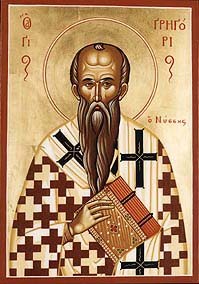
GREGORY,
BISHOP
of NYSSA |
ΓΡΗΓΟΡΙΟΥ ΕΠΙΣΚΟΠΟΥ ΝΥΣΣΗΣ |
|
|
|
|
|
|
|
|
|
|
|
|
|
Our zeal to know how anyone may become perfect through a life of virtue so that you may achieve a blamelessness in all things is in keeping with your purpose in life. I could have considered it of great importance that patterns for everything that you are striving for be found in my life, so as to furnish you with the instruction you seek through deeds rather than words. In that way, my guidance towards what is good would have been worthy of belief, because my life was in tune with my words. |
Πρέπουσα τῇ προαιρέσει σου ἡ σπουδὴ ἡ περὶ τοῦ γνῶναι πῶς ἄν τις διὰ τοῦ κατ΄ ἀρετὴν βίου τελειωθείη͵ ὥστε διὰ πάντων κατορθωθῆναί σου τῇ ζωῇ τὸ ἀμώμητον. ἐγὼ δὲ περὶ παντὸς μὲν ἂν ἐποιησάμην ἐν τῷ ἐμῷ βίῳ τῶν σοὶ σπουδαζομένων εὑρεθῆναι τὰ ὑποδείγματα͵ ὥστε τοῖς ἔργοις πρὸ τῶν λόγων τὴν ἐπιζητουμένην ὑπὸ σοῦ παρασχεῖν διδασκαλίαν. οὕτω γὰρ ἂν ἀξιόπιστος ἦν τῶν ἀγαθῶν ἡ ὑφήγησις͵ τοῦ βίου τοῖς λόγοις συμφθεγγομένου. |
| But, although I pray that this may one day be true, I do not yet see myself as one whose life could be offered to you as an example in place of a treatise. Therefore, in order that I may not seem to be completely useless and incapable of making a contribution to your goal, I have decided to set before you an accurate description of the life towards which one must tend, making this the beginning of my discourse. | ἐπειδὴ δὲ τοῦτο μὲν εὔχομαι γενέσθαι ποτέ͵ νῦν δὲ οὔπω τοιοῦτον ἐμαυτὸν βλέπω͵ ὡς ἀντὶ τοῦ λόγου προδεικνύειν τὸν βίον͵ ἵνα μὴ καθόλου δοκοίην ἀσυντελὴς εἶναί σοί τις πρὸς τὸν σκοπὸν καὶ ἀνόνητος͵ ἐφ΄ ὃ δεῖ συντεῖναι τὸν ἀκριβῆ βίον ὑποθέσθαι διενοήθην͵ ἐντεῦθεν τοῦ λόγου τὴν ἀρχὴν ποιησάμενος. |
|
Our good Master, Jesus Christ, bestowed on us a partnership in His revered name, so that we get our name from no other person connected with us, and if one happens to be rich and well-born or of lowly origin and poor, or if one has some distinction from his business or position, all such conditions are of no avail because the one authoritative name for those believing in Him is that of ‘Christian.’ Now, since this grace was ordained for us from above, it is necessary, first of all, for us to understand the greatness of the gift so that we can worthily thank the God who has given it to us. Then, it is necessary to show through our life that we ourselves are what the power of this great name requires us to be. The greatness of the gift of which we are deemed worthy through the partnership with the Master becomes clear to us if we recognize the true significance of the name of Christ, so that when in our prayers we call upon the Lord of all by this name, we may comprehend the concept that we are taking into our soul. We must also understand reverently what we believe He is when He is called upon by this name. When we do understand this, we shall, as a consequence, also learn clearly what sort of persons we should be shown to be as a result of our zeal for this way of life and our use of His name as the instructor and the guide for our life. |
Τοῦ ἀγαθοῦ δεσπότου ἡμῶν Ἰησοῦ Χριστοῦ χαρισα 174 μένου τὴν κοινωνίαν ἡμῖν τοῦ προσκυνουμένου ὀνόματος͵ ὥστε ἡμᾶς ἐκ μηδενὸς ἄλλου τῶν περὶ ἡμᾶς ὀνομάζεσθαι͵ κἂν πλούσιός τις ὢν τύχῃ καὶ εὐπατρίδης κἂν δυσγενὴς ᾖ ἢ πένης͵ κἂν ἐξ ἐπιτηδευμάτων τινῶν ἢ ἀξιωμάτων τὸ γνώριμον ἔχῃ͵ πάντων δὲ τῶν τοιούτων ὀνομάτων ἀργούντων μίαν εἶναι κυρίαν κλῆσιν τοῖς εἰς αὐτὸν πεπι στευκόσι τὸ Χριστιανοὺς ὀνομάζεσθαι· ταύτης τοίνυν ἄνωθεν ἡμῖν ἐπικυρωθείσης τῆς χάριτος ἀναγκαῖον ἂν εἴη πρῶτον μὲν τῆς δωρεᾶς νοῆσαι τὸ μέγεθος͵ ὥστε κατ΄ ἀξίαν εὐχαριστῆσαι τῷ τὰ τηλικαῦτα δωρησαμένῳ θεῷ͵ ἔπειτα δὲ τοιούτους ἑαυτοὺς διὰ τοῦ βίου δεῖξαι͵ οἵους ἐπιζητεῖ ἡ τοῦ μεγάλου τούτου ὀνόματος δύναμις. τὸ μὲν οὖν μέγεθος τῆς δωρεᾶς͵ ἧς διὰ τοῦ συνονομασθῆναι τῷ δεσπότῃ τῆς ζωῆς ἡμῶν ἠξιώθημεν͵ οὕτως ἂν γένοιτο δῆλον ἡμῖν͵ εἰ αὐτὸ τὸ σημαινόμενον τοῦ κατὰ τὸν Χριστὸν ὀνόματος ἐπιγνοίημεν͵ ὥστε συνεῖναι͵ ὅταν διὰ ταύτης τῆς φωνῆς τὸν τοῦ παντὸς κύριον ἐν ταῖς εὐχαῖς προσκα λώμεθα͵ ποίαν ταῖς ψυχαῖς ἡμῶν ἀναλαμβάνομεν ἔννοιαν ἢ τί διὰ τοῦ ὀνόματος τούτου κατανοοῦντες εὐσεβῶς αὐτὸν ἐπικαλεῖσθαι πιστεύομεν. ἐπειδὰν δὲ τοῦτο νοήσωμεν͵ τότε δι΄ ἀκολούθου καὶ οἵους προσήκει ἡμᾶς διὰ τῆς περὶ τὸν βίον σπουδῆς ἐπιδειχθῆναι σαφῶς μαθησόμεθα͵ διδα σκάλῳ καὶ ὁδηγῷ πρὸς τὸν βίον τῷ ὀνόματι χρώμενοι. |
| Accordingly, if we make St. Paul our leader in these two undertakings, we shall have the safest guide to the plain truth of what we are seeking. For he, most of all, knew what Christ is, and he indicated by what he did the kind of person named for Him, imitating Him so brilliantly that he revealed his own Master in himself, his own soul being transformed through his accurate imitation of his prototype, so that Paul no longer seemed to be living and speaking, but Christ Himself seemed to be living in him. As this astute perceiver of particular goods says: ‘Do you seek a proof of the Christ who speaks in me?’ (2 Cor 13.3) and: ‘It is now no longer I that live but Christ lives in me.’(Gal 2.20) | οὐκοῦν τὸν ἅγιον Παῦλον πρὸς τὰ δύο ταῦτα καθηγεμόνα 175 ποιούμενοι ἀσφαλεστάτην ἕξομεν ὁδηγίαν πρὸς τὴν τῶν ζητουμένων σαφήνειαν. οὗτος γὰρ μάλιστα πάντων ἀκρι βῶς καὶ τί ἐστιν ὁ Χριστὸς κατενόησε καὶ οἷον εἶναι χρὴ τὸν ἐπονομαζόμενον αὐτῷ δι΄ ὧν ἐποίησεν ὑφηγήσατο͵ οὕτως ἐναργῶς αὐτὸν μιμησάμενος͵ ὡς ἐν ἑαυτῷ δεῖξαι τὸν ἑαυτοῦ δεσπότην μεμορφωμένον͵ διὰ τῆς ἀκριβεστάτης μιμήσεως μεταβληθέντος τοῦ τῆς ψυχῆς αὐτοῦ εἴδους πρὸς τὸ πρωτότυπον͵ ὡς μηκέτι Παῦλον εἶναι δοκεῖν τὸν ζῶντά τε καὶ φθεγγόμενον͵ ἀλλ΄ αὐτὸν τὸν Χριστὸν ἐν αὐτῷ ζῆν· καθώς φησιν ὁ καλῶς τῶν ἰδίων ἀγαθῶν ἐπαισθόμενος ὅτι Ἐπεὶ δοκιμὴν ζητεῖτε τοῦ ἐν ἐμοὶ λα λοῦντος Χριστοῦ͵ καὶ ὅτι Ζῶ δὲ οὐκέτι ἐγώ͵ ζῇ δὲ ἐν ἐμοὶ Χριστός. |
|
This man knew the significance of the name of Christ for us, saying that Christ is ‘the power of God and the wisdom of God.’(1 Cor 1.24) And he called Him ‘peace,’ (Eph 2.14) and ‘light inaccessible’(1 Tim 6.16) in whom God dwells, and ‘sanctification and redemption,’(1 Cor 1.30) and ‘great high priest,’ (Heb 4.14) and ‘passover,’ (1 Cor 5.7) and ‘a propitation’(Rom 3.25) of souls, ‘the brightness of glory and the image of substance,’ (Heb 1.3) and ‘maker of the world,’ (Heb 1.2) |
Οὗτος οὖν καὶ τοῦ κατὰ Χριστὸν ὀνόματος ἐγνώρισεν ἡμῖν τὸ σημαινόμενον εἰπὼν ὅτι Χριστός ἐστι θεοῦ δύναμις καὶ θεοῦ σοφία· ἀλλὰ καὶ εἰρήνην αὐτὸν ἐκάλεσε καὶ φῶς ἀπρόσιτον͵ ἐν ᾧ οἰκεῖ ὁ θεός͵ ἁγιασμόν τε καὶ ἀπολύτρωσιν ἀρχιερέα τε μέγαν καὶ πάσχα͵ ἱλαστήριον ψυχῶν͵ ἀπαύγα σμα δόξης͵ χαρακτῆρα ὑποστάσεως καὶ ποιητὴν αἰώνων͵ |
|
and ‘spiritual food’(1 Cor 10.3) and ‘spiritual drink and spiritual rock,’(1 Cor 10.4) ‘water,’ (Jn 4.13 ff) ‘foundation’(1 Cor 3.11) of faith, and ‘corner stone,’ (Mt 21.42; Mk 12.10; Lk 20.17) and ‘image of the invisible God,’ (Col 1.15) and ‘great God,’ (Tit 2.13) and ‘head of the body of the Church,’ (Cf Col 1.18) and ‘the firstborn of every creature,’ (Col 1.15) and ‘first-fruits of those who have fallen asleep,’ (1 Cor 15.20) ‘firstborn from the dead,’ (Col 1.18) ‘firstborn among many brethren,’ (Rom 8.29) and ‘mediator between God and men,’ (1 Tim 2.5) and ‘only-begotten Son,’ (Jn 3.17) and ‘crowned with glory and honor,’ (Heb 2.7; cf Ps 8.6) and ‘lord of glory,’(Cf 1 Cor 2.8) and ‘beginning’(Col 1.18) of being, speaking thus of Him who is the beginning, ‘king of justice and king of peace,’ (Heb 7.2) and ‘ineffable king of all, having the power of the kingdom,’ (Cf Lk 1.33) and many other such things _ that are not easily enumerated. |
βρῶμα πνευματικὸν καὶ πόμα͵ πέτραν καὶ ὕδωρ͵ θεμέλιον 176 πίστεως καὶ γωνίας κεφαλὴν καὶ θεοῦ τοῦ ἀοράτου εἰκόνα καὶ μέγαν θεὸν κεφαλήν τε τοῦ τῆς ἐκκλησίας σώματος καὶ τῆς καινῆς κτίσεως πρωτότοκον καὶ ἀπαρχὴν τῶν κεκοιμημένων͵ πρωτότοκον ἐκ νεκρῶν καὶ πρωτότοκον ἐν πολλοῖς ἀδελφοῖς καὶ μεσίτην θεοῦ καὶ ἀνθρώπων καὶ υἱὸν μονογενῆ δόξῃ καὶ τιμῇ ἐστεφανωμένον καὶ κύριον τῆς δόξης καὶ ἀρχὴν τῶν ὄντων͵ οὕτως εἰπὼν περὶ αὐτοῦ· ῞ος ἐστιν ἀρχή͵ βασιλέα τε δικαιοσύνης πρὸς τούτοις καὶ βασιλέα εἰρήνης καὶ βασιλέα τῶν ἁπάντων ἀπερίγραπτον ἔχοντα τῆς βασιλείας τὸ κράτος καὶ ἄλλα τοιαῦτα πολλά͵ ὧν οὐκ ἔστι τὸ πλῆθος ῥᾳδίως ἐξαριθμήσασθαι· |
|
When all of these phrases are put next to each other, each one of the terms makes its own contribution to a revelation of what is signified by being named after Christ and each provides for us a certain emphasis. To the extent that we take these concepts into our souls, they are all indications of the unspeakable greatness of the gift for us. However, since the rank of kingship underlies all worth and power and rule, by this title the royal power of Christ is authoritatively and primarily indicated (for the anointing of kingship, as we learn in the historical books, comes first),(1 Kings 9.16; 10.1 ff; 12 ff) and all the force of the other titles depends on that of royalty. For this reason, the person who knows the separate elements included under it also knows the power encompassing these elements. But it is the kingship itself which declares what the title of Christ means. |
ἅπερ πάντα συντεθέντα πρὸς ἄλληλα͵ τῆς ἑκάστης τῶν ἐπωνυ μιῶν διανοίας τὸ παρ΄ ἑαυτῆς εἰς ἔνδειξιν τοῦ σημαινο μένου συνεισφερούσης͵ ἔμφασίν τινα τῆς σημασίας τοῦ κατὰ Χριστὸν ὀνόματος ἡμῖν ἐμποιεῖ͵ ὅσον χωροῦμεν τῇ ψυχῇ κατανοῆσαι͵ τοσοῦτον τῆς ἀφράστου μεγαλειό τητος ἡμῖν ἐνδεικνύμενα. ἐπειδὴ τοίνυν πάσης ἀξίας τε καὶ ἐξουσίας καὶ δυναστείας ὑπέρκειται τὸ τῆς βασιλείας ἀξίωμα͵ τῇ δὲ τοῦ Χριστοῦ προσηγορίᾳ κυρίως καὶ πρώτως 177 τὸ βασιλικὸν διασημαίνεται κράτος (προηγεῖτο γάρ͵ καθὼς ἐν ταῖς ἱστορίαις ἐμάθομεν͵ τῆς βασιλείας ἡ χρῖσις)͵ τῇ δὲ βασιλείᾳ πᾶσα ἡ τῶν λοιπῶν ὀνομάτων ἐμπεριέχεται δύναμις͵ τούτου χάριν ὁ τὰ ἐμπεριεχόμενα κατανοήσας καὶ τὴν περιεκτικὴν τῶν κατὰ μέρος συγκατενόησε δύ ναμιν͵ αὕτη δέ ἐστιν ἡ βασιλεία͵ ἧς ἐνδεικτικὸν ὄνομα ἡ τοῦ Χριστοῦ κλῆσίς ἐστιν. |
|
Therefore, since, thanks to our good Master, we are sharers of the greatest and the most divine and the first of names, those honored by the name of Christ being called Christians, it is necessary that there be seen in us also all of the connotations of this name, so that the title be not a misnomer in our case, but that our life be a testimony of it. Being something does not result from being called something. The underlying nature, whatever it happens to be, is discovered through the meaning attached to the name. What do I mean? If someone calls man a tree or a rock, will he, on this account, be a plant or stone? Of course not. It is necessary for him, first of all, to be a man, and, then, to be addressed thus in keeping with his nature. For titles based on similarities have no validity, as if one could say that a man is a statue or an imitation horse. If anything is named validly and not falsely, his nature completely reveals the form of address as a true one. Wood disguised in any way at all is still called wood, bronze is called bronze, stone is called stone, or any other such substance upon which art, shaping it contrary to expectation, imposes a form. |
οὐκοῦν ἐπειδὴ τοῦ μεγίστου τε καὶ θειοτάτου καὶ πρώτου τῶν ὀνομάτων γέγονε παρὰ τοῦ ἀγαθοῦ δεσπότου ἡμῖν ἡ κοινωνία͵ ὥστε τοὺς τῇ ἐπωνυ μίᾳ τοῦ Χριστοῦ τιμηθέντας Χριστιανοὺς ὀνομάζεσθαι͵ ἀναγκαῖον ἂν εἴη πάντα τὰ ἑρμηνευτικὰ τῆς τοιαύτης φωνῆς ὀνόματα καὶ ἐν ἡμῖν καθορᾶσθαι͵ ὡς μὴ ψευδώνυμον ἐφ΄ ἡμῶν εἶναι τὴν κλῆσιν͵ ἀλλ΄ ἐκ τοῦ βίου τὴν μαρτυ ρίαν ἔχειν. οὐ γὰρ ἐκ τοῦ καλεῖσθαί τι τὸ εἶναι γίνεται͵ ἀλλ΄ ἡ ὑποκειμένη φύσις͵ οἵα δ΄ ἂν οὖσα τύχῃ͵ διὰ τῆς προσφυοῦς τοῦ ὀνόματος σημασίας γνωρίζεται. οἷόν τι λέγω· εἰ δένδρῳ τις ἢ πέτρᾳ προσηγορίαν ἀνθρώπου χαρίσαι το͵ ἆρα ἄνθρωπος ἔσται διὰ τὴν κλῆσιν ἢ τὸ φυτὸν ἢ ὁ λίθος; οὐκ ἔστι ταῦτα· ἀλλὰ χρὴ πρῶτον εἶναι ἄνθρωπον͵ εἶθ΄ οὕτως ὀνομασθῆναι τῇ προσηγορίᾳ τῆς φύσεως. οὐδὲ γὰρ ἐπὶ τῶν ὁμοιωμάτων αἱ κλήσεις τὸ κύριον ἔχουσι͵ ὡς εἴ τις ἄνθρωπον λέγοι τὸν ἀνδριάντα ἢ ἵππον τὸ μί μημα· ἀλλ΄ εἰ μέλλοι τι κυρίως καὶ ἀψευδῶς ὀνομάζεσθαι͵ ἀληθῆ δείξει πάντως τὴν προσηγορίαν ἡ φύσις. ἡ δὲ ἀναδεξαμένη τὴν μίμησιν ὕλη͵ ὅπερ ἂν οὖσα τύχῃ͵ τοῦτο καὶ ὀνομάζεται͵ χαλκὸς ἢ λίθος ἤ τι τοιοῦτον ἕτερον͵ 178 ᾧ ἐπέβαλεν ἡ τέχνη τὸ εἶδος πρὸς τὸ δοκοῦν σχηματίσασα. |
|
It is necessary, then, for those calling themselves after Christ, first of all, to become what the name implies, and, then, to adapt themselves to the title. We distinguish a man himself from what is considered a good likeness of him in a picture by noting characteristic differences. The man we call a logical thinking animal, the picture an inanimate piece of wood which has taken on the form of the man through imitation; so, also, shall we distinguish the true Christian from the one merely seeming to be a Christian through the individual elements in his character. |
Οὐκοῦν τοὺς ἀπὸ τοῦ Χριστοῦ ἑαυτοὺς ὀνομάζοντας πρῶτον γενέσθαι χρὴ ὅπερ τὸ ὄνομα βούλεται͵ εἶθ΄ οὕτως ἑαυτοῖς ἐφαρμόσαι τὴν κλῆσιν. καὶ ὥσπερ εἴ τις διακρίνοι ἀπὸ τοῦ ὄντως ἀνθρώπου τὸν ὁμωνύμως ἐπὶ τῆς εἰκόνος λεγόμενον͵ ἐκ τῶν ἰδιωμάτων ποιήσεται τὴν διάκρισιν (τὸ μὲν γὰρ ζῶον λογικὸν διανοητικὸν ὀνομάσει͵ τὸ δὲ ἕτερον ὕλην ἄψυχον διὰ μιμήσεως ὑπελθοῦσαν τὸ εἶδος)· οὕτω καὶ τὸν Χριστιανὸν τόν τε ὄντως ὄντα καὶ τὸν δοκοῦντα διὰ τῶν ἐπιφαινομένων τοῖς χαρακτῆρσιν ἰδιω μάτων ἐπιγνωσόμεθα. |
|
The marks of the true Christian are all those we know in connection with Christ. Those that we have room for we imitate, and those which our nature does not approximate by imitation, we reverence and worship. Thus, it is necessary for the Christian life to illustrate all the interpretative terms signifying Christ, some through imitation, others through worship, if ‘the man of God is to be per-fect’(2 Tim 3.17) as the apostle says, and this perfection must never be mutilated by evil. |
χαρακτῆρες δὲ τοῦ ὄντως Χριστιανοῦ πάντα ἐκεῖνά ἐστιν͵ ὅσα περὶ τὸν Χριστὸν ἐνοήσαμεν. ὧν ὅσα μὲν χωροῦμεν͵ μιμούμεθα· ὅσα δὲ οὐ χωρεῖ ἡ φύσις πρὸς μίμησιν͵ σεβόμεθά τε καὶ προσκυνοῦμεν. οὐκοῦν πάντα τὰ ἑρμηνευτικὰ τῆς τοῦ Χριστοῦ σημασίας ὀνόματα ἐπιλάμπειν χρὴ τῷ τοῦ Χριστιανοῦ βίῳ͵ τὰ μὲν διὰ μιμήσεως͵ τὰ δὲ διὰ προσκυνήσεως͵ εἰ μέλλοι ἄρτιος εἶναι ὁ τοῦ θεοῦ ἄνθρωπος͵ καθώς φησιν ὁ ἀπόστολος͵ μηδαμοῦ διὰ τῆς κακίας ἀκρωτηριάζων τὴν ἀρτιότητα. |
|
There are men who fashion mythical creatures in their speeches and writings, constructing bull-headed horses or centaurs or serpent-footed monsters or other such things made up of different species. They do not achieve an imitation in keeping with a natural archetype, and, illogically overstepping nature, they fashion something other than man, fabricating the impossible. We would not say that what they have constructed in this strange synthesis is a man, even if some parts of the figure happen to resemble certain parts of the human body. In the same way, a person cannot accurately be called a Christian if he does not give assent to the faith with his mind, even if he conforms to it in other respects, or if his mind gives assent, but his body is not suited to his way of life, exhibiting the anger of dragons and the bestiality of serpents, or adding to his human character an equine madness for women. In such cases, a man becomes double-natured, a centaur made up of reason and unreason. |
ὥσπερ γὰρ οἱ τὰς μυθικὰς τερατείας ἢ διὰ τῶν λόγων ἢ διὰ τῆς γραφικῆς πλάσσοντες τέχνης βουκεφάλους τινὰς ἢ ἱπποκενταύρους ἢ δρακοντόποδας ἢ ἄλλο τι τοιοῦτον ἐξ 179 ἑτερογενῶν συντιθέντες οὐ πρὸς τὸ τῆς φύσεως ἀρχέτυπον τὴν μίμησιν ἄγουσιν͵ ἀλλὰ διὰ τῆς παραλόγου ταύτης ἐπινοίας τὴν φύσιν ἐκβαίνοντες ἄλλο τι πλάσσουσι καὶ οὐκ ἄνθρωπον͵ σχηματίζοντες πρὸς τὸ δοκοῦν τὸ ἀνύπαρ κτον͵ καὶ οὐκ ἄν τις ἄνθρωπον εἴποι τὸ πεπλασμένον διὰ τῆς ἀλλοκότου ταύτης συνθέσεως͵ κἂν μέρει τινὶ τοῦ ἀνθρωπίνου σώματος προσεοικὸς τύχῃ τὸ μέρος τοῦ πλάσματος· οὕτως οὐδ΄ ἂν Χριστιανὸς ἀκριβῶς ὀνομασθείη ὁ τὴν κεφαλὴν ἄλογον ἔχων͵ τουτέστιν ὁ τὴν τοῦ παντὸς κεφαλὴν ἥτις ὁ λόγος ἐστὶν ἐν τῇ πίστει μὴ ἔχων͵ κἂν ἐν τοῖς ἄλλοις ἄρτιος ᾖ͵ ἢ ὁ τῇ κεφαλῇ τῆς πίστεως μὴ κατάλληλον ἐνδεικνύμενος τῆς πολιτείας τὸ σῶμα͵ ἢ δρακόντων θυμοῖς συμφυόμενος καὶ καθ΄ ὁμοιότητα τῶν ἑρπετῶν τούτων ἐκθηριούμενος ἢ τὸ θηλυμανὲς τῶν ἵππων τῷ ἀνθρωπίνῳ χαρακτῆρι συμβάλλων καὶ διφυής τις ἱπποκένταυρος ἐκ λογικοῦ τε καὶ ἀλόγου γινόμενος. |
|
It is possible to see many such people: either they resemble the Minotaur, being bull-headed in their belief in idolatry, although they appear to be leading a good life; or they make themselves centaurs and dragons by combining with a Christian facade a bestial body. Now, since, as in the case of the human body, the Christian should be recognized in his entirety, it is fitting for the characteristics of his life to represent a pledge of all the good qualities connected with Christ. For being in some respects what the name implies, but in others inclining towards the opposite, is to cut oneself apart into a battleground where there are two factions, one of good and one of evil, and thus one becomes truceless to oneself and inconsistent. For, says the apostle: ‘What fellowship has light with darkness?’ (2 Cor 6.14) |
τοιούτους δὲ πολλοὺς ἔστιν ἰδεῖν ἢ ἐν μόσχου κεφαλῇ͵ τουτέστιν ἐν τῷ τῆς εἰδωλολατρίας δόγματι͵ τὸν εὐσχήμονα κατορθοῦντας βίον͵ οἷον τὸν Μινώταυρον γράφουσιν͵ ἢ Χριστιανῷ προσώπῳ θηριῶδες ὑφαρμόζοντας τῷ βίῳ τὸ σῶμα͵ οἵους τοὺς κενταύρους ἢ τοὺς δρακοντόποδας πλάτ τουσιν. ὡς ἂν τοίνυν καθάπερ ἐπὶ σώματος ἀνθρωπίνου ὁ Χριστιανὸς δι΄ ὅλου γνωρίζοιτο͵ πάντων προσήκει τῶν 180 κατὰ τὸν Χριστὸν νοουμένων ἀγαθῶν τὸν πιστὸν ἐνσημαί νεσθαι τῷ βίῳ τοὺς χαρακτῆρας. τὸ γὰρ ἔν τινι μὲν εἶναι τοιοῦτον οἷον τὸ ὄνομα βούλεται͵ ἐν ἑτέροις δὲ πρὸς τὰ ἐναντία ῥέπειν οὐδέν ἐστιν ἕτερον ἢ εἰς πολεμίου τάξιν αὐτὸν πρὸς ἑαυτὸν διατέμνεσθαι͵ δι΄ ἀρετῆς καὶ κακίας ἐν ἑαυτῷ στασιάζοντα͵ ἄσπονδον αὐτὸν ἑαυτῷ καὶ ἀσύμβατον τῷ βίῳ γινόμενον. Τίς γὰρ κοινωνία φωτὶ πρὸς σκότος; φησὶν ὁ ἀπόστολος. |
|
Since there is a distinct and irreconcilable contradiction between light and darkness, the person partaking of both has a share in neither, because of the opposition of the parts drawn up against each other at the same time in his mixed life. His faith provides the lighted part, but his dark habits put out the lamp of reason. Since it is impossible and inconsistent for light and darkness to exist in fellowship, the person containing each of the opposites becomes an enemy to himself, being divided in two ways between virtue and evil, and he sets up an antagonistic battle line within himself. And just as it is not possible, when there are two enemies, for both to be victors over each other (for the victory of the one causes the death of his adversary), so, also, in this civil war brought about by the confusion in his life, it is not possible for the stronger element to win without the other becoming completely destroyed. For how will the army of reverence be stronger than evil, when the wicked phalanx of the opponents attacks it?. |
Ἐπειδὴ γὰρ ἄμικτος τῷ φωτὶ πρὸς τὸ σκότος καὶ ἀμεσίτευτός ἐστιν ἡ ἐναντίωσις͵ ὁ ἀμφοτέρων ἐχόμενος καὶ μὴ θάτερον αὐτῶν μεθιεὶς τῇ τῶν ἀντιστοιχούντων ἀλλήλοις ἐναντιότητι καὶ αὐτὸς κατ΄ ἀνάγκην συνδιασχίζε ται καὶ φῶς κατὰ ταὐτὸν καὶ σκότος ἐν τῷ συμμίκτῳ βίῳ γινόμενος͵ τῆς μὲν πίστεως τὸν φωτισμὸν ἐνιείσης͵ τοῦ δὲ σκοτεινοῦ βίου τὴν ἐκ τοῦ λόγου λαμπηδόνα κατα μελαίνοντος. ἐπεὶ οὖν ἀμήχανός ἐστι καὶ ἀσύμβατος τῷ φωτὶ πρὸς τὸ σκότος ἡ κοινωνία͵ ὁ ἑκατέρου τῶν ἐναντίων περιεχόμενος αὐτὸς ἑαυτῷ πολέμιος γίνεται͵ διχῇ μερισθεὶς πρὸς ἀρετὴν καὶ κακίαν καὶ ἑαυτῷ πρὸς ἀντίπαλον τάξιν ἀντικαθιστάμενος. ὥσπερ δὲ οὐκ ἔστιν ἐν δυσὶ πολεμίοις ἀμφοτέρους νικητὰς κατ΄ ἀλλήλων γενέσθαι (ἡ γὰρ τοῦ ἑνὸς νίκη θάνατον τοῦ ἀντικειμένου πάντως ἐργάζεται)͵ οὕτω καὶ ἐπὶ ταύτης τῆς ἐμφυλίου μάχης τῆς διὰ τοῦ 181 συμμίκτου βίου συνισταμένης οὐκ ἔστι νικῆσαι τὴν κρείττω παράταξιν͵ μὴ πανωλεθρίᾳ τῆς ἄλλης διαφθαρείσης. πῶς γὰρ ὁ τῆς εὐσεβείας στρατὸς κρείττων τῆς κακίας γενήσε ται͵ τῆς πονηρᾶς φάλαγγος τῶν ἐναντίων ἀντιβαινούσης; |
|
If the stronger is going to win, the enemy must be completely slaughtered. And thus, virtue will have the victory over evil only when the entire enemy gives way to it through an alliance of the reasonable elements against the unsound ones. Then will be fulfilled what was spoken from the mouth of God through prophecy: ‘It is I who bring both life and death.’ (Deut 32.9) For it is not possible for the good to exist in me, unless it is made to live through the death of my enemy. As long as we keep grasping opposites with each of our hands, it is impossible for there to be participation in both elements in the same being. For, if we are holding evil, we lose the power to take hold of virtue |
ἀλλ΄ εἰ μέλλοι νικᾶν τὸ κρεῖττον͵ φονευθήσεται πάντως τὸ ἀντικείμενον. καὶ οὕτως ἡ ἀρετὴ κατὰ τῆς κακίας ἕξει τὰ νικητήρια͵ ὅταν πᾶν τὸ πολέμιον αὐτῇ διὰ τῆς τῶν λογισμῶν σομμαχίας μεταχωρήσῃ πρὸς τὸ ἀνύπαρκτον. καὶ τότε πληροῦται τὸ ἐκ προσώπου τοῦ θεοῦ διὰ τῆς προφητείας λεγόμενον ὅτι Ἐγὼ ἀποκτενῶ καὶ ζῆν ποιήσω. οὐ γὰρ ἔστιν ἄλλως τὸ ἐν ἐμοὶ ἀγαθὸν ζῆσαι͵ μὴ τῷ θανάτῳ τοῦ πολεμίου ζωοποιούμενον. ἕως δ΄ ἂν τῶν δύο περιεχώ μεθα ἑκατέρᾳ χειρὶ τῶν ἐναντίων ἁπτόμενοι͵ ἀδύνατον κατὰ ταὐτὸν ἀμφοτέρων ἔχειν τὴν μετουσίαν. τοῦ γὰρ περι δραξαμένου τῆς κακίας ἡ ἀρετὴ τῆς λαβῆς ἐξωλίσθησεν. |
|
Therefore, let us take up the original argument, namely, that the one road to the pure and divine life for lovers of virtue is knowing what the name of Christ means, in conformity with which we must shape our lives, attuning it to virtue through the emphasis on the other terms which we gathered together in our introduction from the holy voice of Paul. Placing these before us with the prescribed zeal, we shall make them the safest guide for a life of virtue, imitating some of these traits, as we said in the first part, and revering and worshiping others. Let the marshaling of these be a battle line for us. Let us begin with the first: ‘Christ,’ it says, ‘is the power of God and the wisdom of God.’ (1 Cor 1.24) Through this description of Christ, we derive, first of all, notions befitting the divine which make the name an object of reverence for us. Since all creation, both whatever is known through perception and whatever lies beyond observation, came into being through Him and is united with Him, wisdom is necessarily interwoven with power in connection with the definition of Christ, the maker of all things. We know this through the yoking together of the two words, I mean, power and wisdom, because these great and indescribable wonders of creation would not exist if wisdom had not thought of their coming into being, nor would they exist if power, through which thoughts become deeds, had not accompanied wisdom in bringing the thought to completion. |
Οὐκοῦν πάλιν τὸν ἐξ ἀρχῆς ἀναλάβωμεν λόγον͵ ὅτι μία πρὸς τὴν καθαράν τε καὶ θείαν ζωήν ἐστι τοῖς φιλαρέτοις ὁδὸς τὸ γνῶναι τί σημαίνει τὸ τοῦ Χριστοῦ ὄνομα͵ ᾧ χρὴ καὶ τὸν ἡμέτερον συμμορφωθῆναι βίον͵ διὰ τῆς τῶν λοιπῶν ὀνομάτων ἐμφάσεως εἰς ἀρετὴν ῥυθμιζόμενον. ὅσα τοίνυν ἐν τοῖς προοιμίοις τοῦ λόγου ῥήματά τε καὶ ὀνόματα παρὰ τῆς ἁγίας τοῦ Παύλου φωνῆς ἑρμηνευτικὰ τῆς τοῦ Χριστοῦ σημασίας συνελεξάμεθα͵ ταῦτα προθέντες εἰς τὴν προκει μένην ἡμῖν σπουδὴν ἀσφαλεστάτην ὁδηγίαν εἰς τὸν βίον τὸν κατ΄ ἀρετὴν ποιησόμεθα͵ τὰ μὲν μιμούμενοι͵ καθὼς 182 ἐν τοῖς φθάσασιν εἴρηται͵ τὰ δὲ προσκυνοῦντες καὶ σε βαζόμενοι. γενέσθω δὲ ἡμῖν τάξις τῶν εἰρημένων ἡ ἀπ αρίθμησις. οὐκοῦν ἀπὸ τῶν πρώτων ἀρξώμεθα· Χριστός͵ φησί͵ θεοῦ δύναμις καὶ θεοῦ σοφία. διὰ τούτων πρῶτον μὲν τὰς θεοπρεπεῖς ἐννοίας διὰ τῆς τοῦ Χριστοῦ προση γορίας μανθάνομεν͵ δι΄ ὧν σεβάσμιον ἡμῖν τὸ ὄνομα γί νεται. ἐπειδὴ γὰρ πᾶσα ἡ κτίσις ὅση τε τῇ αἰσθήσει γινώ σκεται καὶ ἡ τῆς αἰσθητικῆς ὑπερκειμένη κατανοήσεως δι΄ αὐτοῦ γέγονε καὶ ἐν αὐτῷ συνέστηκεν͵ ἀναγκαίως πρὸς τὸν ὁρισμὸν τῆς τοῦ Χριστοῦ σημασίας τοῦ τὰ πάντα ποιήσαντος ἡ σοφία τῇ δυνάμει συμπλέκεται͵ τοῦτο νοούν των ἡμῶν διὰ τῆς τῶν δύο τούτων φωνῶν συζυγίας͵ τῆς δυνάμεώς τε λέγω καὶ τῆς σοφίας͵ ὅτι οὐκ ἂν ἦν τὰ με γάλα ταῦτα καὶ ἄφραστα τῆς κτίσεως θαύματα͵ μὴ σοφίας μὲν τὴν γένεσιν αὐτῶν ἐπινοούσης͵ δυνάμεως δὲ τῇ σοφίᾳ παρομαρτούσης πρὸς τὴν τῶν νοηθέντων τελείωσιν͵ δι΄ ἧς ἔργα τὰ νοήματα γίνεται. |
|
The meaning of Christ is appropriately divided into this double emphasis on wisdom and power in order that, when we behold the greatness of the composition of being, we may recognize His unspeakable power through what we comprehend, and, in order that, when we calculate how all things that did not exist before came into being (the multiform nature in being having been endowed with substance through the divine nod), we then worship the incomprehensible wisdom of the One who thought of these things. Indeed, it is not useless or without benefit to us to believe in the power and wisdom of Christ in connection with the possession of the good. For, when a person prays, he draws to himself through prayer what he is invoking and looking towards with the eye of his soul. Thus, the person looking towards power (Christ is power) ‘is strengthened with power unto the inner man,’ as the apostle says, (Cf Eph 3.16) and the person calling upon the wisdom which the Lord knows of old becomes wise, as our introduction stated. Indeed, the person synonymous with Christ, who is power and wisdom, having been empowered against sin, will also exhibit wisdom in himself by his wise choice. When wisdom and power are displayed in us, the one choosing what is fair, and the other confirming the choice, a perfection of life interwoven with both of these qualities is achieved. |
Μερίζεται τοίνυν καταλλήλως εἰς διπλῆν ἔμφασιν τὸ τοῦ Χριστοῦ σημαινόμενον͵ εἰς τὴν σοφίαν τε καὶ τὴν δύναμιν͵ ἵν΄ ὅταν μὲν πρὸς τὸ μέγεθος τῆς τῶν ὄντων συστάσεως ἀποβλέψωμεν͵ τὴν ἄφραστον αὐτοῦ δύναμιν διὰ τῶν καταλαμβανομένων νοήσωμεν͵ ὅταν δὲ λογισώ 183 μεθα πῶς τὰ μὴ ὄντα παρῆλθεν εἰς γένεσιν͵ τῆς πολυειδοῦς ἐν τοῖς οὖσι φύσεως διὰ θείου νεύματος οὐσιωθείσης͵ τότε τὴν ἀκατάληπτον σοφίαν τοῦ ταῦτα νοήσαντος προσκυνή σωμεν͵ ἧς πράγματά ἐστι τὰ νοήματα. γίνεται δὲ οὐκ ἀργὸν καὶ ἀνωφελὲς ἡμῖν πρὸς τὴν τοῦ ἀγαθοῦ κτῆσιν τὸ δύναμιν καὶ σοφίαν τὸν Χριστὸν πιστεύειν. ὃ γάρ τις ἐπικαλεῖται προσευχόμενος καὶ πρὸς ὃ βλέπει τῷ τῆς ψυχῆς ὀφθαλμῷ͵ τοῦτο πρὸς ἑαυτὸν διὰ τῆς εὐχῆς ἐπισπᾶ ται· καὶ οὕτω δυνάμει τε κραταιοῦται πρὸς τὸν ἔσω ἄνθρωπον͵ καθώς φησιν ὁ ἀπόστολος͵ ὁ πρὸς τὴν δύναμιν βλέπων (Χριστὸς δέ ἐστιν ἡ δύναμις)͵ καὶ σοφὸς γίνεται͵ καθὼς ἡ παροιμία φησίν͵ ὁ τὴν σοφίαν ἐπικαλούμενος͵ ἥτις πάλιν νοεῖται ὁ κύριος. οὐκοῦν ὁ τῷ Χριστῷ συνονομαζόμενος͵ ὅς ἐστι δύναμίς τε καὶ σοφία͵ καὶ τῇ δυνάμει συνονομάζεται δυναμωθεὶς κατὰ τῆς ἁμαρτίας͵ καὶ τὴν σοφίαν ἐν ἑαυτῷ δείξει τῇ ἐκλογῇ τοῦ βελτίονος. σοφίας δὲ καὶ δυνάμεως ἐν ἡμῖν δεικνυμένων͵ τῆς μὲν τὸ καλὸν αἱρουμένης͵ τῆς δὲ τὸ νοηθὲν βεβαιούσης͵ κατορθοῦται τοῦ βίου τὸ τέλειον δι΄ ἀμφοῖν συμπλεκόμενον. |
|
Recognizing Christ as ‘peace,’ (Eph 2.14) we shall exhibit the true title of Christian in ourselves through the peace in our life. For the One ‘has slain enmity,’ as the apostle says.(Eph 2.16) Let us not, therefore, bring it to life in ourselves, but rather show through our life that it is dead. Let us not raise up against ourselves through anger and backbiting what has been rightly deadened for our salvation by God. This would destroy our soul and bring about an evil resurrection of what is rightly dead. But, if we have Christ, who is peace, let us also deaden hatred in ourselves in order to achieve in our life what we believe is in Him. For that One ‘has broken down the intervening wall of the enclosure,’ (Eph 2.14)and, out of the two elements in Himself, has created ‘one new man,’ (Eph 2.15) and made peace. Therefore, let us also reconcile, not only those fighting against us on the outside, but also the elements at variance within us, in order that no longer may the ‘flesh lust against the spirit and the spirit against the flesh.’ (Gal 5.17; cf Rom 8.6,7) Subjecting the spirit of the flesh to divine law, let us live peacefully, having been dissolved into the new and peáceful man and having become one from two. For the definition of peace is the harmony of dissonant parts. Once the civil war in our nature is expelled, then, we also, being at peace within ourselves, become peace, and reveal our having taken on the name of Christ as true and authentic. |
οὕτω καὶ εἰρήνην τὸν Χριστὸν νοήσαντες ἀληθῆ τοῦ Χριστιανοῦ τὴν κλῆσιν ἐφ΄ ἑαυτῶν ἐπιδείξομεν͵ ἐὰν διὰ τῆς ἐν ἡμῖν εἰρήνης τὸν Χριστὸν τῷ βίῳ ἐπιδειξώμεθα. ἐκεῖνος τὴν ἔχθραν ἀπέκτεινε͵ καθώς φησιν ὁ ἀπόστολος. οὐκοῦν μηδὲ ἡμεῖς ἐν ἑαυτοῖς ταύτην ζωοποιήσωμεν͵ ἀλλὰ νεκρὰν αὐτὴν ἐν 184 τῷ ἡμετέρῳ δείξωμεν βίῳ. μήποτε τὴν καλῶς ἐπὶ σωτηρίᾳ ἡμῶν παρὰ τοῦ θεοῦ νεκρωθεῖσαν ἡμεῖς ἐπ΄ ὀλέθρῳ τῶν ψυχῶν ἡμῶν δι΄ ὀργῆς καὶ μνησικακίας καθ΄ ἑαυτῶν ἀναστήσωμεν͵ πονηρὰν ἀνάστασιν τῆς καλῶς ἀποθανούσης κατεργασάμενοι. ἀλλ΄ εἰ τὸν Χριστὸν ἔχομεν͵ ὅς ἐστιν ἡ εἰρήνη͵ καὶ ἡμεῖς ἐν ἑαυτοῖς τὴν ἔχθραν νεκροποιήσωμεν͵ ἵν΄ ὅπερ ἐν ἐκείνῳ πιστεύομεν͵ τοῦτο καὶ ἐν τῷ ἡμετέρῳ κατορθώσωμεν βίῳ. ὡς γὰρ ἐκεῖνος τὸ μεσότοιχον τοῦ φραγμοῦ λύσας τοὺς δύο ἔκτισεν ἐν ἑαυτῷ εἰς ἕνα καινὸν ἄνθρωπον͵ ποιῶν εἰρήνην͵ οὕτω καὶ ἡμεῖς εἰς καταλλαγὰς ἀγάγωμεν οὐ μόνον τοὺς ἔξωθεν ἡμῖν προσμαχομένους͵ ἀλλὰ καὶ τοὺς ἐν ἡμῖν αὐτοῖς στασιάζοντας͵ ἵνα μηκέτι ἡ σὰρξ ἐπιθυμῇ κατὰ τοῦ πνεύματος͵ τὸ δὲ πνεῦμα κατὰ τῆς σαρκός· ἀλλ΄ ὑποταγέντος τοῦ σαρκώδους φρονήματος τῷ θείῳ νόμῳ͵ εἰρηνεύωμεν ἐν ἑαυτοῖς εἰς ἕνα τὸν καινόν τε καὶ εἰρηνικὸν ἄνθρωπον ἀναστοιχειωθέντες καὶ εἷς οἱ δύο γενόμενοι. εἰρήνης γὰρ ὅρος ἡ τῶν διεστηκότων ἐστὶν ὁμοφωνία. ὅταν οὖν ἐξαιρεθῇ τῆς φύσεως ἡμῶν ὁ ἐμφύλιος πόλεμος͵ τότε καὶ ἡμεῖς ἐν ἑαυτοῖς εἰρηνεύ σαντες εἰρήνη γινόμεθα͵ ἀληθῆ καὶ κυρίαν ἐφ΄ ἡμῶν τοῦ Χριστοῦ τὴν ἐπωνυμίαν ἐπιδεικνύοντες. |
|
Knowing Christ as the ‘true light,’ (Jn 1.9) ‘inaccessiblé (1 Tim 6.16) to falsehood, we learn this, namely, that it is necessary for our lives also to be illuminated by the rays of the true light. But virtues are the rays of ‘the Sun of Justice,’ (Mal 3.20) streaming forth for our illumination, through which we ‘lay aside the works of darkness,’ (Rom 13.12) so that we ‘walk becomingly as in the day,’ (Rom 13.13) and ‘we renounce those things which shame conceals.’ (2 Cor 4.2) By doing all things in the light, we become the light itself, so that it ‘shines’ before others, (Cf Mt 5.15,16) which is the peculiar quality of light. And if we recognize Christ as ‘sanctification,’ (1 Cor 1.30) in whom every action is steadfast and pure, let us prove by our life that we ourselves stand apart, being ourselves true sharers of His name, coinciding in deed and not in word with the power of his sanctification. |
φῶς δὲ ἀληθινὸν καὶ τῷ ψεύδει ἀπρόσιτον νοήσαντες τὸν Χριστὸν τοῦτο μανθάνομεν͵ ὅτι χρὴ καὶ τὸν ἡμέτερον βίον ταῖς τοῦ ἀλη θινοῦ φωτὸς ἀκτῖσι καταφωτίζεσθαι. ἀρεταὶ δέ εἰσιν αἱ 185 ἀκτῖνες αἱ τοῦ ἡλίου τῆς δικαιοσύνης εἰς φωτισμὸν ἡμῶν ἀπορρέουσαι͵ δι΄ ὧν γίνεται τὸ ἀποθέσθαι τὰ ἔργα τοῦ σκότους καὶ ὡς ἐν ἡμέρᾳ περιπατεῖν εὐσχημόνως καὶ ἀπειπάμενον τὰ κρυπτὰ τῆς αἰσχύνης͵ καὶ πάντα ἐν φωτὶ ποιοῦντα καὶ αὐτὸν φῶς γενέσθαι͵ ὥστε καὶ ἄλλοις λάμ πειν͵ ὅπερ φωτός ἐστιν ἴδιον. κἂν ἁγιασμὸν τὸν Χριστὸν νοήσωμεν͵ τῷ πάσης βεβήλου τε καὶ ἀκαθάρτου πράξεως καὶ ἐννοίας ἑαυτοὺς ἀποστῆσαι κοινωνοὺς ἀληθῶς τοῦ ὀνόματος ἑαυτοὺς ἀποδείξωμεν͵ ἔργω καὶ οὐχὶ ῥήματι τοῦ ἁγιασμοῦ τὴν δύναμιν ὁμολογοῦντες͵ τῷ βίῳ. |
|
And learning that Christ is ‘redemption’ (1 Cor 1.80) because He gave Himself as an atonement in our behalf, we are taught this knowledge, that when He furnished us with immortality as our particular possession, as if bestowing a certain honor on each soul, He ransomed us from death with His own life. If, then, we become slaves of the One who redeemed us, we shall look exclusively towards our Master, on the grounds that we no longer live for ourselves, but for the One who possesses us, because He gave His life for us. For we are no longer lords of ourselves, but the possessions of Him who, having bought us, is the Master of His own. Truly, the will of the Master will be the law of our life. And as ‘the law of sin’ (Rom 8.2) governed us when death was prevailing, so now, that we have become the property of life, it is necessary for us to conform to the government in power. Let us, therefore, never turn aside from the will of life and desert through sin to the wicked tyrant of souls of old, I mean to death. |
Ἀπολύτρωσιν δὲ εἶναι τὸν Χριστὸν μαθόντες τὸν ἑαυτὸν δόντα λύτρον ὑπὲρ ἡμῶν τοῦτο διὰ τῆς τοιαύτης φωνῆς παιδευόμεθα͵ τὸ μαθεῖν ὅτι καθάπερ τιμήν τινα τῆς ἑκάστου ψυχῆς παρασχόμενος ἡμῖν τὴν ἀθανασίαν κτῆμα ἴδιον τοὺς ἐκ τοῦ θανάτου παρ΄ αὐτοῦ διὰ τῆς ζωῆς ἐξα γορασθέντας ἐποίησεν. εἰ τοίνυν δοῦλοι τοῦ λυτρωσαμένου γεγόναμεν͵ πρὸς τὸν κυριεύοντα πάντως ὀψόμεθα͵ ὡς μηκέτι ἡμᾶς ἑαυτοῖς ζῆν͵ ἀλλὰ τῷ κτησαμένῳ ἡμᾶς διὰ τοῦ τῆς ζωῆς ἀνταλλάγματος. οὐκέτι γὰρ ἑαυτῶν ἐσμεν κύριοι͵ ἀλλ΄ ὁ ὠνησάμενός ἐστι τῶν ἰδίων κτημάτων δε σπότης͵ ἡμεῖς δὲ αὐτοῦ τὰ κτήματα. οὐκοῦν νόμος ἔσται τῆς ἡμετέρας ζωῆς τὸ τοῦ κυριεύοντος θέλημα. ὥσπερ 186 γὰρ τοῦ θανάτου κατακρατοῦντος ἡμῶν ὁ τῆς ἁμαρτίας ἐν ἡμῖν νόμος ἐπολιτεύετο͵ οὕτως ἐπειδὴ τῆς ζωῆς κτῆμα γεγόναμεν͵ ἀναγκαῖον ἂν εἴη πρὸς τὴν κρατοῦσαν μεθ αρμοσθῆναι ἡμῶν τὴν πολιτείαν͵ μή ποτε τοῦ τῆς ζωῆς παρατραπέντες θελήματος͵ πάλιν πρὸς τὸν πονηρὸν τῶν ψυχῶν ἡμῶν τύραννον͵ τὸν θάνατον λέγω͵ διὰ τῆς ἁμαρτίας αὐτομολήσωμεν. |
|
We are assimilated to Christ, also, if we hear from Paul that he is the ‘passover’ (1 Cor 5.7) and ‘high priest.’ (Heb 4.14) For Christ was truly sacrificed as the paschal victim in our behalf. But the priest, bringing in the sacrifice to God, is no other than Christ Himself. For it says: ‘He delivered himself up for us, an offering and a sacrifice.’ (Eph 5.2) Through these words we learn this, that the person looking towards that One delivers himself as an offering and sacrifice and passover, and will show himself to God as a living sacrifice, ‘holy, pleasing to God,’ becoming a reasonable ‘service.’ (Cf Rom 12.1) But the rule of this holy office is: ‘Be not conformed to this world, but be transformed in the newness of your mind, that you may discern what is the good and acceptable and the perfect will of God.’ (Rom 12.2) If the flesh lives and is not sacrificed according to the law of the spirit, it is not possible for the will of God to be displayed in it: ‘For the wisdom of the flesh is hostile to God and is not subject to the law of God.’(Rom 8.7) As long as the flesh lives, which was offered up through the life-giving sacrifice by ‘mortifying the members upon the earth’ (Cf Col 3.5) from which passions spring, it is not possible for the pleasing and perfect will of God to be achieved expeditiously in the life of the faithful. |
ἡ δὲ αὐτὴ διάνοια προσοικειώσει ἡμᾶς τῷ Χριστῷ͵ κἂν πάσχα αὐτὸν εἶναι κἂν ἀρχιερέα παρὰ τοῦ Παύλου ἀκούσωμεν. ἐτύθη γὰρ ὡς ἀληθῶς ὑπὲρ ἡμῶν τὸ πάσχα Χριστός· ἀλλ΄ ὁ ἱερεὺς ὁ προσαγαγὼν τῷ θεῷ τὴν θυσίαν οὐκ ἄλλος τίς ἐστι παρ΄ αὐτὸν τὸν Χριστόν. Ἑαυτὸν γάρ͵ φησίν͵ ἀνήνεγκε προσφορὰν καὶ θυσίαν ὑπὲρ ἡμῶν. οὐκοῦν τοῦτο διὰ τούτων μανθάνομεν͵ ὅτι ὁ πρὸς ἐκεῖνον βλέπων τὸν ἑαυτὸν προσαγαγόντα προσφορὰν καὶ θυσίαν καὶ πάσχα γενόμενον καὶ αὐτὸς ἑαυτὸν παρα στήσει τῷ θεῷ θυσίαν ζῶσαν ἁγίαν εὐάρεστον͵ λογικὴ λατρεία γενόμενος· ὁ δὲ τρόπος τῆς ἱερουργίας ἐστὶ τὸ Μὴ συσχηματίζεσθαι τῷ αἰῶνι τούτῳ͵ ἀλλὰ μεταμορφοῦ σθαι τῇ ἀνακαινώσει τοῦ νοὸς αὐτοῦ ἐν τῷ δοκιμάζειν͵ τί τὸ θέλημα τοῦ θεοῦ τὸ ἀγαθὸν καὶ εὐάρεστον καὶ τέλειον. 187 οὐ γὰρ ἔστι ζώσης τῆς σαρκὸς καὶ μὴ κατὰ τὸν πνευματικὸν ἱερουργηθείσης νόμον τὸ ἀγαθὸν θέλημα τοῦ θεοῦ ἐν αὐτῇ δειχθῆναι· Διότι τὸ φρόνημα τῆς σαρκὸς ἔχθρα εἰς θεὸν καὶ τῷ νόμῳ τοῦ θεοῦ οὐχ ὑποτάσσεται. οὐδὲ γὰρ δύναται͵ ἕως ἂν ζῇ ἡ σάρξ͵ ἧς διὰ τῆς ζωοποιοῦ θυσίας ἱερουργηθείσης διὰ τοῦ νεκρῶσαι τὰ ἐπὶ τῆς γῆς μέλη͵ δι΄ ὧν ἐνεργεῖται τὰ πάθη͵ ἀνεμποδίστως τὸ εὐάρεστον καὶ τέλειον θέλημα τοῦ θεοῦ ἐν τῇ ζωῇ τῶν πεπιστευκότων κατορθωθήσεται. |
|
So, also, Christ, being known as ‘a propitiation by his own blood,’ (Rom 3.25) teaches each one thinking of this to become himself a propitiation, sanctifying his soul by the deadening of his members. And when Christ is spoken of as ‘the brightness of his glory and the image of his substance,’(Heb 1.3) we get from these words the idea of His greatness in the act of being worshiped. For Paul, truly God-inspired and God-taught, examining, ‘in the depth of the riches of the wisdom and of the knowledge of God,’ (Rom 11.33) the unclear and hidden aspects of the divine mysteries, revealed through suggestive phrases the illumina-tions (Cf 2 Cor 12.4) that came to him from God concerning the understanding of what is incomprehensible and unsearchable because the tongue is no match for thought. According to the report of those who heard his interpretation of mystery, he spoke, as well as reason can, in the service of thought. For, comprehending as much as human power can concerning the divine nature, he revealed the unapproachable and incomprehensible Logos of substantial being in human terms. |
οὕτως καὶ ἱλαστήριον ἐν τῷ ἰδίῳ αἵματι ὁ Χριστὸς νοού μενος διδάσκει τὸν ταῦτα νοήσαντα αὐτὸν ἕκαστον γενέ σθαι ἑαυτῷ ἱλαστήριον͵ διὰ τῆς τῶν μελῶν νεκρώσεως τὴν ψυχὴν ἀφαγνίζοντα. ὅταν δὲ δόξης ἀπαύγασμα καὶ χαρακτὴρ ὑποστάσεως ὁ Χριστὸς λέγηται͵ τῆς προσκυνου μένης αὐτοῦ μεγαλωσύνης διὰ τῶν ῥημάτων τούτων τὰς ἐννοίας ἀναλαμβάνομεν. ὁ γὰρ θεόπνευστος ὡς ἀληθῶς καὶ θεοδίδακτος Παῦλος͵ ὁ ἐν τῷ βάθει τοῦ πλούτου τῆς σοφίας καὶ τῆς γνώσεως τοῦ θεοῦ τὰ ἄδηλα καὶ τὰ κρύφια τῶν θείων μυστηρίων διερευνώμενος͵ τὰς γινομένας αὐτῷ θεό θεν ἐλλάμψεις περὶ τῆς τῶν ἀνεξερευνήτων τε καὶ ἀνεξιχνι άστων κατανοήσεως͵ ἀτονωτέραν ἔχων τῆς διανοίας τὴν γλῶτταν͵ καθὼς ἐχώρει ἡ ἀκοὴ τῶν δεχομένων τὴν σύν εσιν αὐτοῦ τὴν ἐν τῷ μυστηρίῳ δι΄ ἐναυσμάτων τινῶν 188 ὑπέδειξεν͵ ὅσον ὑπουργεῖν τῇ διαναίᾳ δυνατῶς εἶχεν ὁ λόγος͵ τοσοῦτον φθεγγόμενος. πάντα γὰρ ὅσα χωρεῖ ἡ ἀνθρωπίνη δύναμις περὶ τῆς θείας φύσεως κατανοήσας ἀνέφικτόν τε καὶ ἀνεπίληπτον λογισμοῖς ἀνθρωπίνοις τὸν τῆς ὑπερκειμένης οὐσίας ἀποφαίνεται λόγον. |
|
Accordingly, when speaking of the theories concerning the divine nature as peace and power and life and justice and light and truth and such things, he maintained that an account of that nature itself was completely unattainable, saying that God has not been seen and will not be seen. For he says: ‘No man has seen or can see’ Him. (1 Tim 6.16) Because of this, when he was asking how to give a name to what cannot be grasped in thought and did not discover a word expressing an interpretation of the incomprehensible, he called whatever underlies all good, and is not sufficiently known or spoken of, ‘glory’ and ‘substance.’ The underlying essence of being, he dismissed as unnamable. However, interpreting the unity and inseparability of the Son and the Father and the Son’s being contemplated indefinably and invisibly with the indefinable and unseen Father, he addressed Him as ‘effulgence of glory’ and ‘image of substance,’ indicating the unity of their nature by the word ‘effulgence’ and their equality by the word ‘image.’ |
Διὸ τὰ περὶ αὐτὴν θεωρούμενα λέγων͵ εἰρήνην καὶ δύναμιν καὶ ζωὴν καὶ δικαιοσύνην καὶ φῶς καὶ ἀλήθειαν καὶ τὰ τοιαῦτα͵ τὸν περὶ αὐτῆς ἐκείνης λόγον ἄληπτον εἶναι παντελῶς διωρίσατο͵ εἰπὼν μήτε ἑωρᾶσθαί ποτε τὸν θεὸν μήτε ὀφθήσεσθαι. Ὃν εἶδε γάρ φησιν ἀνθρώπων οὐδεὶς οὐδὲ ἰδεῖν δύναται. διὰ τοῦτο ἀναζητῶν πῶς ὀνο μάσει τὸ μὴ δυνάμενον λογισμοῖς ληφθῆναι͵ ὡς οὐχ εὗρεν ἐμφαντικὸν ὄνομα τῆς τῶν ἀκαταλήπτων ἑρμηνείας͵ δόξαν καὶ ὑπόστασιν ὠνόμασε τὸ ὑπερκείμενον παντὸς ἀγαθοῦ τὸ μήτε νοούμενον ἀξίως μήτε φραζόμενον. τὴν μὲν οὖν ὑπερκειμένην τῶν ὄντων οὐσίαν ἀφῆκεν ἀκατονόμαστον· τὸ δὲ συναφές τε καὶ ἀδιάστατον τοῦ υἱοῦ πρὸς τὸν πατέρα διερμηνεύων καὶ τὸ τῷ ἀορίστῳ τε καὶ ἀϊδίῳ πατρὶ ἀορί στως τε καὶ ἀϊδίως συνθεωρούμενον ἀπαύγασμα δόξης καὶ χαρακτῆρα ὑποστάσεως προσαγορεύει͵ τῷ μὲν ἀπαυγάσματι τὸ συμφυὲς ἐνδεικνύμενος͵ τῷ δὲ χαρα 189 κτῆρι τὸ ἰσοστάσιον. |
|
For, in connection with an effulgent nature, there is no middle point in a beam of light, nor is there an inferior part of an image in connection with a substance determined by it. The observer of the effulgent nature will know the effulgence in its entirety, and the person comprehending the size of the substance measures it in its entirety with its accompanying image. So he speaks of the Lord as ‘the form of God,’ (Cf Phil 2.6) not belittling the Lord by the idea of form, but showing the bigness of God through the word, in which the immensity of the Father is contemplated as never exceeding its own form or being found outside of its specific character. For there is nothing formless or unadorned in respect to the Father which does not rejoice in the beauty of the only-begotten Son. |
οὔτε γὰρ αὐγῆς πρὸς τὴν ἀπαυγάζουσαν φύσιν ἐπινοεῖταί τι μέσον οὔτε τις τοῦ χαρακτῆρος ἐλάττω σις πρὸς τὴν ὑπ΄ αὐτοῦ χαρακτηριζομένην ὑπόστασιν͵ ἀλλὰ καὶ ὁ τὴν ἀπαυγάζουσαν φύσιν νοήσας καὶ τὸ ἀπαύ γασμα ταύτῃ πάντως συγκατενόησε καὶ ὁ τὸ μέγεθος τῆς ὑποστάσεως ἐν νῷ λαβὼν τῷ ἐπιφαινομένῳ χαρακτῆρι πάντως ἐμμετρεῖ καὶ τὴν ὑπόστατιν. διὸ καὶ μορφὴν θεοῦ λέγει τὸν κύριον͵ οὐ κατασμικρύνων τῇ τῆς μορφῆς ἐννοίᾳ τὸν κύριον͵ ἀλλὰ τὸ μέγεθος τοῦ θεοῦ διὰ τῆς μορφῆς ἐνδεικνύμενος͵ ᾗ ἐνθεωρεῖται τοῦ πατρὸς ἡ μεγαλειότης͵ οὐδαμοῦ τῆς ἰδίας μορφῆς ὑπερπίπτουσα οὐδὲ ἔξω τοῦ περὶ αὐτὴν χαρακτῆρος εὑρισκομένη. ἄμορφον γὰρ καὶ ἀκαλλὲς περὶ τὸν πατέρα οὐδέν͵ ὃ μὴ τῇ ὡραιότητι τοῦ μονογενοῦς ἐπαγάλλεται· |
|
Therefore, the Lord says: ‘He who sees me, sees also the Father,’ (Jn 14.9) indicating through this that there is no deficiency and no excess. But he also means that He upholds ‘all things with the word of His power,’ (Heb 1.3) and thus dissolves the difficulty of the busy-bodies who seek the undiscoverable when they look for an account of matter and nowhere check their curiosity, asking how the material is experienced by the immaterial, quantity by that without quantity, form by that without form, color by the unseeable and the finite by the infinite, and how, if there is no quality connected with the simple and the uncomposed, matter is interwoven with it. He solves all such inquiries by saying that the Logos ‘upholds all things by the word of His power’ from non-existence to existence. For all things, as many as exist in connection with matter and as many as have received an immaterial nature, have one cause of their substance: the Word of the unspeakable power. From these words, we learn to look to Him as the source of being. If we pass into being from that source and have our existence in Him, there is every necessity to believe that there is nothing outside of the One in whom we exist and from whom we come into being, and back to whom we go. Along with this thought, the blamelessness of our life is likewise established. |
διό φησιν ὁ κύριος ὅτι Ὁ ἑωρακὼς ἐμὲ ἑώρακε τὸν πατέρα͵ σημαίνων διὰ τούτου τὸ μήτε ἔλλειψίν τινα εἶναι μήτε ὑπέρπτωσιν. ἀλλὰ καὶ φέρειν αὐτὸν λέγων τὰ σύμπαντα τῷ τῆς δυνάμεως ῥήματι λύει τῶν τὰ ἀνεξερεύνητα πολυπραγμονούντων τὴν ἀμηχανίαν͵ οἳ τὸν περὶ τῆς ὕλης ἀναζητοῦντες λόγον οὐδαμοῦ τῆς πολυπραγ μοσύνης ἵστανται͵ πόθεν͵ λέγοντες͵ τῷ ἀΰλῳ ἡ ὕλη͵ καὶ πῶς τὸ ποσὸν ἐκ τοῦ ἀπόσου καὶ ἐκ τοῦ ἀσχηματίστου τὸ σχῆμα͵ καὶ ἐκ τοῦ ἀοράτου τὸ χρῶμα καὶ ἐκ τοῦ ἀορίστου τὸ τοῖς ἰδίοις μέτροις ἐμπερατούμενον; καὶ εἰ μηδεμία 190 ποιότης περὶ τὸ ἁπλοῦν καὶ ἀσύνθετον͵ πόθεν ἐμπλέκεται ταῖς περὶ αὐτὴν ποιότησιν ἡ ὕλη; πάντα γὰρ ταῦτα καὶ τὰ τοιαῦτα τῶν ζητουμένων λύει ὁ εἰπών͵ ὅτι τὰ σύμπαντα τῷ ῥήματι τῆς δυνάμεως αὐτοῦ φέρει ὁ λόγος ἐκ τοῦ μὴ ὄντος εἰς γένεσιν. πάντα γάρ͵ ὅσα περὶ τὴν ὕλην ἐστὶ καὶ ὅσα τὴν ἄϋλον εἴληχε φύσιν͵ μίαν αἰτίαν ἔχει τῆς ὑπο στάσεως͵ τὸ ῥῆμα τῆς ἀφράστου δυνάμεως. ἐκ δὲ τούτων παιδευόμεθα τὸ πρὸς αὐτὸν βλέπειν͵ ἀφ΄ οὗ τῶν ὄντων ἐστὶν ἡ γένεσις. εἰ γὰρ ἐκεῖθεν εἰς τὸ εἶναι παρήχθημεν καὶ ἐν αὐτῷ συνεστήκαμεν͵ ἀνάγκη πᾶσα μηδὲν ἔξω τῆς γνώσεως πιστεύειν εἶναι τοῦ ἐν ᾧ ἐσμεν καὶ ἀφ΄ οὗ γεγό ναμεν καὶ εἰς ὃν ἀναλύομεν. ταύτῃ δὲ τῇ διανοίᾳ συγκατορ θοῦται κατὰ τὸ εἰκὸς τὸ κατὰ τὴν ζωὴν ἀναμάρτητον. |
|
For what person who believes that he lives ‘from Him and through Him and unto Him’(Rom 11.36) will dare to make the One who encompasses in Himself the life of each of us, a witness of a life that does not reflect Him? |
τίς γὰρ ἐξ αὐτοῦ καὶ δι΄ αὐτοῦ καὶ ἐν αὐτῷ ζῆν πιστεύων μάρτυρα τῆς ἀπεμφαινούσης ζωῆς τολμήσει ποιήσασθαι τὸν ἐν ἑαυτῷ τὴν ἑκάστου ζωὴν περιέχοντα; |
|
The divine apostle also, in calling the Lord ‘spiritual food and drink,’ (1 Cor 10.3 ,4) suggests that he knows that human nature is not simple, but that there is an intelligible part mixed with a sensual part and that a particular type of nurture is needed for each of the elements in us, sensible food to strengthen our bodies, and spiritual food for the well-being of our souls. And just as in the case of the body, the firm and the fluid, mingling with each other, preserve our nature through digestion, in the same way, by analogy, Paul distinguishes the nurture of the intelligible part, using the same terms, food and drink, and adapting them properly to the needs of those assimilating them. For to those who are exhausted and fainting, bread comes to strengthen the heart of a man, but to those who are weary because of the wretchedness of their life and thirsty because of this, wine comes as a joy to their heart. (Cf Ps 103.15) |
βρῶμα δὲ καὶ πόμα πνευματικὸν ὀνομάζων τὸν κύριον ὁ θεῖος ἀπόστολος ταῦτα διὰ τῶν λεγομένων νοεῖν ὑποτίθεται͵ ὅτι οὐ μονοειδής ἐστιν ἡ ἀνθρωπίνη φύσις͵ ἀλλὰ τοῦ νοητοῦ πρὸς τὸ αἰσθητὸν συγκεκραμένου ἰδιάζουσα καθ΄ ἑκάτερον τῶν ἐν ἡμῖν θεωρουμένων ἐστὶν ἡ τροφή͵ τῆς μὲν αἰσθητῆς βρώσεως τὸ σῶμα διακρατούσης͵ τῆς δὲ πνευματικῆς τροφῆς τὴν ψυχικὴν ἐμποιούσης ἡμῖν εὐεξίαν. ἀλλ΄ ὥσπερ ἐπὶ τοῦ σώματος τὸ στερεόν τε καὶ ὑγρὸν τῆς τροφῆς μετ΄ ἀλλήλων μιγνύμενα συντηρητικὰ τῆς φύσεως 191 γίνεται͵ διὰ τῆς καταλλήλου πέψεως ἑκάστῳ τῶν ἐν ἡμῖν στοιχειωδῶς συγκεκραμένων καταμιγνύμενα͵ κατὰ τὸν αὐτὸν τρόπον ἀναλογικῶς ὁ Παῦλος καὶ τὴν νοητὴν κατα μερίζει τροφήν͵ βρῶσιν ὀνομάζων καὶ πόσιν τὸ αὐτὸ πρᾶγμα͵ πρὸς τὴν χρείαν τῶν προσφερομένων οἰκείως μεθαρμοζόμενον. τοῖς μὲν γὰρ ἀτονοῦσι καὶ ἐκλελυμένοις ἄρτος γίνεται͵ στηρίζων καρδίαν ἀνθρώπου· τοῖς δὲ κεκμηκόσι διὰ τὴν πρὸς τὸν βίον τοῦτον ταλαιπωρίαν καὶ διὰ τοῦτο γενομένοις διψώδεσιν οἶνος γίνεται͵ τὴν καρδίαν εἰς εὐφροσύνην ἄγων. |
|
Now, it is necessary from what has been said to know the power of the Logos by which the soul is nourished according to its need, having received grace from it according to the riddle of the prophet who points out clearly the relief which comes to the weary from the Logos ‘in verdant pastures and in restful waters.’ (Ps 22.2) And if someone in examining this mystery should say that the Lord is rightly called ‘spiritual food and drink,’ he is not far from the truth. For His ‘flesh is food indeed’ and His ‘blood is drink indeed.’ (Jn 6.56) But, in connection with the thought just mentioned, there is participation in such nourishment for all, since the Logos who becomes food and drink is received and assimilated without distinction by those seeking Him. However, in connection with another idea, the participation in this food and drink is not careless or indiscriminate, for the apostle limits it thus: ‘Let a man prove himself and so let him eat of that bread and drink of the cup, for he who eats and drinks unworthily eats and drinks judgment to himself.’ (1 Cor 11.28) |
Νοεῖν δὲ χρὴ διὰ τῶν εἰρημένων τοῦ λόγου τὴν δύναμιν͵ δι΄ οὗ τρέφεται ἡ ψυχὴ καταλλήλως τῇ χρείᾳ τὴν ἀπ΄ αὐτοῦ χάριν προσδεχομένη κατὰ τὸ αἴνιγμα τοῦ προφήτου͵ ὃς τόπῳ χλόης καὶ ὕδατι ἀναπαύσεως τὴν ἐκ τοῦ λόγου γινομένην τοῖς κεκμηκόσι παραμυθίαν διασημαίνει. εἰ δὲ καὶ πρὸς τὸ μυστήριόν τις βλέπων βρῶμα καὶ πόμα πνευ ματικὸν κυρίως ὀνομάζεσθαι λέγοι τὸν κύριον͵ οὐδὲ τοῦτο τῆς κυρίας ἐμφάσεως ἀπεξένωται· ἀληθῶς γὰρ ἡ σὰρξ αὐτοῦ βρῶσίς ἐστι καὶ τὸ αἷμα αὐτοῦ ἀληθῶς ἐστι πόσις. ἀλλ΄ ἐπὶ μὲν τῆς προρρηθείσης διανοίας πᾶσι κατ΄ ἐξουσίαν ἐστὶν ἡ μετουσία τοῦ λόγου͵ ὃς γίνεται βρῶμα καὶ πόμα προσφερόμενον ἀδιακρίτως ὑπὸ τῶν ἐπιζητούντων αὐτὸν λαμβανόμενος· ἐπὶ δὲ τῆς ἑτέρας ἐννοίας οὐκέτι ἀνεξέ 192 ταστός ἐστι καὶ ἀδιάκριτος ἡ τῆς τοιαύτης τροφῆς τε καὶ πόσεως μετουσία͵ οὕτω τοῦ ἀποστόλου προσδιορίσαντος ὅτι Δοκιμαζέτω δὲ ἕκαστος ἑαυτὸν καὶ οὕτως ἐκ τοῦ ἄρτου ἐσθιέτω καὶ ἐκ τοῦ ποτηρίου πινέτω. ὁ δὲ ἀναξίως ἐσθίων καὶ πίνων κρῖμα ἑαυτῷ ἐσθίει καὶ πίνει. |
|
The evangelist, also, seems to point this out definitely, at the time of the mystical passion when that good councilor took down the body of the Lord and wrapped Him in spotless and pure linen and placed Him in a new and pure sepulcher. (Cf Lk 23.53) Thus, the command of the apostle and the observation of the evangelist become a law to all to receive the Holy Body with a pure conscience. If there is somewhere some stain from sin, we must wash it out with the water of our tears. |
πρὸς ὅ μοι δοκεῖ καὶ ὁ εὐαγγελιστὴς βλέπων ἠσφαλισμένως τὸ τοιοῦτον παρασημήνασθαι͵ ὅτε ἐν τῷ καιρῷ τοῦ μυστικοῦ πάθους ὁ εὐσχήμων ἐκεῖνος βουλευτὴς ἀσπίλῳ τε καὶ καθαρᾷ τῇ σινδόνι τὸ σῶμα τοῦ κυρίου διαλαβὼν καινῷ τε καὶ καθαρῷ τῷ μνήματι ἐναπέθετο· ὥστε νόμον πᾶσιν ἡμῖν τό τε τοῦ ἀποστόλου παράγγελμα γενέσθαι καὶ τὸ τοῦ εὐαγγελιστοῦ παρατήρημα τοῦ καθαρᾷ τῇ συνειδήσει τὸ ἅγιον ὑποδέχεσθαι σῶμα· εἴ πού τις ἐξ ἁμαρτίας εἴη κηλίς͵ τῷ ὕδατι τῶν δακρύων αὐτὴν ἀπορρύ ψαντας. |
|
And when Christ is called ‘a rock,’ (1 Cor 10.4) this word assists us in the firmness and permanence of our virtuous life, that is, in the steadfastness of our endurance of suffering, and in our soul’s opposition and inaccessibility to the assaults of sin. Through these and such things, we also will be a rock, imitating, as far as is possible in our changing nature, the unchanging and permanent nature of the Master. And if the same One is called ‘the wise builder and the foundation’ (1 Cor 3.10) of faith and the ‘corner stone,’ (Eph 2.20; Lk 20.17) neither will this be shown to be without profit for us in leading a virtuous life. For we learn through this that the beginning and end of all good government and good learning and practice is the Lord. |
ἀλλὰ καὶ πέτρα λεγόμενος ὁ Χριστὸς ὠφελήσει διὰ τοῦ ὀνόματος τούτου ἡμᾶς͵ ἐν τῷ παγίῳ τε καὶ ἀμεταθέτῳ τῆς κατ΄ ἀρετὴν ζωῆς καὶ ἐν τῷ στερρῶς ἔχειν πρὸς τὴν τῶν παθημάτων ὑπομονὴν καὶ διὰ τοῦ πρὸς πᾶσαν προσ βολὴν ἁμαρτίας ἀντίτυπον καὶ ἀνένδοτον τὴν ψυχὴν ἐπι δείκνυσθαι· διὰ τούτων γὰρ καὶ τῶν τοιούτων πέτρα καὶ ἡμεῖς ἐσόμεθα͵ μιμούμενοι͵ καθώς ἐστι δυνατόν͵ ἐν τῇ τρεπτῇ φύσει τὸ ἄτρεπτον τοῦ δεσπότου καὶ ἀμετάθετον. εἰ δὲ ὁ αὐτὸς παρὰ τοῦ σοφοῦ ἀρχιτέκτονος καὶ θεμέλιος πίστεως καὶ γωνίας κεφαλὴ ὀνομάζεται͵ οὐδὲ τοῦτο πρὸς τὴν τοῦ κατ΄ ἀρετὴν βίου συνεισφορὰν ἀσυντελὲς ἡμῖν ἐπιδει χθήσεται. διδασκόμεθα γὰρ διὰ τούτων͵ ὅτι πάσης ἀγαθῆς πολιτείας καὶ παντὸς ἀγαθοῦ μαθήματός τε καὶ ἐπιτηδεύ 193 ματος καὶ ἀρχὴ καὶ τέλος ἐστὶν ὁ κύριος. |
|
And the hope’ (Col 1.27) which we know to be the same as the cornerstone towards which all things tend, if they are zealously pursued in virtue, is that One so named by Paul. The beginning of this high ‘tower’ (Lk 14.28) of life is our faith in Him, upon which we build, putting down the principles of our life as a kind of foundation, and, through our daily achievements, we erect pure thoughts and actions upon it. Thus, the cornerstone of all becomes our cornerstone, fitting Himself diagonally to the two walls of our life which are built out of our body and soul with elegance and correctness. But if one part of the building is deficient, if the external elegance does not correspond to the correctness of the soul, or if the soul’s virtue does not balance the outward appearance, Christ, in fitting Himself to a single portion of a double structure, becomes the cornerstone of a half-completed life. For it is not possible for a cornerstone to exist if two walls do not join. The beauty of the chief cornerstone sets off our building when our dualistic existence, straight and true, is harmoniously set up according to the right rule of life by the plumb line of the virtues, having nothing in itself that is bent or crooked. |
ἥ τε γὰρ ἐλπίς͵ ἣν ἀντὶ τῆς κεφαλῆς νοοῦμεν͵ πρὸς ἣν πάντα βλέπει τὰ κατ΄ ἀρετὴν σπουδαζόμενα͵ ἐκεῖνός ἐστιν͵ οὕτως ὠνομα σμένος παρὰ τοῦ Παύλου͵ καὶ ἡ ἀρχὴ τῆς ὑψηλῆς ταύτης τοῦ βίου πυργοποιΐας ἡ εἰς αὐτὸν γίνεται πίστις͵ ἐφ΄ ἧς οἷόν τινα θεμέλιον τὰς ἀρχὰς τοῦ βίου καταβαλλομένων ἡμῶν καὶ διὰ τῶν καθημερινῶν κατορθωμάτων τὰς κα θαρὰς ἐννοίας τε καὶ ἐνεργείας νομοθετούντων͵ οὕτως ἡ τοῦ παντὸς κεφαλὴ καὶ ἡμετέρα γίνεται κεφαλή͵ τοῖς δυσὶ τῆς ζωῆς ἡμῶν τοίχοις͵ τοῖς τε κατὰ σῶμα καὶ ψυχήν͵ δι΄ εὐσχημοσύνης καὶ καθαρότητος ἐποικοδομου μένοις διὰ τῆς διαγωνίου συμφυΐας ἑαυτὴν ἐφαρμόζουσα. ὡς ἐὰν ἐλλείπῃ τὸ ἕτερον τῶν οἰκοδομημάτων͵ ἤτοι τῆς κατὰ τὸ φαινόμενον εὐσχημοσύνης τῇ τῆς ψυχῆς καθαρό τητι μὴ συνοικοδομουμένης ἢ τῆς ψυχικῆς ἀρετῆς τῷ φαινομένῳ μὴ συμβαινούσης͵ οὐκ ἂν γένοιτο τοῦ ἡμιτελοῦς τούτου βίου κεφαλὴ ὁ Χριστὸς ὁ μόνῃ τῇ διπλῇ τε καὶ δια γωνίᾳ οἰκοδομίᾳ ἑαυτὸν ἐφαρμόζων· οὐδὲ γάρ ἐστι δυνατὸν χωρὶς τῆς τῶν δύο τοίχων συμβολῆς γωνίαν γενέσθαι. τότε οὖν ἐπιτεθήσεται τῷ οἰκοδομήματι ἡμῶν τοῦ ἀκρο γωνιαίου τὸ κάλλος͵ ὅταν ἀμφοτέρωθεν κατὰ τὸν ὀρθὸν 194 τοῦ βίου κανόνα τῇ τῶν ἀρετῶν σπάρτῳ ἀποταθῇ ἐναρ μονίως ὁ διπλοῦς βίος ὀρθός τε καὶ ἀδιάστροφος καὶ οὐδὲν ἔχων ἐν ἑαυτῷ σκολιὸν ἢ κατηγκυλωμένον. |
|
But when Paul calls Christ ‘the image of the invisible Gοd,’ (Col 1.15) meaning the God over all and the great God (and with these words he proclaims the glory of the true Master, speaking of ‘our great God and Savior Jesus Christ’ (Tit 2.13) and the One ‘from whom is Christ according to the flesh, who is over all things, God blessed fοrever’ (Rom 9.5) —saying these things, then, he teaches us what is the One existing forever. It is that thing which only the existing One knows, and, at all times, it exceeds human comprehension in equal measure, even if the person who always ‘minds the things which are above’ (Col 3.2) comes near to it in his moral progress. Accordingly, this Person who is beyond knowledge and comprehension, the ineffable and the ‘unspeakable’ (1 Pet 1.8) and the ‘inexpressible,’ (Cf 2 Cor 9.15) in order that He might again make Himself an ‘image of God,’ because of His love for man, became Himself an ‘image of the invisible God’ so that he took on the form which He assumed among you, and again, through Himself, He fashioned a beauty in accord with the character of the Archetype. |
Εἰκόνα δὲ τοῦ θεοῦ τοῦ ἀοράτου τὸν Χριστὸν ὀνομάζων ὁ Παῦλος τὸν ἐπὶ πάντων θεὸν καὶ μέγαν θεόν (καὶ ταύταις γὰρ ταῖς φωναῖς ἀνακηρύσσει τοῦ ἀληθινοῦ δεσπότου τὸ μεγαλεῖον λέγων· Τοῦ μεγάλου θεοῦ καὶ σωτῆρος ἡμῶν Ἰησοῦ Χριστοῦ· καὶ Ἐξ ὧν ὁ Χριστὸς τὸ κατὰ σάρκα͵ ὁ ὢν ἐπὶ πάντων θεὸς εὐλογητὸς εἰς τοὺς αἰῶνας)· ταῦτα οὖν λέγων τοῦτο παιδεύει διὰ τῶν λεγομέ νων ἡμᾶς͵ ὅτι ὁ ἀεὶ ὢν ὅπερ ἐστίν (ἔστι δὲ ἐκεῖνο͵ ὅπερ ὁ ὢν ἐπίσταται μόνος͵ τῆς δὲ ἀνθρωπίνης καταλήψεως͵ κἂν ἀεὶ αὐτῷ διὰ προκοπῆς προσεγγίζῃ ὁ τὰ ἄνω φρονῶν͵ πάντοτε τῷ ἴσῳ μέτρῳ ὑπερανέστηκεν)· οὗτος τοίνυν ὁ ὑπερέκεινα πάσης γνώσεώς τε καὶ καταλήψεως͵ ὁ ἄφραστος καὶ ἀνεκλάλητος καὶ ἀνεκδιήγητος͵ ἵνα σε ποιήσῃ πάλιν 195 εἰκόνα θεοῦ͵ καὶ αὐτὸς ὑπὸ φιλανθρωπίας ἐγένετο εἰκὼν τοῦ θεοῦ τοῦ ἀοράτου͵ ὥστε τῇ ἰδίᾳ μορφῇ͵ ἣν ἀνέλαβεν͵ ἐν σοὶ μορφωθῆναι καὶ σὲ πάλιν δι΄ ἑαυτοῦ πρὸς τὸν χαρακτῆρα τοῦ ἀρχετύπου συσχηματισθῆναι κάλλους͵ εἰς τὸ γενέσθαι ὅπερ ἦς ἐξ ἀρχῆς. |
|
Therefore, if we also are to become an ‘image of the invisible God,’ it is fitting that the form of our life be struck according to the ‘example’ (Cf Jn 13.15) of the life set before us. But what is that? It is living in the flesh, but not ‘according to the flesh.’ (Rom 8.12) The Prototype, ‘the image of the invisible God,’ living in His virginity, underwent all temptations because of the similarity of His nature to ours, but He did not share the experience of a single sin: ‘Who did no sin, neither was deceit found in His mοuth.’ (1 Pet 2.22) Therefore, just as when we are learning the art of painting, the teacher puts before us on a panel a beautifully executed model, and it is necessary for each student to imitate in every way the beauty of that model on his own panel, so that the panels of all will be adorned in accordance with the example of the beauty set before them; in the same way, since every person is the painter of his own life, and choice is the craftsman of the work, and the virtues are the paints for executing the image, there is no small danger that the imitation may change the Prototype into a hateful and ugly person instead of reproducing the master form if we sketch in the character of evil with muddy colors. But, since it is possible, one must prepare the pure colors of the virtues, mixing them with each other according to some artistic formula for the imitation of beauty, so that we become an image of the image, having achieved the beauty of the Prototype through activity as a kind of imitation, as did Paul, who became an ‘imitator of Christ,’ (1 Cor 4.16) through his life of virtue. |
οὐκοῦν εἰ μέλλοιμεν γίνεσθαι καὶ ἡμεῖς εἰκὼν θεοῦ τοῦ ἀοράτου͵ πρὸς τὸ ἐκκείμενον ἡμῖν τοῦ βίου ὑπόδειγμα τυποῦσθαι προσήκει τῆς ζωῆς ἡμῶν τὸ εἶδος· τοῦτο δέ ἐστι τί; τὸ ἐν σαρκὶ ζῶντας μὴ κατὰ σάρκα ζῆν. καὶ γὰρ ἡ πρωτότυπος ἐκείνη τοῦ ἀοράτου θεοῦ εἰκὼν ἡ διὰ τῆς παρθένου ἐπιδημήσασα ἐπειράθη μὲν κατὰ πάντα καθ΄ ὁμοιότητα τῆς ἀνθρωπίνης φύσεως͵ μόνης δὲ οὐ συμπαρεδέξατο τῆς ἁμαρτίας τὴν πεῖραν. Ὃς ἁμαρτίαν οὐκ ἐποίησε͵ οὐδὲ εὑρέθη δόλος ἐν τῷ στόματι αὐτοῦ. ὥσπερ τοίνυν͵ εἰ τὴν ζωγραφικὴν ἐπαιδευόμεθα τέχνην͵ προθέντος ἡμῖν τοῦ διδασκάλου κεκαλλωπισμένην τινὰ μορφὴν ἐπὶ πίνακος͵ ἔδει πάντως τὸ ἐκείνης κάλλος ἐπὶ τῆς ἰδίας ἕκαστον ζωγραφίας μιμήσασθαι͵ ὥστε τοὺς 196 πάντων πίνακας κατὰ τὸ ἐκκείμενον τοῦ κάλλους ὑπό δειγμα καλλωπισθῆναι͵ κατὰ τὸν αὐτὸν τρόπον͵ ἐπειδὴ τῆς ἰδίας ἕκαστος ζωῆς ἐστι ζωγράφος͵ τεχνίτης δὲ τῆς δημιουργίας ταύτης ἐστὶν ἡ προαίρεσις͵ χρώματα δὲ πρὸς τὴν ἀπεργασίαν τῆς εἰκόνος αἱ ἀρεταί͵ κίνδυνος οὐ μικρὸς μεταχαράξαι τοῦ πρωτοτύπου κάλλους τὴν μίμησιν εἰς εἰδεχθές τι καὶ ἄμορφον πρόσωπον͵ διὰ τῶν ῥυπαρῶν χρω μάτων ἀντὶ τοῦ δεσποτικοῦ εἴδους τὸν τῆς κακίας χαρα κτῆρα σκιαγραφήσαντας. ἀλλ΄ ὥς ἐστι δυνατόν͵ καθαρὰ δεῖ τῶν ἀρετῶν τὰ χρώματα κατά τινα τεχνικὴν μίξιν πρὸς ἄλληλα συγκεκραμένα πρὸς τὴν τοῦ κάλλους μίμησιν παραλαμβάνειν͵ ὥστε γενέσθαι ἡμᾶς τῆς εἰκόνος εἰκόνα͵ δι΄ ἐνεργοῦς ὡς οἷόν τε μιμήσεως ἐκμαξαμένους τὸ πρω τότυπον κάλλος͵ ὡς ἐποίει ὁ Παῦλος μιμητὴς τοῦ Χριστοῦ διὰ τοῦ κατ΄ ἀρετὴν βίου γινόμενος. |
|
If it is necessary to distinguish the individual colors through which the imitation comes about, one color is meekness, for he says: ‘Learn from me, for I am meek and humble of heart.’ (Mt 11.29) Another color is patience which appears quantitatively in ‘the image of the invisible God.’ A sword, clubs, chains, whips, slaps in the face, the face spat upon, the back beaten, irreverent judgment, a harsh denial, soldiers mocking, the sullen rejection with jests and sarcasm and insults, blows from a reed, nails and gall and vinegar, and all of these terrible things were applied to Him without cause, nay, rather, in return for innumerable good works! And how were those who did these things repaid? ‘Father, forgive them, for they do not know what they are doing.’ (Lk 23.34) Was it not possible for Him to bring the sky down upon them, or to bury these insolent men in a chasm of the earth, or to throw them down from their own mountains into the sea, or to inundate the earth with the depths of ocean, or to send down upon them the Sodomitic rain of fire, or to di any other angry deed in revenge? Instead, He bore all these things in meekness and patience, legislating patience for your life through Himself. Thus, it is possible to see all the features of the Prototype, the image of God. Looking towards that image and adorning our own form clearly in accordance with that One, each person becomes himself an ‘image of the invisible God,’ having been portrayed through endurance. |
εἰ δὲ χρὴ καὶ τὰ καθ΄ ἕκαστον διευκρινῆσαι τῷ λόγῳ͵ δι΄ ὧν ἡ τῆς εἰκόνος μί μησις γίνεται͵ ἓν χρῶμα ἡ ταπεινοφροσύνη. Μάθετε γάρ͵ φησίν͵ ἀπ΄ ἐμοῦ͵ ὅτι πρᾶός εἰμι καὶ ταπεινὸς τῇ καρδίᾳ. ἕτερον χρῶμα ἡ μακροθυμία ἡ ποσῶς τῇ εἰκόνι τοῦ θεοῦ τοῦ ἀοράτου ἐπιφανεῖσα. μάχαιρά τε καὶ ξύλα καὶ δεσμὰ καὶ μάστιγες͵ σιαγόνες ῥαπιζόμεναι͵ πρόσωπον ἐμπτυό μενον͵ νῶτον πληγαῖς ἐκδιδόμενον͵ κριτήριον ἀσεβές͵ 197 ἀπόφασις ἀπηνής͵ στρατιῶται τῆς σκυθρωπῆς ἀποφάσεως κατατρυφῶντες͵ ἐν χλευασμοῖς καὶ εἰρωνείαις καὶ ὕβρεσι καὶ ταῖς ἐκ καλάμου πληγαῖς͵ ἧλοι καὶ χολὴ καὶ ὄξος καὶ πάντα τὰ δεινότατα ἄνευ αἰτίας αὐτῷ προσαγόμενα͵ μᾶλλον δὲ ὑπὲρ τῆς πολυτρόπου εὐεργεσίας ἀντιδιδόμενα. τίς οὖν κατὰ τῶν ταῦτα ποιούντων ἡ ἄμυνα; Πάτερ͵ συγχώρησον αὐτοῖς· οὐ γὰρ οἴδασι τί ποιοῦσι. μὴ οὐκ ἦν δυνατὸν ἄνωθεν αὐτοῖς αὐτὸν ἐπιρρῆξαι τὸν οὐρανὸν ἢ χάσματι γῆς ἐξαφα νίσαι τοὺς ὑβριστὰς ἢ ἐπεκβαλεῖν ἔξω τῶν ἰδίων ὅρων τὴν θάλασσαν καὶ τοῖς βυθοῖς ποιῆσαι τὴν γῆν ὑποβρύχιον ἢ τὴν Σοδομιτικὴν αὐτοῖς ἐπιβαλεῖν τοῦ πυρὸς ἐπομβρίαν ἢ ἄλλο τι τῶν σκυθρωπῶν ποιῆσαι διὰ προστάγματος; ἀλλὰ ταῦτα πάντα ἤνεγκεν ἐν πρᾳότητι καὶ μακροθυμίᾳ ὁ τῷ σῷ βίῳ δι΄ ἑαυτοῦ νομοθετῶν τὸ μακρόθυμον. οὕτω καὶ τὰ ἄλλα πάντα περὶ τὴν πρωτότυπον τοῦ θεοῦ εἰκόνα ἔστιν ἰδεῖν͵ πρὸς ἣν ὁ βλέπων καὶ κατ΄ ἐκείνην ἐναργῶς τὴν ἑαυτοῦ καλλωπίζων μορφὴν εἰκὼν καὶ αὐτὸς γίνεται τοῦ θεοῦ τοῦ ἀοράτου διὰ τῆς ὑπομονῆς ζωγραφούμενος. |
|
But learning that Christ is the ‘head of the Church,’ (Eph 5.23) let this be considered before all else, that every head is of the same nature and the same essence as the body subordinate to it, and there is a unity of the individual parts with the whole, accomplishing by their common respiration a complete sympathy of all the parts. Therefore, if any part is divorced from the body, it is also altogether alienated from the head. Reason tells us through these words that whatever the head is by nature, this the individual parts become, in order to be in communion with the head. But we are the parts who make up the body of Christ. If, then, anyone removes one of the members of the body of Christ and makes it ‘the member of a harlot,’ (Cf 1 Cor 6.15 ff) hurling unrestrained madness at Him like a sword, through this evil emotion, he alienates the member completely from the head. So, also, all the other instruments of evil become swords through which the members are cut off from the body and separated from the head by the emotions which effected the cutting. In order for the body, therefore, to remain whole in its nature, it is fitting for the separate parts to be in communion with the head; for example, if we assume purity to be logically an essential quality of the head, it is altogether necessary for the members subordinate to the head to be pure. |
Ὁ δὲ κεφαλὴν τῆς ἐκκλησίας τὸν Χριστὸν εἶναι μαθὼν τοῦτο πρὸ πάντων διανοείσθω͵ ὅτι πᾶσα κεφαλὴ τῷ ὑποκειμένῳ σώματι ὁμοφυής ἐστι καὶ ὁμοούσιος καὶ μία τίς ἐστι τῶν καθ΄ ἕκαστον μελῶν πρὸς τὸ ὅλον ἡ συμφυΐα͵ διὰ μιᾶς συμπνοίας κατεργαζομένη πρὸς τὰ μέρη τῷ παντὶ τὴν συμπάθειαν. οὐκοῦν εἴ τι τοῦ σώματός ἐστιν ἐκτός͵ τοῦτο πάντως καὶ πρὸς τὴν κεφαλὴν ἀλλοτρίως ἔχει. 198 παιδεύει τοίνυν διὰ τούτων ὁ λόγος ἡμᾶς͵ ὅπερ ἐστὶν ἡ κεφαλὴ κατὰ τὴν φύσιν͵ τοῦτο καὶ τὰ καθ΄ ἕκαστον γίνεσθαι μέλη͵ ἵνα πρὸς τὴν κεφαλὴν οἰκείως ἔχῃ. ἡμεῖς δέ ἐσμεν τὰ μέλη͵ οἱ εἰς τὸ σῶμα τοῦ Χριστοῦ συντελοῦντες. εἰ τοίνυν τις ἄρας τὸ μέλος τοῦ Χριστοῦ ποιήσει μέλος πόρνης͵ οἷόν τινα μάχαιραν ἐμβαλὼν τὴν ἀκόλαστον λύσσαν͵ διὰ τοῦ πονηροῦ τούτου πάθους τὸ μέλος πάντως τῆς κεφαλῆς ἠλλοτρίωσεν. οὕτω δὲ καὶ τὰ λοιπὰ τῆς κακίας ὄργανα μάχαιραι γίνονται͵ δι΄ ὧν τὰ μέλη τοῦ συμφυοῦς ἀποτέμνε ται σώματος καὶ τῆς κεφαλῆς ἀφορίζεται πάντα͵ καθ΄ ὧν ἂν τὴν τομὴν ἐνεργήσῃ τὰ πάθη. ἵνα τοίνυν ὅλον ἐν τῷ κατὰ φύσιν διαμένῃ τὸ σῶμα͵ πρὸς τὴν κεφαλὴν οἰκείως ἔχειν προσήκει καὶ τὰ καθ΄ ἕκαστον μέλη͵ οἷον εἰ καθαρότητα τῷ λόγῳ τῆς οὐσίας τὴν κεφαλὴν εἶναι ὑποτιθέμεθα͵ κα 199 θαρὰ πάντως εἶναι δεῖ τὰ μέλη τὰ ὑπὸ τὴν τοιαύτην κεφαλὴν συντελοῦντα· |
|
And if we know that the head is incorruptible, then, the members also must be incorruptible. And thus, all other notions one has about the head must necessarily be applied to the members: peace, holiness, truth, and all such things. These similar qualities in the members testify to their union with the head. The apostle says that One is ‘the Head,’ but ‘from Him the whole body (being closely joined and knit together through every joint of the system according to the functioning in due measure of each single part) derives its increase.’ (Eph 4.16) And it is fitting for this to be taught through the word ‘head,’ for, just as in the case of animals, the impulse towards action is given to the body from the head. The movement of the feet and the action of the hands control each act through sight and hearing and, if the eye is not directing or the ear not receiving guidance, it is not possible for any of the necessary actions to come about. Thus, it is necessary for us, also, to move our bodies in accordance with the true Head towards every action and undertaking, wherever ‘He that formed the eye’ or ‘He who shaped the ear’ (Ps 93.9) leads. Moreover, since the Head looks ‘to the things above,’ it is entirely necessary for the members being in harmony with Him to follow His lead and to be inclined to the things above. |
εἰ ἀφθαρσίαν νοοῦμεν τὴν κεφαλήν͵ ἐν ἀφθαρσίᾳ χρὴ πάντως συνεστάναι τὰ μέλη. οὕτω καὶ τὰ ἄλλα νοήματα͵ ὅσα ἡ κεφαλὴ νοεῖται͵ καὶ ἐπὶ τῶν μελῶν ἀκόλουθόν ἐστι καθορᾶσθαι͵ τὴν εἰρήνην͵ τὸν ἁγιασμόν͵ τὴν ἀλήθειαν καὶ πάντα τὰ τοιαῦτα. διὰ γὰρ τοῦ ταῦτα καὶ τὰ τοιαῦτα ἐν τοῖς μέλεσι δείκνυσθαι τὸ συμφυῶς ἔχειν αὐτὰ πρὸς τὴν κεφαλὴν μαρτυρεῖται͵ οὕτως εἰπόντος τοῦ ἀποστόλου͵ ὅτι ἐκεῖνος μέν ἐστιν ἡ κεφαλή͵ ἐξ αὐτοῦ δὲ πᾶν τὸ σῶμα συναρμολογούμενον καὶ συμβιβαζόμενον διὰ πάσης ἁφῆς τῆς ἐπιχορηγίας τῆς κατ΄ ἐνέργειαν ἐν μέτρῳ ἑνὸς ἑκάστου μέρους τὴν αὔξησιν τοῦ σώματος ποιεῖται. καὶ τοῦτο δὲ προσήκει διὰ τοῦ τῆς κεφαλῆς ὀνόματος παιδευθῆναι͵ ὅτι ὥσπερ ἐπὶ τῶν ζῴων ἐκ τῆς κεφαλῆς ἐστι τῷ σώματι τὸ πρὸς τὰς ἐνεργείας ἐνδόσιμον· ὀφθαλμῷ γὰρ καὶ ἀκοῇ τὰ καθ΄ ἕκαστον εὐθύνεται ἥ τε διὰ ποδῶν κίνησις καὶ ἡ διὰ χειρῶν ἐνέργεια· οὐ γὰρ ἔστιν ἢ ὀφθαλμοῦ μὴ ἐπιστατοῦντος τῶν σπουδαζομένων ἢ μὴ δεχομένης τῆς ἀκοῆς τὴν ὑφήγησιν δεόντως τι τῶν προκειμένων γε νέσθαι· οὕτω χρὴ κατὰ τὴν ἀληθινὴν κεφαλὴν καὶ ἡμᾶς τὸ σῶμα καταλλήλως κινεῖσθαι πρὸς πᾶσαν ὁρμὴν καὶ ἐνέργειαν͵ ὅπουπερ ὁ πλάσας τὸν ὀφθαλμὸν ἢ ὁ φυτεύσας τὸ οὖς καθηγήσεται. ἐπεὶ οὖν ἡ κεφαλὴ τὰ ἄνω βλέπει͵ 200 καὶ τὰ μέλη δεῖ πάντως τὰ ὑφηρμοσμένα τῇ κεφαλῇ ἕπεσθαι τῇ τῆς κεφαλῆς ὁδηγίᾳ καὶ πρὸς τὰ ἄνω τὴν ῥοπὴν ἔχειν. |
|
But, when we hear that He is ‘the firstborn of every crea-ture’ (Col 1.15) and ‘firstborn from the dead,’ (Col 1.18) and ‘the firstborn among many brethren,’ (Rom 8.29) let us, first of all, dismiss the heretical assumptions, since the shameful dogmatic implications of these have nothing to do with those phrases. And, after that, let us determine the ethical implication of these words for our life. For when those who are fighting against God say that the ‘only-begotten’ God, ‘the creator of all,’ the One ‘from whom and through whom and unto whom all things are,’ (Rom 11.36) is the work and creation and product of God, and, on this account, interpret the phrase ‘the firstborn of every creature’ as meaning that He is the brother of every creature, taking precedence because of the rights of the eldest in time, as Reuben (Cf Gen 29.32) does over his own brothers, and that He is placed first, not because of His nature, but because of the rights of the eldest, this must, first of all, be said to them, that it is not possible for the same person to be believed to be the only-begotten and the firstborn. For the only-begotten is not thought of as having brothers and the firstborn is not thought of apart from his brothers, but, if one is only-begotten, he does not have brothers; and, if he is the firstborn of brothers, it is altogether impossible for him to be or to be spoken of as only-begotten. Therefore, these words do not coincide and have no common application to the same person, since it is not possible for the same person to be called the two things, only-begotten and firstborn. |
Ὅταν δὲ πρωτότοκον τῆς κτίσεως αὐτὸν εἶναι ἀκού σωμεν καὶ πρωτότοκον ἐκ τῶν νεκρῶν καὶ πρωτότοκον ἐν πολλοῖς ἀδελφοῖς͵ πρῶτον μὲν τὰς αἱρετικὰς ὑπολή ψεις ἀποπεμπώμεθα͵ ὡς οὐδεμίαν συνηγορίαν τῆς πονηρᾶς αὐτῶν δογματοποιΐας ἐκ τῶν προκειμένων ῥημάτων ἐχού σης· μετὰ ταῦτα δὲ καὶ τὰ πρὸς τὸν ἠθικὸν βίον διὰ τούτων ἡμῖν συντελοῦντα κατανοήσωμεν. ἐπειδὴ γὰρ τὸν μονογενῆ θεὸν τὸν τοῦ παντὸς δημιουργόν͵ τὸν ἐξ οὗ καὶ δι΄ οὗ καὶ ἐν ᾧ τὰ πάντα͵ ἔργον εἶναι τοῦ θεοῦ καὶ κτίσμα καὶ ποίημα λέγουσιν οἱ θεομάχοι καὶ διὰ τοῦτο πάσης κτίσεως πρω τότοκον αὐτὸν λέγεσθαι διορίζονται͵ ὡς ἀδελφὸν ὄντα τῆς κτίσεως͵ μόνοις τοῖς τοῦ χρόνου πρεσβείοις αὐτὸν προτε ρεύοντα͵ ὡς τὸν Ρουβὶμ τῶν ἰδίων ἀδελφῶν͵ οὐ φύσει προτεταγμένον͵ ἀλλὰ τοῖς ἐκ χρόνου πρεσβείοις· πρῶτον μὲν τοῦτο πρὸς ἐκείνους ῥητέον͵ ὅτι οὐκ ἔστι τὸν αὐτὸν καὶ μονογενῆ καὶ πρωτότοκον εἶναι πιστεύεσθαι. οὔτε γὰρ ὁ μονογενὴς μετὰ ἀδελφῶν νοεῖται οὔτε χωρὶς ἀδελφῶν 201 ὁ πρωτότοκος͵ ἀλλ΄ εἰ μονογενής ἐστιν͵ ἀδελφοὺς οὐκ ἔχει͵ εἰ δὲ ἀδελφῶν πρωτότοκος͵ μονογενὴς πάντως οὔτε ἔστιν οὔτε λέγεται. οὐκοῦν ἀσύμβατά ἐστι καὶ ἀκοινώνητα ταῦτα πρὸς ἄλληλα ἐπὶ τοῦ αὐτοῦ τὰ ὀνόματα͵ ὡς ἀδύνατον εἶ ναι τὰ δύο τὸν αὐτὸν ὀνομάζεσθαι͵ καὶ μονογενῆ καὶ πρωτότοκον. |
|
And yet it is said in the Scripture concerning the Logos that He is an ‘only-begotten’ God and, again, in Paul, that he is ‘the firstborn of every creature.’ Therefore, it is fitting to distinguish each of these phrases, analyzing them accurately by the criterion of truth. The Logos existing before time is ‘only-begotten’; but, since all creation after this came into being in Christ, the Logos made flesh is ‘the firstborn’ of creation. And whatever thought comes to us when we learn that He is the ‘firstborn from the dead’ and the ‘firstborn among many brethren,’ let us understand it as following upon the concept of Him as ‘the firstborn of every creature.’ Indeed, ‘the firstborn of the dead’ becomes the One born as ‘the first fruits of those who have fallen asleep,’ (1 Cor 15.20) in order to provide for the resurrection of all flesh. Through His engendering from above, and through His making us ‘children of the day and children of light,’ (1 Thess 5.5) born ‘of water and the Spirit,’ (Jn 3.5) although we are those ‘who were by nature children of wrath,’ (Eph 2.3) He Himself acts as our guide in this birth in the water of the Jordan, sprinkling on us the grace of the Spirit in accordance with the first fruits of his nature. Thus, all those brought into life by this spiritual rebirth are called brothers of the One born before them ‘through water and the spirit.’ |
ἀλλὰ μὴν εἴρηται παρὰ τῆς γραφῆς περὶ τοῦ ἐν ἀρχῇ ὄντος λόγου͵ ὅτι μονογενὴς θεός͵ καὶ πάλιν παρὰ τοῦ Παύλου ὅτι πρωτότοκος πάσης κτίσεως. οὐκοῦν ἐπιμερίσαι προσήκει τῷ κριτηρίῳ τῆς ἀληθείας͵ ἑκάτερον τούτων τῶν ὀνομάτων ἀκριβῶς διαστείλαντα· ὥστε μο νογενῆ μὲν εἶναι τὸν προαιώνιον λόγον͵ τῆς δὲ μετὰ ταῦτα ἐν τῷ Χριστῷ γενομένης κτίσεως πάσης πρωτότοκον γενέσθαι τὸν λόγον σάρκα γενόμενον. καὶ ὅπερ ἂν ἡμῖν ἐγγένηται νόημα͵ πρωτότοκον αὐτὸν ἐκ νεκρῶν εἶναι μαθοῦσι καὶ πρωτότοκον ἐν πολλοῖς ἀδελφοῖς͵ ἐκεῖνο καὶ ἐπὶ τοῦ πρωτοτόκου τῆς κτίσεως ἀκολούθως νοήσωμεν. 202 οὐκοῦν ἐκ νεκρῶν μὲν πρωτότοκος γίνεται ὁ ἀπαρχὴ τῶν κεκοιμημένων γενόμενος͵ ἵνα ὁδοποιήσῃ πάσῃ σαρκὶ τὴν ἀνάστασιν͵ καὶ μέλλων ἡμᾶς διὰ τῆς ἄνωθεν γεννήσεως τῆς δι΄ ὕδατος καὶ πνεύματος υἱοὺς ἡμέρας καὶ υἱοὺς φωτὸς ἀπεργάζεσθαι͵ τοὺς πρότερον ὄντας φύσει τέκνα ὀργῆς͵ αὐτὸς καθηγεῖται τῆς τοιαύτης γεννήσεως ἐν τῷ ῥείθρῳ τοῦ Ἰορδάνου͵ ἐπὶ τὴν ἀπαρχὴν τῆς φύσεως ἡμῶν τὴν τοῦ πνεύματος χάριν ἐπισπασάμενος͵ ὥστε πάντας τοὺς ἐκ τῆς πνευματικῆς ἀναγεννήσεως εἰς ζωὴν γεννωμένους ἀδελφοὺς χρηματίσαι τοῦ προγεννηθέντος διὰ τοῦ ὕδατος καὶ τοῦ πνεύματος. |
|
In the same way, also, thinking of Him as the firstborn of every ‘new creature in Christ,’ (2 Cor 5.17) we do not go beyond a reverent interpretation. For when the old creature transgressed and became useless through sin, the new creature necessarily took on the role of those who had disappeared, having been formed through the rebirth and ‘the resurrection from the dead.’ (Cf Acts 3.15) Because He is considered the leader in this life, He is and He is called ‘the firstborn of every creature.’ How necessary it is to have truth as a self-sufficient ally could easily be demonstrated to the attentive by the few words that have been said. But, how these words appear to contribute to a virtuous life, we shall now explain briefly. |
κατὰ τὸν αὐτὸν τρόπον καὶ τῆς ἐν Χριστῷ γενομένης κτίσεως πρωτότοκον αὐτὸν νοοῦντες οὐκ ἔξω γινόμεθα τῆς εὐσεβοῦς ὑπολήψεως. ἐπειδὴ γὰρ ἡ ἀρχαία κτίσις παρῆλθε διὰ τῆς ἁμαρτίας ἀχρειωθεῖσα͵ ἀναγκαίως τὴν τῶν ἀφανισθέντων πάροδον διεδέξατο ἡ καινὴ τῆς ζωῆς κτίσις ἡ διὰ τῆς ἀναγεννήσεως καὶ τῆς ἐκ νεκρῶν ἀναστάσεως συνισταμένη͵ ἧς ὁ ἀρχηγὸς τῆς ζωῆς ἡγησάμενος πρωτότοκος τῆς κτίσεως γίνεται καὶ ὀνο μάζεται. ἀλλ΄ ὅπως μὲν χρὴ πρὸς τοὺς ἀντιτεταγμένους ἔχειν͵ δι΄ ὀλίγων τῶν εἰρημένων ῥᾴδιον ἂν γένοιτο τοῖς φιλο πονωτέροις αὐτάρκη συμμαχίαν πρὸς τὴν ἀλήθειαν ἔχειν. 203 ὅπως δ΄ ἂν φανείη συντελοῦντα πρὸς τὸν κατ΄ ἀρετὴν βίον τὰ ῥήματα ταῦτα͵ διὰ βραχέων ἐπελευσόμεθα. |
|
Reuben (Cf Gen 29.32) was the firstborn of those born after him, and their resemblance to him bore witness to their relationship to him, so that their brotherhood was not unrecognized, being testified to by the similarity of appearance. Therefore, if, through the same rebirth ‘by water and the spirit,’ we also have become brothers of the Lord, He having become for us ‘the firstborn among the many brethren,’ it follows that our nearness to Him will show in the character of our life, because ‘the firstborn of every creature’ has informed our life. But what have we learned from Scripture that the character of His life is? What we have said many times, that: ‘He committed no sin, nor was deceit found in his mouth.’ (Cf 1 Pet 2.22) |
πρωτό τοκος ἦν τῶν μετ΄ αὐτὸν διὰ γεννήσεως παραχθέντων ὁ Ρουβίμ͵ ἀλλ΄ ἐμαρτύρει τοῖς μετ΄ αὐτὸν γεννηθεῖσι τὴν πρὸς αὐτὸν συγγένειαν καὶ ὁ ἐπιφαινόμενος αὐτοῖς χαρα κτὴρ οἰκείως πρὸς τὸν πρωτότοκον ἔχων͵ ὥστε μὴ ἀγνοεῖ σθαι τὴν ἀδελφότητα διὰ τῆς κατὰ τὴν μορφὴν ὁμοιότητος μαρτυρουμένην. οὐκοῦν εἰ διὰ τῆς ὁμοτρόπου ἀναγεννή σεως τῆς δι΄ ὕδατος καὶ πνεύματος καὶ ἡμεῖς ἀδελφοὶ τοῦ κυρίου γεγόναμεν τοῦ δι΄ ἡμᾶς γενομένου πρωτοτόκου ἐν πολλοῖς ἀδελφοῖς͵ ἀκόλουθον ἂν εἴη διὰ τῶν τοῦ βίου χαρα κτήρων ἐπιδεικνύειν τὴν πρὸς αὐτὸν ἀγχιστείαν͵ ἐμμορφου μένου τῇ ζωῇ ἡμῶν τοῦ πρωτοτόκου τῆς κτίσεως. τίνα δὲ χαρακτῆρα τῆς ἐκείνου μορφῆς παρὰ τῆς γραφῆς μεμαθήκαμεν; ὃν πολλάκις εἰρήκαμεν ὅτι Ἁμαρτίαν οὐκ ἐποίησεν οὐδὲ εὑρέθη δόλος ἐν τῷ στόματι αὐτοῦ. |
|
Therefore, if we are going to act as brothers of the One who gave us birth, the sinlessness of our life will be a pledge of our relationship to Him and no filth will nullify our union with His purity. But the firstborn is also justice and holiness and love and redemption and such things. So if our life is characterized by such qualities, we furnish clear tokens of our noble birth, and anyone, seeing these qualities in our life, will bear witness to our brotherhood with Christ. For He Himself opened the door of the resurrection and, on this account, became ‘the firstborn of them that sleep.’ He indicated this, that we shall all rise ‘in the twinkling of an eye, at the last trumpet,’ (1 Cor 15.52) and He did this for those who were with Him and the rest who are conquered by death. |
οὐκοῦν εἰ μέλλοιμεν ἀδελφοὶ χρηματίζειν τοῦ καθηγησαμένου ἡμῶν τῆς γεννήσεως͵ τὸ ἀναμάρτητον τῆς ζωῆς ἡμῶν πι στώσεται τὴν πρὸς ἐκεῖνον συγγένειαν͵ μηδενὸς ῥύπου τῆς πρὸς τὴν καθαρότητα συναφείας ἡμᾶς ἀφορίζοντος. ἀλλὰ καὶ δικαιοσύνη καὶ ἁγιασμὸς ὁ πρωτότοκός ἐστι καὶ ἀγάπη καὶ ἀπολύτρωσις καὶ τὰ τοιαῦτα. οὐκοῦν εἰ διὰ τῶν τοιούτων καὶ ὁ ἡμέτερος χαρακτηρίζεται βίος͵ 204 ἐναργῆ παρεξόμεθα τῆς εὐγενείας ἡμῶν τὰ γνωρίσματα͵ ὥστε τὸν ταῦτα καθορῶντα ἐν τῇ ζωῇ τῇ ἡμετέρᾳ προσ μαρτυρεῖν ἡμῖν τὴν πρὸς τὸν Χριστὸν ἀδελφότητα. αὐτὸς γάρ ἐστιν ὁ ἀνοίξας ἡμῖν τὴν θύραν τῆς ἀναστάσεως καὶ διὰ τοῦτο ἀπαρχὴ τῶν κεκοιμημένων γενόμενος. ὅτι μὲν οὖν ἀναστησόμεθα πάντες ἐν ῥιπῇ ὀφθαλμοῦ ἐν τῇ ἐσχάτῃ σάλπιγγι͵ τοῦτο ἔδειξεν οἷς τε ἐφ΄ ἑαυτοῦ καὶ οἷς ἐπὶ τῶν λοιπῶν τῶν ὑπὸ τοῦ θανάτου κρατηθέντων ἐποίησεν. |
|
Nor in the life after this will there be the same resurrection for all who rise from the tomb of earth, for it says: ‘They who have done good shall come forth unto resurrection of life; but they who have done evil unto resurrection of judgment.’ (Jn 5.29) So that if someone’s life tends toward the fearful judgment, that person, even if he happened to be numbered among the brethren of the Lord through the birth from on high, belies the name and denies his nearness to the firstborn because of his evil form. But, ‘the Mediator between God and men’ (1 Tim 2.5) who through Himself joins the human being to God connects to God only that which is worthy of union with Him. For just as He in Himself assimilated His own human nature to the power of the Godhead, being a part of the common nature, but not being subject to the inclination to sin which is in that nature (for it says: ‘He did no sin, nor was deceit found in his mouth’), so, also, will He lead each person to union with the Godhead if they do nothing unworthy of union with the Divine. |
Οὐ μὴν ἴση κατάστασις ἐν τῷ μετὰ ταῦτα βίῳ πάντας τοὺς ἐκ τοῦ τῆς γῆς χώματος ἀναστάντας ἐκδέχεται͵ ἀλλὰ Πορεύσονται͵ φησίν͵ οἱ μὲν τὰ ἀγαθὰ ποιήσαντες εἰς ἀνάστασιν ζωῆς͵ οἱ δὲ τὰ φαῦλα πράξαντες εἰς ἀνάστασιν κρίσεως. ὥστε εἴ τινος πρὸς τὴν φοβερὰν ἐκείνην κατά κρισιν ὁ βίος βλέπει͵ οὗτος͵ κἂν διὰ τῆς ἄνωθεν γεννήσεως τοῖς ἀδελφοῖς τοῦ κυρίου συναριθμούμενος τύχῃ͵ κατα ψεύδεται τοῦ ὀνόματος͵ ἐν τῇ μορφῇ τῆς κακίας τὴν πρὸς τὸν πρωτότοκον ἀγχιστείαν ἀρνούμενος. ὁ δὲ μεσίτης θεοῦ καὶ ἀνθρώπων ὁ δι΄ ἑαυτοῦ συνάπτων τῷ θεῷ τὸ ἀνθρώπινον ἐκεῖνο συνάπτει μόνον͵ ὅπερ ἂν τῆς πρὸς τὸν θεὸν συμφυΐας ἄξιον ᾗ. ὥσπερ γὰρ τὸν ἑαυτοῦ ἄνθρωπον τῇ δυνάμει τῆς θεότητος ἐν ἑαυτῷ προσῳκείωσε͵ μέρος 205 μὲν τῆς κοινῆς φύσεως ὄντα͵ οὐ μὴν τοῖς πάθεσιν ὑποπεπτω κότα τῆς φύσεως τοῖς εἰς ἁμαρτίαν ἐκκαλουμένοις (Ἁμαρ τίαν γάρ͵ φησίν͵ οὐκ ἐποίησεν οὐδὲ εὑρέθη δόλος ἐν τῷ στόματι αὐτοῦ)· οὕτω καὶ τοὺς καθ΄ ἕκαστον προσάξει τῇ συναφείᾳ τῆς θεότητος͵ εἰ μηδὲν ἐπάγοιντο τῆς πρὸς τὸ θεῖον συμφυΐας ἀνάξιον. |
|
But, if anyone is truly ‘the temple of God,’ (1 Cor 3.16; cf 2 Cor 6.16) containing no idol or shrine of evil in himself, this person is given a share in the Godhead by the Mediator, having become pure through the reception of His purity. ‘Into a soul that plots, evil wisdom enters not,’ (Wis 1.4) as Scripture says, nor does ‘the clean of heart’ (Mt 5.8) see anything else in himself except God, and, cleaving to Him through incorruptibility, he receives the whole of the good kingdom within himself. What has been said becomes clear to us if we take as an adjunct to it the message of the Lord sent to the apostles through Mary (Magdalene); He says: ‘I ascend to my Father and your Father, to my God and to your God.’ (Jn 20.17) It is the Mediator between the Father and the disinherited who says this, the One who reconciled the enemies of God to the true and only Godhead. (Cf James 4.4) |
ἀλλ΄ εἴ τις ἀληθῶς εἴη θεοῦ ναὸς μηδὲν κακίας εἴδωλον καὶ ἀφίδρυμα ἐν ἑαυτῷ περιέ χων͵ οὗτος ὑπὸ τοῦ μεσίτου πρὸς μετουσίαν τῆς θεότητος παραληφθήσεται͵ καθαρὸς γενόμενος πρὸς τὴν ὑποδοχὴν τῆς αὐτοῦ καθαρότητος. οὔτε γὰρ εἰς κακότεχνον ψυχὴν εἰσελεύσεται σοφία͵ καθὼς ὁ λόγος φησίν͵ οὔτε ὁ καθαρὸς τῇ καρδίᾳ ἄλλο τι παρὰ τὸν θεὸν ἐν ἑαυτῷ βλέπει͵ ᾧ διὰ τῆς ἀφθαρσίας προσκολληθεὶς ἐντὸς ἑαυτοῦ πᾶσαν τὴν ἀγαθὴν βασιλείαν ἐδέξατο. μᾶλλον δ΄ ἂν γένοιτο ἡμῖν καταφανὲς τὸ λεγόμενον͵ εἰ τὴν τοῦ κυρίου φωνήν͵ ἣν διὰ τῆς Μαρίας πρὸς τοὺς ἀποστόλους πεποίηται͵ πρὸς τὴν σαφήνειαν τῶν εἰρημένων συμπαραλάβοιμεν· Πορεύο μαι͵ φησί͵ πρὸς τὸν πατέρα μου καὶ πατέρα ὑμῶν͵ καὶ θεόν μου καὶ θεὸν ὑμῶν. ταῦτα γὰρ ὁ μεσίτης μεταξὺ τοῦ πατρὸς καὶ τῶν ἀποκηρύκτων φησὶν ὁ δι΄ ἑαυτοῦ τοὺς ἐχθροὺς τοῦ θεοῦ καταλλάξας τῇ ἀληθινῇ καὶ μόνῃ θεότητι. |
|
For when, according to the prophetic word, (Cf Ps 57.4) men were alienated from the life-giving womb through sin, and went astray from the womb in which they were fashioned, they spoke falsehood instead of truth. Because of this, the Mediator, assuming the first fruit of our common nature, made it holy through His soul and body, unmixed and unreceptive of all evil, preserving it in Himself. He did this in order that, having taken it up to the Father of incorruptibility through His own incorruptibility, the entire group might be drawn along with it because of its related nature, and in order that the Father might admit the disinherited to ‘adoption’ (Cf Eph 1.5) as sons, and the enemies of God to a share in His own Godhead. And just as the first fruit of the dough was assimilated through purity and innocence to the true Father and God, so we, also, as dough in similar ways will cleave to the Father of incorruptibility by imitating, as far as we can, the innocence and stability of the Mediator. Thus, we shall be a crown of precious stones for the only-begotten God, having become an honor and a glory through our life. |
ἐπειδὴ γὰρ κατὰ τὸν προφητικὸν λόγον ἀπηλλοτριώθησαν τῆς ζωοποιοῦ μήτρας διὰ τῆς ἁμαρτίας οἱ ἄνθρωποι καὶ ἀπὸ τῆς γαστρὸς ἐπλανήθησαν͵ ἐν ᾗ ἐπλάσθησαν͵ τὸ ψεῦδος 206 ἀντὶ τῆς ἀληθείας λαλήσαντες͵ τούτου χάριν τὴν ἀπαρχὴν τῆς κοινῆς φύσεως ἀναλαβὼν διὰ ψυχῆς τε καὶ σώματος ἁγίαν ἐποίησε͵ πάσης κακίας ἀμιγῆ τε καὶ ἀπαράδεκτον αὐτὴν ἐν ἑαυτῷ διασώσας͵ ἵνα ταύτην ἀναθεὶς διὰ τῆς ἀφθαρσίας τῷ πατρὶ τῆς ἀφθαρσίας συνεπισπάσηται δι΄ αὐτῆς πᾶν τὸ συγγενὲς κατὰ τὴν φύσιν αὐτῇ καὶ ὁμόφυλον καὶ προσδέξηται τοὺς ἀποκηρύκτους εἰς τὴν υἱοθεσίαν καὶ τοὺς ἐχθροὺς τοῦ θεοῦ εἰς τὴν τῆς θεότητος αὐτοῦ μετουσίαν. οὐκοῦν ὥσπερ ἡ ἀπαρχὴ τοῦ φυράματος διὰ καθαρότητός τε καὶ ἀπαθείας ᾠκειώθη τῷ ἀληθινῷ πατρὶ καὶ θεῷ͵ οὕτω καὶ ἡμεῖς τὸ φύραμα διὰ τῶν ὁμοίων ὁδῶν τῷ πατρὶ τῆς ἀφθαρσίας κολληθησόμεθα διὰ τοῦ μιμή σασθαι͵ καθὼς ἂν ᾖ δυνατόν͵ τοῦ μεσίτου τὸ ἀπαθές τε καὶ ἀναλλοίωτον. οὕτω γὰρ ἐσόμεθα τοῦ μονογενοῦς θεοῦ στέφανος ἐκ λίθων τιμίων͵ τιμὴ καὶ δόξα διὰ τοῦ βίου γενόμενοι. |
|
For Paul says that: ‘Having made himself a little lower than the angels because of his having suffered death, he made those whose nature had previously become thorny through sin into a crown for himself, transforming the thorn through suffering into honor and glory.’ (Cf Heb 2.7-9) And yet, once He has ‘taken away the sins of the world’ (Jn 1.29) and taken upon His head a crown of thorns, in order to weave a crown of ‘honor and glory,’ there is no small danger that someone be discovered to be a burr and a thorn, because of his evil life, and then placed in the middle of the Master’s crown because of sharing in His body. The just voice speaks directly to this one: |
φησὶ γὰρ ὁ Παῦλος ὅτι βραχύ τι ἑαυτὸν ἐλατ τώσας παρὰ τοὺς ἀγγέλους διὰ τὸ πάθημα τοῦ θανάτου τοὺς πρότερον εἰς ἀκάνθης φύσιν μετατεθέντας διὰ τῆς ἁμαρτίας στέφανον ἑαυτῷ διὰ τῆς κατὰ τὸν θάνατον οἰκονομίας ἐποίησεν͵ εἰς τιμὴν καὶ δόξαν μεταστοιχειώσας διὰ τοῦ πάθους τὴν ἄκανθαν. κίνδυνος οὖν οὐ μικρὸς ἅπαξ τοῦ αἴροντος τὴν ἁμαρτίαν τοῦ κόσμου τὸν ἐξ ἀκανθῶν στέφανον ἀναλαβόντος τῇ κεφαλῇ͵ ἵνα ποιήσῃ τὸν ἐκ τιμῆς τε καὶ δόξης συμπλεκόμενον στέφανον εὑρε θῆναί τινα τρίβολον ὄντα διὰ τοῦ κακοῦ βίου καὶ ἄκανθαν͵ 207 εἶτα ἐν μέσῳ τῷ δεσποτικῷ στεφάνῳ διὰ τῆς τοῦ σώματος αὐτοῦ κοινωνίας παρενειρόμενον. πρὸς ὃν ἐρεῖ πάντως ἡ δικαία φωνή· |
|
‘How didst thou come in here without a wedding-garment?’ (Mt 22.12) ‘How were you, a thorn, woven in with those fitted into my crown through honor and glory?’ ‘What harmony is there between Christ and Belial? What part has the believer with the unbeliever?’ (2 Cor 6.15) ‘What has light in common with the darkness?’ In order that none of these charges be’ made against our life, we must take care to avoid every thorny deed and word and thought throughout our entire life, so that having become an honor and glory through a pure and innocent regimen, we ourselves shall crown the Head of all, having become, as it were, a treasure and a possession for the Master. ‘The Lord of Glory’ (1 Cor 2.8) cannot be and cannot be called the Lord of any dishonored person. Therefore, the person free from unseemliness and shamelessness in the hidden and visible man makes his own master the One who is and is called ‘the Lord of Glory’ and not the lord of dishonor. |
Πῶς εἰσῆλθες ὧδε μὴ ἔχων ἔνδυμα γάμου; πῶς συνεπλάκης τοῖς διὰ τιμῆς καὶ δόξης τῷ ἐμῷ στεφάνῳ ἐνηρμοσμένοις ἄκανθα ὤν; τίς κοινωνία Χριστῷ πρὸς Βελίαρ; τίς μερὶς πιστῷ μετὰ ἀπίστου; τί κοινὸν τῷ φωτὶ πρὸς τὸ σκότος; ὡς ἂν οὖν μὴ ταῦτά ποτε τὰ ῥήματα καθ΄ ἡμῶν ὁ βίος ἡμῶν ἐγκαλέσαιτο͵ ἐπιμελητέον ἂν εἴη τοῦ πᾶν ἀκανθῶδες ἔργον τε καὶ ῥῆμα καὶ νόημα διὰ πάσης τῆς ζωῆς [τοῦ βίου] ἡμῶν ἀποσκευάζεσθαι͵ ἵνα τῇ καθαρᾷ τε καὶ ἀπαθεῖ πολιτείᾳ τιμὴ καὶ δόξα γενόμενοι͵ τὴν τοῦ παντὸς κεφαλὴν δι΄ ἑαυτῶν στεφανώσωμεν͵ ὥσπερ τι κειμήλιον καὶ κτῆμα τῷ δεσπότῃ γενόμενοι. οὐδενὸς γὰρ ἀτίμου καταδέχεται κύριος εἶναί τε καὶ λέγεσθαι ὁ τῆς δόξης κύριος. οὐκοῦν ὁ πάσης ἀσχημοσύνης τε καὶ βδελυρίας ἀλλότριος͵ κατά τε τὸν κρυπτὸν καὶ τὸν φαινόμενον ἄνθρωπον δεσπότην ἑαυτοῦ ποιεῖ τὸν δόξης͵ οὐκ ἀτιμίας͵ κύριον ὄντα τε καὶ λεγόμενον. |
|
And He is also a ‘beginning.’ (Col 1.18) But a beginning of anything is no different from what comes after itself. If someone defines the beginning as life, what comes afterwards will also be considered life. And if the beginning is light, what comes after the beginning will also be considered light. But what benefit do we derive from believing that He is the beginning? We become ourselves what we believe our beginning to be. For the beginning of darkness is not called the light, nor do we consider death a continuation of what is referred to as the beginning of life. But, unless a person is of the same nature as what produced him, i.e., connected with the beginning through innocence and virtue, the One who is the ‘beginning’ of being would not be his beginning. ‘The ruler of dark-ness’ (Eph 6.12) is the beginning of the dark life, the one having power over death is the beginning of death-bringing sin. Truly, it is not possible for the person who is allied with the beginning of darkness because of his wicked life to say that his own beginning is the beginning of all good. And his being called ‘the king of justice and peace’ (Heb 7.2) imparts the same notion for those who accept the words of the divine Master for their own good. For, according to the teaching on prayer, the person who prays that the kingdom of God may come to him, once he has learned that the true king is the ‘king of justice and peace,’ will set up justice and peace completely in his own life, in order that the king of justice and peace may be his king. |
Ἔστι δὲ καὶ ἀρχή· ἀρχὴ δὲ παντὸς πράγματος οὐκ ἀλλοτρίως πρὸς τὰ μεθ΄ ἑαυτὴν ἔχει. εἰ γὰρ ζωὴν τὴν ἀρχὴν εἶναί τις ὁρίσαιτο͵ ζωὴ πάντως καὶ τὸ μετὰ τὴν ἀρχὴν ἔσται νοούμενον· καὶ εἰ φῶς ἡ ἀρχή͵ φῶς καὶ τὸ μετὰ τὴν ἀρχὴν νοηθήσεται. τί οὖν διὰ τοῦ πιστεύειν αὐτὸν 208 εἶναι ἀρχὴν ὠφελούμεθα; τὸ γενέσθαι τοιούτους ἡμᾶς͵ οἵαν εἶναι τὴν ἀρχὴν ἡμῶν πεπιστεύκαμεν. οὐ γὰρ σκότους ἀρχὴ τὸ φῶς ὀνομάζεται οὐδὲ τῆς ζωῆς εἰς ἀρχὴν τεταγ μένης τὸν θάνατον τὸ συνεχὲς τῆς ἀρχῆς ἐννοήσομεν. ἀλλ΄ εἰ μή τις ὁμοφυῶς πρὸς τὸ καθηγούμενον ἔχοι δι΄ ἀπαθείας καὶ ἀρετῆς τῇ ἀρχῇ συναπτόμενος͵ οὐκ ἂν γένοιτο τούτου ἀρχὴ ἡ τῶν ὄντων ἀρχή. ἀρχὴ τοῦ σκοτεινοῦ βίου ὁ κοσμοκράτωρ τοῦ σκότους͵ τῆς θανατηφόρου ἁμαρ τίας ὁ ἔχων τοῦ θανάτου τὸ κράτος. οὐκ ἔστιν οὖν τὸν διὰ μοχθηρᾶς ζωῆς ὑπὸ τὴν τοῦ σκότους ἀρχὴν τεταγμένον τὴν παντὸς ἀγαθοῦ ἀρχὴν ἑαυτοῦ εἶναι λέγειν ἀρχήν· τῆς δὲ αὐτῆς ἔχεται διανοίας τοῖς πρὸς τὸ ἴδιον ἀγαθὸν τὰς θείας φωνὰς ἐκλαμβάνουσι τὸ καὶ βασιλέα δικαιο σύνης τε καὶ εἰρήνης αὐτὸν ὀνομάζεσθαι. ὁ γὰρ κατὰ τὴν διδασκαλίαν τῆς προσευχῆς ἐλθεῖν ἐπ΄ αὐτὸν τὴν τοῦ θεοῦ βασιλείαν εὐχόμενος͵ μαθὼν ὅτι δικαιοσύνης τε καὶ εἰρήνης ἐστὶ βασιλεὺς ὁ ἀληθινὸς βασιλεύς͵ κατορθώσει πάντως τῷ ἰδίῳ βίῳ τὴν δικαιοσύνην τε καὶ εἰρήνην͵ ἵνα βασιλεύσῃ αὐτοῦ ὁ τῆς δικαιοσύνης τε καὶ τῆς εἰρήνης βασιλεύς. |
|
Every virtue of the king is thought of as part of a military force; for I think it is necessary to think of all virtues in connection with justice and peace. If, then, a person having left his post in God’s expedition enlists in the ranks of a different group and becomes a soldier of the inventor of evil, putting off the breastplate of justice and peace and all peaceful armor, how can this one be stationed under the king of peace after having thrown away the shield of truth? For it is clear that the device on one’s armor will show who one’s king is, and the leader is revealed by the character of one’s life, instead of by the emblem sketched on the armor. How blessed is he who is drawn up under the divine generalship and enlisted in the ranks of the thousands and thousands of men armed against evil with virtues which are imprinted with the image of the king. |
οὐκοῦν στρατὸς ἐννοεῖται τοῦ βασιλέως πᾶσα ἀρετή· διὰ γὰρ τῆς δικαιοσύνης τε καὶ εἰρήνης πάσας οἶμαι δεῖν τὰς ἀρετὰς ἐννοεῖν. εἴ τις οὖν λειποτακτήσας ἀπὸ τῆς 209 τοῦ θεοῦ στρατιᾶς τῇ παρατάξει τῶν ἀλλοφύλων ἑαυτὸν καταλέξειε͵ τοῦ εὑρετοῦ τῆς κακίας ὁπλίτης γενόμενος καὶ ἀποδυσάμενος τὸν θώρακα τῆς δικαιοσύνης καὶ πᾶσαν τὴν εἰρηνικὴν παντευχίαν͵ πῶς οὗτος ὑπὸ τὸν βασιλέα τῆς εἰρήνης ταχθήσεται͵ ῥίψασπις τῆς ἀληθείας γενόμενος; δῆλον γὰρ ὅτι τὸ ἐπίσημον αὐτοῦ τῆς ὁπλίσεως δείξει τὸν βασιλεύοντα͵ ἀντὶ τῆς ἐνσκιαγραφουμένης τοῖς ὅπλοις εἰκόνος ἐν τῷ χαρακτῆρι τοῦ βίου δεικνύον τὸν καθηγού μενον. ὡς μακάριος ἐκεῖνος ὁ ὑπὸ τὴν θείαν στρατηγίαν τεταγμένος καὶ τοῖς τάγμασι τῶν ἐν μυρίαις μυριάσιν ἀριθμουμένων κατειλεγμένος καὶ κατὰ τῆς κακίας διὰ τῶν ἀρετῶν ὁπλιζόμενος͵ αἳ τὴν εἰκόνα τοῦ βασιλέως τῷ ἐνδυσαμένῳ αὐτὰς ἐνσημαίνονται |
|
And why was it necessary to prolong the discourse by bringing in the sequence of phrases by which the name of the Lord is interpreted, those phrases, which can lead the way to a life of virtue, each name, by its particular emphasis, accomplishing something for us in the perfecting of our life? I say that it is good for these things to be remembered and reviewed so that there may be some guidance for us in the scope of the discourse which we proposed in the beginning, when we asked how anyone can achieve perfection in himself. For I think that if a person always keeps this in mind, that he is a participant in the revered name, when he is called a Christian according to the teaching of the apos-des, (Acts 11.26) he will also necessarily show in himself the power of the other names by which Christ is thought of, since through his life he is a sharer in each of them. |
Καὶ τί χρὴ περαιτέρω προάγειν τὸν λόγον πάσας τὰς φωνάς͵ αἷς τὸ τοῦ Χριστοῦ διερμηνεύεται ὄνομα͵ προτι θέντα τῇ ἀκολουθίᾳ τῆς ἐξετάσεως͵ δι΄ ὧν ἔστι πρὸς τὸν κατ΄ ἀρετὴν βίον ὁδηγηθῆναι͵ ἑκάστου ὀνόματος διὰ τῆς οἰκείας ἐμφάσεως συνεργοῦντός τι πάντως ἡμῖν πρὸς τὴν τοῦ βίου τελείωσιν; ἀλλὰ καλῶς ἔχειν φημὶ τὴν τῶν μνημονευθέντων ἀνακεφαλαιώσασθαι μνήμην͵ ὥστε τινὰ γενέσθαι χειραγωγίαν ἡμῖν πρὸς τὸν τοῦ λόγου σκοπόν͵ ὃν ἐξ ἀρχῆς ὑπεθέμεθα ζητοῦντες͵ πῶς ἄν τις τὸ τέλειον ἐν ἑαυτῷ κατορθώσειεν. οἶμαι γάρ͵ εἴ τις ἀεὶ τοῦτο λογίζοιτο͵ ὅτι κοινωνός ἐστι τοῦ προσκυνουμένου ὀνόματος κατὰ 210 τὸ δόγμα τῶν ἀποστόλων Χριστιανὸς χρηματίζων͵ ἀναγκαί ως καὶ τῶν ἄλλων ὀνομάτων͵ οἷς ὁ Χριστὸς νοεῖται͵ καὶ ἐφ΄ ἑαυτοῦ δείξει τὴν δύναμιν͵ κοινωνὸς ἑκάστης κλήσεως διὰ τοῦ βίου γινόμενος. |
|
What do I mean? Three things characterize the life of Christ: action, word, thought. For thought is the beginning of every word; second, after the thinking, is the word which reveals through the voice the thought coined in the soul; and action has the third rank after mind and thought, bringing what is thought to action. So, when the sequence of life brings us to any one of these, it is good to examine accurately these divine ideas of every word, deed, and thought by which Christ is known and called, lest our deed or word or thought be carried beyond the power of those high terms. As Paul says: ‘All that is not from faith is sin,’ (Rom 14.23) as can be shown clearly from the following. Every word or deed or thought that does not look to Christ looks completely to the adversary of Christ. |
οἷόν τι λέγω· τρία τὰ χαρακτηρί ζοντα τοῦ Χριστιανοῦ τὸν βίον ἐστί· πρᾶξις͵ λόγος͵ ἐνθύμιον. ἐκ τούτων ἀρχικώτερον τῶν ἄλλων ἐστὶ τὸ ἐνθύμιον. ἀρχὴ γὰρ γίνεται λόγου παντὸς ἡ διάνοια͵ δεύτερον δὲ μετὰ τὴν ἐνθύμησιν ὁ λόγος ἐστί͵ τὴν ἐντυπω θεῖσαν τῇ ψυχῇ διάνοιαν διὰ τῆς φωνῆς ἐκκαλύπτων͵ τρίτην δὲ τάξιν ἐπέχει μετὰ τὸν νοῦν καὶ τὸν λόγον ἡ πρᾶξις͵ τὸ νοηθὲν εἰς ἐνέργειαν ἄγουσα. οὐκοῦν ὅταν εἴς τι τούτων ἡμᾶς ἡ ἀκολουθία τοῦ βίου προαγάγη ται͵ καλῶς ἔχει παντὸς καὶ λόγου καὶ ἔργου καὶ ἐν θυμήματος τὰ θεῖα ταῦτα νοήματα͵ δι΄ ὧν ὁ Χριστὸς νοεῖται καὶ ὀνομάζεται͵ δι΄ ἀκριβείας ἐπισκοπεῖσθαι͵ μὴ ἔξω τῆς δυνάμεως τῶν ὑψηλῶν ἐκείνων ὀνομάτων φέρηται ἡμῶν ἢ τὸ ἔργον ἢ ὁ λόγος ἢ τὸ ἐνθύμιον. ὡς γὰρ ὁ Παῦλός φησιν͵ ὅτι πᾶν ὃ μὴ ἐκ πίστεως ἁμαρτία ἐστίν͵ οὕτως ἔστιν ἐκ τοῦ ἀκολούθου νοήσαντα σαφῶς ἀποφήνασθαι͵ ὅτι πᾶν 211 ὃ μὴ εἰς Χριστὸν βλέπει ἢ ῥῆμα ἢ ἔργον ἢ νόημα εἰς τὸ ἀντικείμενον τῷ Χριστῷ πάντως ὁρᾷ. |
|
For it is not possible for what is outside of light or life not to be completely in darkness or in death. If, then, what is not done or spoken or thought in accordance with Christ is akin to the adversary of the good, what is revealed through these words is clear to all, namely, that the person outside of Him rejects Christ by what he thinks, does, or says. Therefore, the voice of the prophet speaks the truth when it says: ‘I have accounted all the wicked of the earth as dross.’ (Cf Ps 118.119) For, just as one who denies Christ in his pursuits is a sinner against the revered name, so, also, if someone rejects truth or justice or holiness and incorruptibility; or if, in the moment of his fight with his passions, he casts from his life any of the other qualities considered virtues, he is called a sinner by the prophecy, sinning through each of these in his life. |
οὐ γὰρ ἔστι τὸν ἔξω φωτὸς ἢ ζωῆς γενόμενον μὴ ἐν σκότει πάντως ἢ ἐν θανάτῳ εἶναι. εἰ τοίνυν τὸ μὴ κατὰ Χριστὸν ἐνεργούμενόν τε καὶ λαλούμενον καὶ νοούμενον πρὸς τὸ τῷ ἀγαθῷ ἀντι κείμενον οἰκείως ἔχει͵ παντὶ δῆλον ἂν εἴη τὸ διὰ τούτων ἀναφαινόμενον͵ ὅτι ἀφίησι τὸν Χριστὸν ὁ ἔξω ἐκείνου γενό μενος͵ δι΄ ὧν ἢ νοεῖ τι ἢ πράττει ἢ φθέγγεται. οὐκοῦν ἀληθεύει ἡ θεία τοῦ προφήτου φωνή͵ ἥ φησι· Παραβαίνοντας ἐλογισάμην πάντας τοὺς ἁμαρτωλοὺς τῆς γῆς. ὡς γὰρ ὁ τὸν Χριστὸν ἐν τοῖς διωγμοῖς ἀρνησάμενος παρα βάτης ἐστὶ τοῦ προσκυνουμένου ὀνόματος͵ οὕτω καὶ εἴ τις τὴν ἀλήθειαν ἢ τὴν δικαιοσύνην ἀρνήσαιτο ἢ τὸν ἁγιασμόν τε καὶ τὴν ἀφθαρσίαν͵ ἢ εἴ τι ἄλλο τῶν κατ΄ ἀρε τὴν νοουμένων ἐν καιρῷ τῆς τῶν παθημάτων ἐπικρατή σεως ἀποβάλοι τοῦ βίου͵ παραβάτης ὀνομάζεται ὑπὸ τῆς προφητείας͵ δι΄ ἑκάστου τούτων τὸν ταῦτα ὄντα παραβαίνων τῷ βίῳ. |
|
What, then, is it necessary to do to be worthy of the name of Christ? What else than to distinguish in one’s self the proper thoughts and words and deeds, asking whether they look to Christ or are at odds with Christ. Making the distinction is very easy. For whatever is done or thought or said through passion has no agreement with Christ, but bears the character of the adversary, who smears the pearl of the soul with the mud of the passions and dims the luster of the precious stone. What is free from every passionate inclination looks to the source of passionlessness, who is Christ. Drawing from Him as from a pure and uncorrupted stream, a person will show in his thoughts such a resemblance to his Prototype as exists between the water in the running water or stream and the water taken away from there in a jar. For the purity in Christ and the purity seen in the person who has a share in Him are the same, the One being the stream and the other drawn from it, bringing intellectual beauty to his life, so that there is agreement between the hidden and the visible man, since the graceful bearing of our life coincides with our thoughts which are put into motion in accordance with Christ. |
τί οὖν χρὴ πράττειν τὸν τῆς μεγάλης τοῦ Χριστοῦ ἐπωνυμίας ἀξιωθέντα; τί ἄλλο ἢ διὰ παντὸς φυλοκρινεῖν ἐν ἑαυτῷ τὰ νοήματά τε καὶ ῥήματα καὶ τὰ ἔργα͵ εἴτε πρὸς Χριστὸν ἕκαστον τούτων βλέπει εἴτε τοῦ Χριστοῦ ἠλλοτρίωται· πολλὴ δὲ τῆς διακρίσεως τῶν τοιούτων ἐστὶν ἡ εὐκολία. ὃ γὰρ διὰ πάθους τινὸς ἢ ἐνεργεῖ ται ἢ νοεῖται ἢ λέγεται͵ τοῦτο οὐδεμίαν ἔχει πρὸς τὸν 212 Χριστὸν συμφωνίαν͵ ἀλλὰ τὸν χαρακτῆρα τοῦ ἀντικειμένου φέρει͵ ὃς ἀντὶ βορβόρου τὰ πάθη τῷ μαργαρίτῃ τῆς ψυχῆς προσαλείφων τὴν λαμπηδόνα τοῦ τιμίου λίθου διαλυμαί νεται. τὸ δὲ καθαρεῦον πάσης ἐμπαθοῦς διαθέσεως πρὸς τὸν ἀρχηγὸν τῆς ἀπαθείας βλέπει͵ ὅς ἐστιν ὁ Χριστός͵ ἐξ οὗ καθάπερ ἐκ καθαρᾶς καὶ ἀφθάρτου πηγῆς ἀρυόμενός τις εἰς ἑαυτὸν τὰ νοήματα τοιαύτην ἑαυτῷ πρὸς τὸ πρω τότυπον δείξει τὴν ὁμοιότητα͵ οἵα ἐστὶ πρὸς τὸ ὕδωρ τῷ ὕδατι τῷ τε πηγαίῳ τῷ βρύοντι καὶ τῷ ἐκεῖθεν ἐν τῷ ἀμφορεῖ γεγενημένῳ. μία γὰρ τῇ φύσει ἡ καθαρότης ἥ τε ἐν τῷ Χριστῷ καὶ ἡ ἐν τῷ μετέχοντι θεωρουμένη͵ ἀλλ΄ ὁ μὲν πηγάζει͵ ὁ δὲ μετέχων ἀρύεται͵ μετάγων ἐπὶ τὸν βίον τὸ ἐν τοῖς νοήμασι κάλλος· ὥστε συμφωνίαν εἶναι τοῦ κρυπτοῦ ἀνθρώπου πρὸς τὸν φαινόμενον͵ συμβαινούσης τῆς τοῦ βίου εὐσχημοσύνης τοῖς κατὰ Χριστὸν κινουμένοις νοήμασι. |
|
THIS, therefore, is perfection in the Christian life in my judgment, namely, the participation of one’s soul and speech and activities in all of the names by which Christ is signified, so that the perfect holiness, according to the eulogy of Paul, is taken upon oneself in ‘the whole body and soul and spirit,’ (Cf 1 Thess 5.23) continuously safeguarded against being mixed with evil. But what if someone should say that the good is difficult to achieve, since only the Lord of creation is immutable, whereas human nature is unstable and subject to change, and ask how it is possible for the fixed and unchangable to be achieved in the changeable nature? We reply to such an argument that one cannot be worthily crowned ‘unless he has competed according to the rules.’ (Cf 2 Tim 2.5) For how can there be a lawful contest if there is no opponent? If there is no opponent, there is no crown. Victory does not exist by itself, without there being a defeated party. Let us struggle, therefore, against this very unstable element of our nature, engaging in a close contest with our opponent, as it were, not becoming victors by destroying our nature, but by not allowing it to fall. |
Τοῦτο τοίνυν ἐστὶ κατά γε τὴν ἐμὴν κρίσιν τὸ ἐν τῷ Χριστιανῷ βίῳ τέλειον͵ τὸ πάντων τῶν ὀνομάτων͵ οἷς τὸ τοῦ Χριστοῦ διασημαίνεται ὄνομα͵ τὴν κοινωνίαν ἔχειν ἐν ψυχῇ τε καὶ λόγῳ καὶ ἐν τοῖς τοῦ βίου ἐπιτηδεύμασιν͵ ὥστε ὁλοτελῆ τὸν ἁγιασμὸν κατὰ τὴν εὐλογίαν τοῦ Παύλου ἐφ΄ ἑαυτοῦ ἀναδέξασθαι ἐν ὁλοκλήρῳ τῷ σώματι καὶ τῇ ψυχῇ καὶ τῷ πνεύματι ἔξω τῆς πρὸς τὸ κακὸν ἐπιμιξίας 213 διηνεκῶς φυλασσόμενον. εἰ δέ τις λέγοι δυσκατόρθωτον εἶναι τὸ ἀγαθόν͵ ἐπειδὴ ἄτρεπτος μόνος ὁ τῆς κτίσεως κύριος͵ τρεπτὴ δὲ ἡ ἀνθρωπίνη φύσις καὶ πρὸς τὰς μετα βολὰς ἐπιτηδείως ἔχει· πῶς οὖν ἐστι δυνατὸν τὸ ἐν τῷ ἀγαθῷ πάγιόν τε καὶ ἀμετάπτωτον ἐν τῇ τρεπτῇ κατορ θωθῆναι φύσει; πρὸς τοίνυν τὸν τοιοῦτον λόγον ἐκεῖνό φαμεν͵ ὅτι οὐκ ἔστι στεφανωθῆναί τινα τὸν μὴ νομίμως ἀθλήσαντα· οὐκ ἂν δὲ γένοιτο νόμιμος ἄθλησις μὴ ὄντος τοῦ προσπαλαίοντος. εἰ οὖν μὴ ἦν ὁ ἀντίπαλος͵ οὐδ΄ ἂν ὁ στέφανος ἦν· νίκη γὰρ καθ΄ ἑαυτὴν οὐκ ἔστιν͵ ἐὰν μὴ ᾖ τὸ ἡττώμενον. οὐκοῦν πρὸς αὐτὸ τὸ τρεπτὸν τῆς φύσεως ἡμῶν ἀγωνισώμεθα͵ οἷόν τινι ἀντιπάλῳ διὰ τῶν λογισμῶν συμπλεκόμενοι͵ οὐ διὰ τοῦ καταβαλεῖν αὐτὴν νικηταὶ γινόμε νοι͵ ἀλλὰ διὰ τοῦ μὴ συγχωρῆσαι πεσεῖν. οὐδὲ γὰρ μόνον πρὸς τὸ κακὸν ὁ ἄνθρωπος τῇ τροπῇ χρῆται· |
|
For does man make a change only towards evil? Indeed, it would not be possible for him to be on the side of the good if he were by nature inclined only to a single one of the opposites. In fact, the fairest product of change is the increase of goods, the change to the better always changing what is nobly changed into something more divine. |
ἦ γὰρ ἂν ἀμήχανον ἦν αὐτὸν ἐν ἀγαθῷ γενέσθαι͵ εἰ πρὸς τὸ ἐναντίον μόνον τὴν ῥοπὴν εἶχεν ἐκ φύσεως· νυνὶ δὲ τὸ κάλλιστον τῆς τροπῆς ἔργον ἡ ἐν τοῖς ἀγαθοῖς ἐστιν αὔξησις͵ πάντοτε τῆς πρὸς τὸ κρεῖττον ἀλλοιώσεως ἐπὶ τὸ θειότερον μετα ποιούσης τὸν καλῶς ἀλλοιούμενον. |
|
|
|
| THEREFORE, I do not think it is a fearful thing (I mean that our nature is changeable). The Logos shows that it would be a disadvantage for us not to be able to make a change for the better, as a kind of wing of flight to greater things. | οὐκοῦν τὸ φοβερὸν εἶναι δοκοῦν (λέγω δὲ τὸ τρεπτὴν ἡμῶν εἶναι τὴν φύσιν) οἷόν τι πτερὸν πρὸς τὴν ἐπὶ τὰ μείζω πτῆσιν ὁ λόγος ὑπέδειξεν͵ ὡς ζημίαν εἶναι ἡμῖν τὸ μὴ δύνασθαι τὴν πρὸς τὸ κρεῖττον ἀλλοίωσιν δέξασθαι. |
| Thus no one should be saddened by seeing that [his] nature tends toward [= is intended for] change. | μὴ τοίνυν λυπείσθω ὁ βλέπων ἐν τῇ φύσει τὸ πρὸς τὴν μεταβολὴν ἐπιτήδειον͵ |
| But instead changing constantly for the better, turning and ‘being transfigured from glory to glory,’ (2 Cor 3.18) | ἀλλὰ πρὸς τὸ κρεῖττον διὰ παντὸς ἀλλοιούμενος καὶ ἀπὸδόξης 214 εἰς δόξαν μεταμορφούμενος οὕτω τρεπέσθω͵ |
| becoming greater by increasing every day, and always being perfected, and never overtaking the limit of perfection. | διὰ τῆς καθ΄ ἡμέραν αὐξήσεως πάντοτε κρείττων γινόμενος καὶ ἀεὶ τελειούμενος καὶ μηδέποτε πρὸς τὸ πέρας φθάνων τῆς τελειότητος. |
|
For this is the true perfection: never to stop growing towards what is better and never marking any boundary on perfection. |
αὕτη γάρ ἐστιν ἡ ὡς ἀληθῶς τελειότης τὸ μηδέποτε στῆναι πρὸς τὸ κρεῖττον αὐξανόμενον μηδέ τινι πέρατι περιορίσαι τὴν τελειότητα. |
|
|
|
This Webpage was created for a workshop held at Saint Andrew's Abbey, Valyermo, California in 2021
xxxx xcxcxc