|
|
|
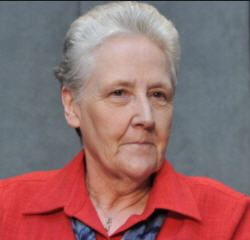
MARIE Collins, an Irish victim of child-abuse by her parish priest, was appointed in 2013 to Pope Francis’ newly-created Pontifical Council for the Protection of Minors. She resigned from the Council on March 1, 2017, explaining on her website (full text below):
[...] despite the Holy Father approving all the recommendations made to him by the Commission, there have been constant setbacks. This has been directly due to the resistance by some members of the Vatican Curia to the work of the Commission. The lack of co-operation, particularly by the dicastery most closely involved in dealing with cases of abuse, has been shameful.
STATEMENT ON MY RESIGNATION FROM THE PONTIFICAL COMMISSION FOR THE PROTECTION OF MINORS
http://www.mariecollins.net/news.html
I sent my letter of resignation (copied to Cardinal O’Malley), from the Pontifical Commission for the Protection of Minors, to Pope Francis on the 9th February 2017 to have effect from 1st March 2017.
Since the beginning of the Commission in March 2014 I have been impressed with the dedication of my colleagues and the genuine wish by Pope Francis for assistance in dealing with the issue of clerical sexual abuse. I believe the setting up of the Commission, the bringing in of outside expertise to advise him on what was necessary to make minors safer, was a sincere move.
However, despite the Holy Father approving all the recommendations made to him by the Commission, there have been constant setbacks. This has been directly due to the resistance by some members of the Vatican Curia to the work of the Commission. The lack of co-operation, particularly by the dicastery most closely involved in dealing with cases of abuse, has been shameful.
Late last year a simple recommendation, approved by Pope Francis, went to this dicastery in regard to a small change of procedure in the context of care for victims/survivors. In January I learned the change was refused. At the same time a request for co-operation on a fundamental issue of Commission work in regard to safeguarding was also refused. While I hope the Commission will succeed in overcoming this resistance, for me it is the last straw.
Cardinal Sean O’Malley has invited me to continue to be part of training projects including those for the Curia and new bishops and I am happy to accept. This will be the area on which I will now concentrate.
I wish my colleagues on the Pontifical Commission for the Protection of Minors the very best for the future.
Marie
Collins
1st March 2017
Marie Collins
1st March 2017
I expanded on the above statement in a longer piece on my resignation. This article appeared in the National Catholic Reporter on 1st March 2017 "Survivor explains decision to leave Vatican's abuse commission" also below
The Pontifical Commission for the Protection of Minors has had difficulties to overcome in the three years of its being in place. Obviously I intend to respect the confidentiality of my former colleagues and the work they are doing in the Commission but some of the main stumbling blocks which I can mention were included by members giving testimony to the Royal Commission in Australia last week, these involve: lack of resources, inadequate structures around support staff, slowness of forward movement and cultural resistance. The most significant problem has been the latter, reluctance of some members of the Vatican Curia to implement the recommendations of the Commission despite their approval by the Pope. Ms Kathleen McCormack, the Australian member summed up the struggles and emphasised the need to keep hope “like water on a rock. We've just got to keep at it”.
I have come to the point where I can no longer be sustained by hope. As a survivor I have watched events unfold with dismay. During our first year we had to go forward without an office or staff. Finding a method by which the Commission could enter into dialogue with Vatican dicasteries was difficult for a very prolonged period. This was eventually overcome in 2016 when liaison persons for each Vatican department were appointed to be available to interact with the Commission but there was a long delay in this very important area of communication and co-operation.
The Commission’s recommendation for a Tribunal to be put in place whereby negligent bishops could be held accountable was approved by the Pope and announced in June 2015. Yet is was found by the Congregation for the Doctrine of the Faith, as Baroness Sheila Hollins stated to the Royal Commission, to have unspecified “legal” difficulties, and so was never implemented.
Pope Frances in his moto propo “As a Loving Mother” last year followed up with another accountability initiative. This would not only cover negligent bishops but religious superiors. It was to come into effect on 5th September 2016 but it is impossible to know if it has actually begun work or not.
The Safeguarding Guidelines template developed by the Commission, intended to be used by bishops conferences around the world as a basis for drawing up their own policy documents has not yet been disseminated. The dicastery which has the responsibility for reviewing existing bishops’ conference policy documents and which has its own template is refusing to co-operate with the Commission on the combining of the work. In his testimony to the Royal Commission Mr Bill Kilgallon from New Zealand, Chair of the Guidelines working group used the analogy of government to understand how this sort of resistance can come about, he said “how jealously government departments guard their own domain and there can be some push-back about taking advice from others”
The reluctance of some in the Vatican curia to implement recommendations or co-operate with the work of a commission, when the purpose is to improve the safety of children and vulnerable adults around the world is unacceptable. Is this reluctances driven by internal politics, fear of change, clericalism which instils a belief that “they know best” or a closed mind which sees abuse as an inconvenience or a clinging to old institutional attitudes?. I do not know the answer but it is devastating in 2017 to see that these men still can put other concerns before the safety of children and vulnerable adults.
The last straw for me, on top of the refusal to co-operate on the Safeguarding Guidelines, has been the refusal, by this same dicastery, to implement one of the simplest recommendation the Commission has put forward to date. Last year the Holy Father at our request, instructed that all departments in the Vatican ensure correspondence from victims/survivors receive a response. Last month I learned in a letter from this particular dicastery that they are refusing to do so. I find it impossible to listen to public statements about the deep concern in the Church for the care of those whose lives have been blighted by abuse, yet watch as privately a congregation in the Vatican refuses to even acknowledge one of their letters! It is a reflection of how this whole abuse crisis in the Church has been handled: with fine words in public and contrary actions behind closed doors.
When I accepted my appointment to the Commission in 2014 I said publicly that if I found what was happening behind closed doors was in conflict with what was being said to the public I would not remain. This point has come, I feel I have no choice but to resign if I am to retain my integrity.
I know my former colleagues on the Commission will forge on and I hope in time succeed in overcoming the difficulties and bring the real change that is needed. There is still a survivor member in the group though on leave of absence. I do not know if when his term of office ends another survivor will be brought on board. I do hope in whatever way things go forward that a survivor voice will be included.
In the past three years I have never had the opportunity to sit and talk to the Pope but if I had I would ask him three things:
1. Give the Commission an adequate, independent budget to do their work without having each item of expenditure go through the internal Vatican approval process.
2. Give the Commission the responsibility and the power to oversee implementation of the recommendations when they are approved. No matter how much work is put into the recommendations given to the Holy Father and no matter how much he supports them they must be properly implemented to have any effect.
3. Remove the restriction on the recruitment of professional staff from outside the Vatican.
Despite everything I have said I do believe there is value in the Commission continuing its work. The members are sincerely putting every effort into very important projects with the intention of moving things forward. The Pope, despite recent disappointing news on the reduction of sanction on convicted perpetrators, I believe does at heart understand the horror of abuse and the need for those who would hurt minors to be stopped. Although I do not agree with them, as far as I am aware none of his actions have put a perpetrator back into a position where children would be at risk, if they did I would have a very different view. Those who appeal to his commitment to mercy in these cases do a disservice to all, including the man himself, who I feel does not appreciate how his actions of clemency undermines everything else he does in this area including supporting the work of the Commission.
I wish my former colleagues well as they
go forward. The issue of improving safety of children and vulnerable adults is
so important it has to continue no matter the stumbling blocks in its’ path.
This Webpage was created for a workshop held at Saint Andrew's Abbey, Valyermo, California in 2013